
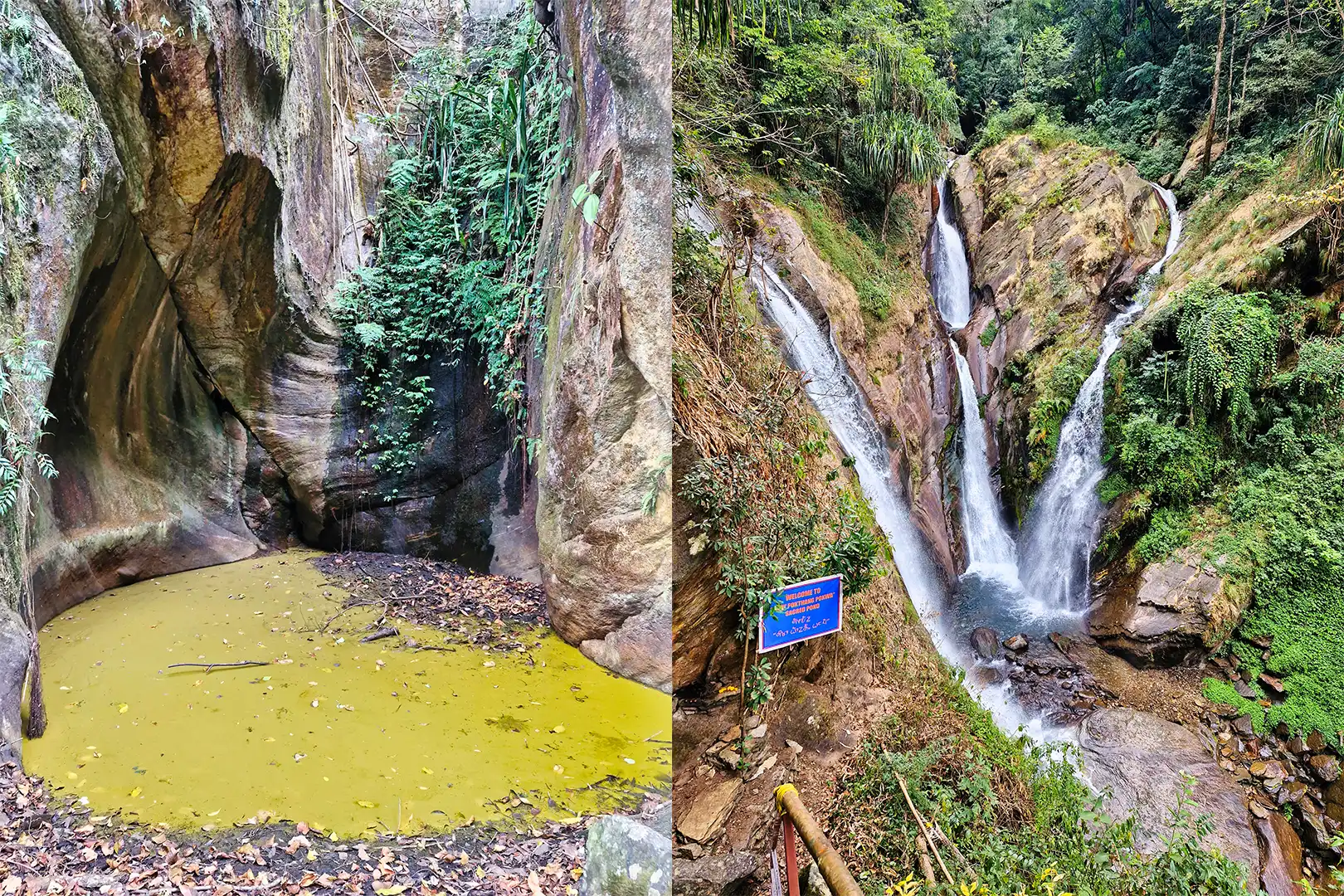
A sacred pond below Mangsabung village, and the leopard legend that gave it its name.
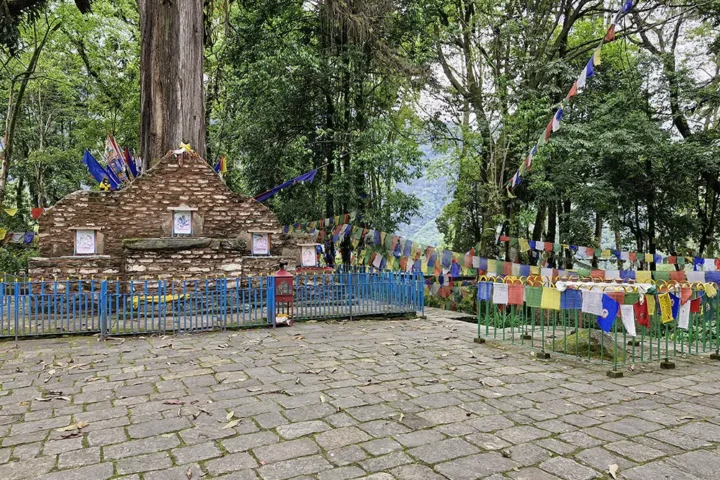
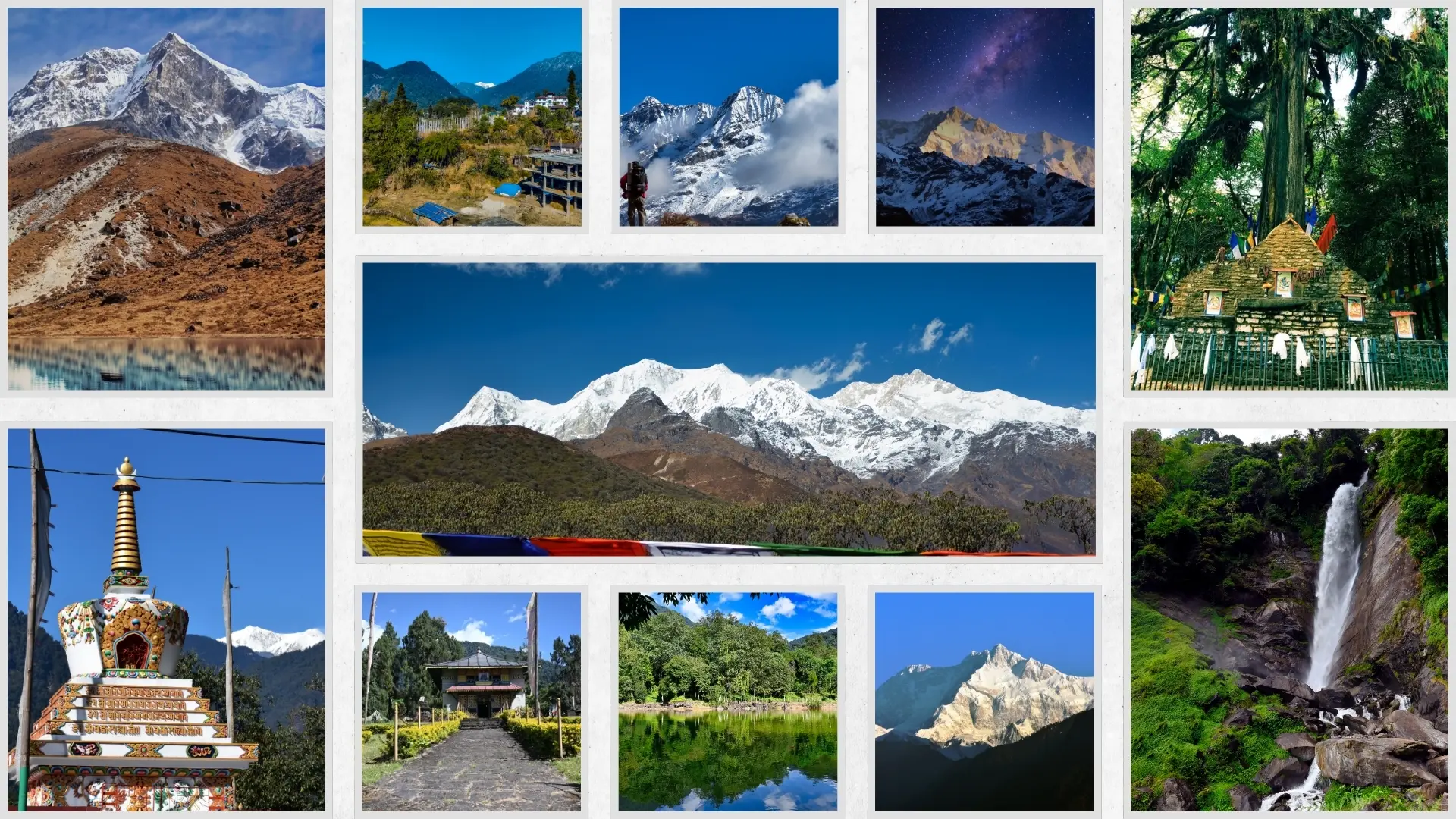
When planning your Yuksom sightseeing itinerary, most travelers stick to the usual suspects: Dubdi Monastery, Norbugang Coronation Throne, and Karthok Lake.
But near Yuksom there is a sacred pond that most visitors never hear about.
Welcome to Sigay Pokthang Pokwa, a waterfall and sacred pond below Mangsabung village, roughly 5 kilometers from Yuksom.
Until recently, reaching this place required locals to navigate vertical rock faces, hanging from thin wires and roots. Local shamans were among the few who ventured here, for spiritual rituals.
Today, thanks to the efforts of the Mangsabung community, you can make the descent yourself.
A Pond Where Three Rivers Meet
The three rivers come together at the base of Mangsabung village. At this sacred confluence, carved into steep cliffs and ancient rock formations, lies the Sigay Pokthang Pokwa Sacred Pond.
The name itself tells a story. In the Limboo (Tsong) language, “Sigay” means Leopard, “Pokthang” means “come by raising,” and “Pokwa” means pond.
The Leopard Rising Pond.
But why a Leopard pond? Let me share the legend that’s been passed down through generations of the Limboo community.
The Legend of Sigey Pokthang Pokwa
Before Yuksom became the first capital of Sikkim and a charming destination in Sikkim tourism, this land belonged to ancient spirits and deities, according to local beliefs.
The story begins with Warak Mang, the Ocean God, who descended into this very pond you can visit today.
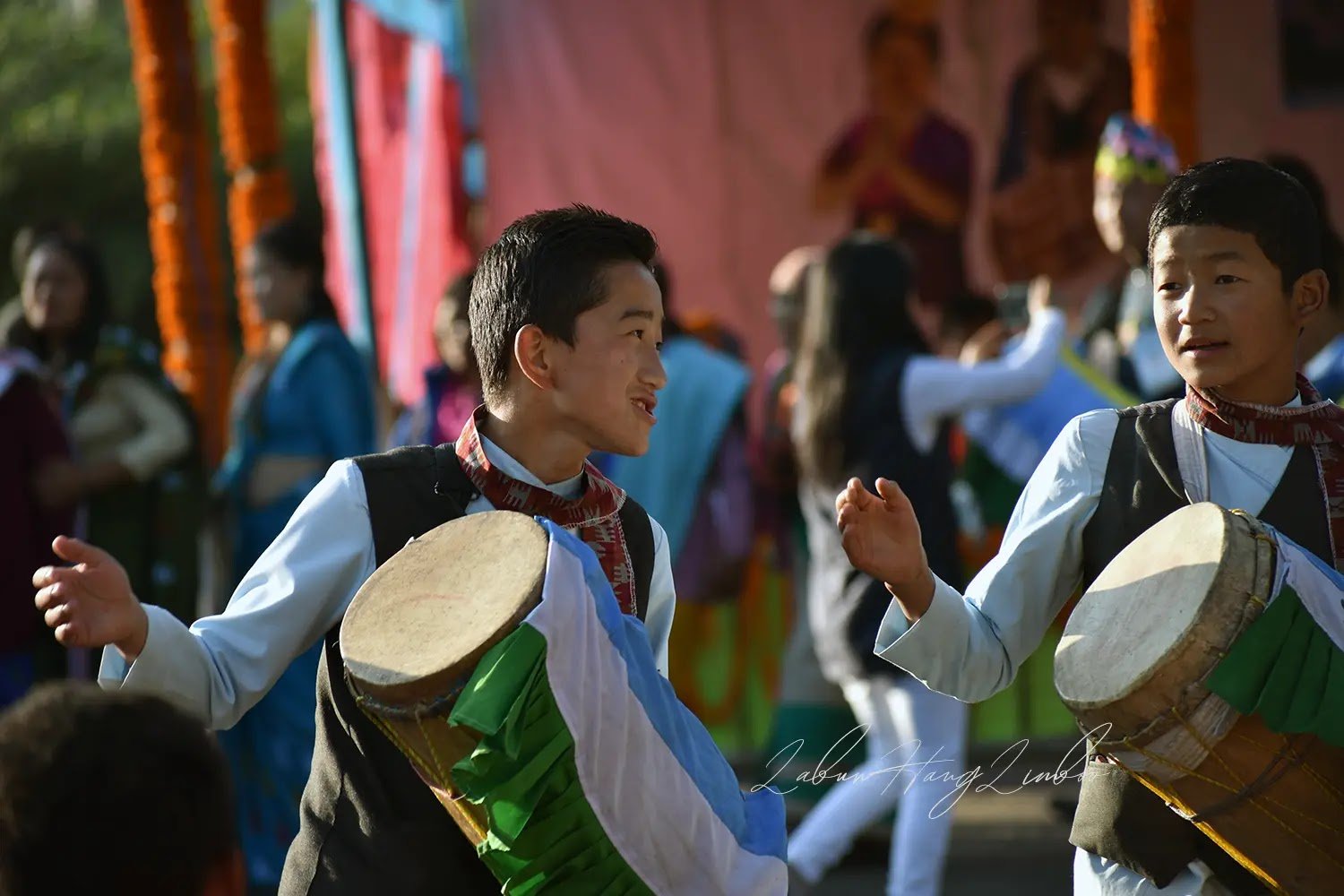
The people of Mangsabung were simple folks who lived off their land. When Warak Mang, the Ocean God, arrived in their humble village, the villagers welcomed him with drums, traditional dances, and offerings of fresh crops and millets.
Pleased with their devotion, Warak Mang blessed them in return. He touched the rocky slope and created a pond where there had been only hard rock. Using his divine power, he fashioned a magical golden fish and presented it to the people as a blessing. As he bestowed this gift, he made a promise: “Care for these fish, and you shall prosper.”
For generations, the people of Mangsabung prospered. Wealth and happiness filled the land.
As time passed, the community gradually forgot its sacred duties. First, the pond became dirty. Then, prayer offerings stopped. As a consequence of this neglect, the Ocean God became angry.
The Birth of the Sigay, the Twin Leopards
When Warak Mang returned to the neglected pond, he found that the Mangsabung people had failed to properly welcome him. Furious at their disrespect, the deity created two powerful spirits, Lubun Mang and Wasang Mang, who then took on a terrifying physical form: the Sigay, the Leopards that would give the pond its name.
According to legend, whenever people strayed from their moral values, engaged in wrongdoing, mistreated animals, or disturbed the harmony between communities and the natural world, the two leopards would emerge from the forest and attack people and livestock.
From that day, the village lived in constant fear of these attacks.
The Shamans’ Solution
The village elders, the Tumyanghangs, and the shamans (Yeba) held a sacred meeting to pray and conduct rituals. Finally, two spiritually powerful hunters, Tsongbang Hang and Paaba Hang, were chosen for a divine mission.
Through elaborate Tongsing rituals and by chanting the sacred Mundhum (Limboo spiritual texts), these hunters tracked and killed both Leopards with traditional weapons, following the instructions given by the elders and shamans.
The village rejoiced, and for a brief moment, peace returned.
The Price of Peace
Soon after their celebration, illness began to spread through Mangsabung. Crops failed. People died mysteriously.
The shamans consulted the oracles and discovered the truth: killing the sacred Leopards had brought a curse upon the land.
To lift the curse, the entire village needed to perform a massive purification ritual at the sacred pond: the Sigey Pokthang Pokwa.
The villagers had to cleanse the pond, make offerings, and appease the Ocean God to restore harmony.
When the rituals were finally completed, harmony was restored. The golden fish returned to the pond, and prosperity flowed back to Mangsabung.
To this day, the pond remains a pilgrimage site for the Limboo community. The place where Leopards emerged. The place where gods were angered and appeased. The place where the old ways still hold power.
Mangsabung: The Village Above the Pond
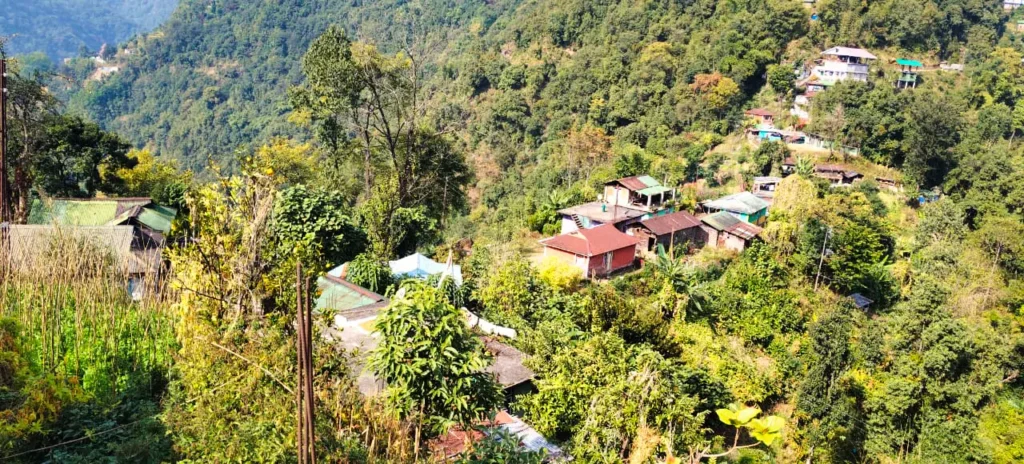
Before you reach Sigey Pokthang Pokwa, you’ll walk through Mangsabung village, a stop that deserves time of its own.
The name “Mangsabung” comes from the Limboo language, meaning “a place surrounded by deities.”
The village sits on what looks like a finger of land jutting out between deep river valleys. From above, it appears almost flat, but don’t be fooled. The terrain drops dramatically on all sides. The Sidakwa River carves through the gorge on the left, the Ladung River thunders through on the right, and down below, the Phamrong River joins them both.
Mangsabung is perched on a ridge surrounded by some of the steepest terrain in West Sikkim. Dense forest blankets every slope. The rivers are hundreds of feet below, their roar a constant presence.
Looking at the landscape, you realize why the villagers call it a place surrounded by deities. The geography itself feels protective, almost supernatural. It’s a natural fortress, a place where the earth’s bones break through the skin.
The Limboo Heritage Village
The people of Mangsabung are members of the Limboo (Tsong) community, which keeps its own cultural practices, language, and spiritual beliefs. As one of Sikkim’s indigenous groups alongside the Lepcha (Rongs), the Limboo people are the original inhabitants of this land and have preserved ancient traditions that offer deep insight into the area’s history and identity.
When you visit, take the time to talk with the villagers. The stories in this article live with them, and so does a deep connection to this land.
The Journey: What to Expect on Your Trek
Here is what the trip to Sigey Pokthang Pokwa involves.
Distance and Duration
- Yuksom to Mangsabung village
- 2 to 3kmApproximately 2 to 3 kilometers by road
- Yuksom to the sacred pond
- 5kmApproximately 5 kilometers one way (an estimate, not a measured distance)
- YuksomTrek to Mangsabung1 hour
- Mangsabung villageDescent from Mangsabung to Sigey Pokthang PokwaAbout 1 hourEven for a reasonably experienced walker
- Sigey Pokthang PokwaClimb back to MangsabungAbout 2 hoursBecause the ascent is steep
About 5 hours
Total round trip
But plan for a full day
Why a full day? Because you won’t want to rush. The villagers may invite you for tea, and the sacred atmosphere at the pond asks for your quiet attention.
The Trail the Community Built
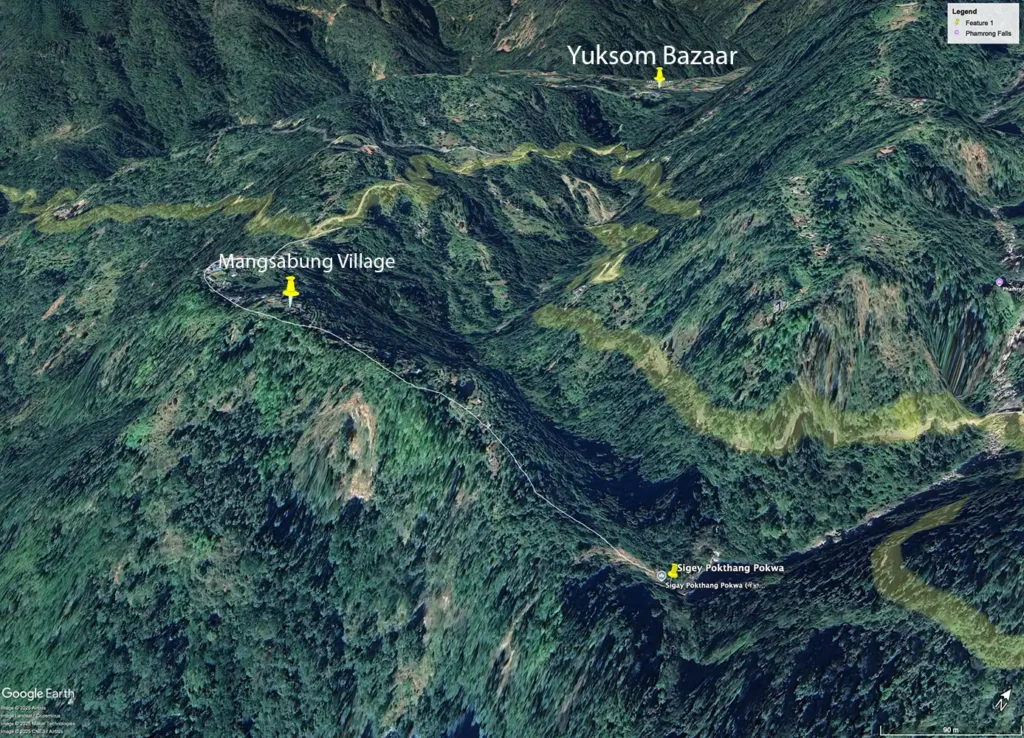
Reaching Sigey Pokthang Pokwa wasn’t always possible for casual visitors.
Looking at the terrain map, you can see why. Sigey Pokthang Pokwa lies deep in the gorge below Mangsabung village. What appears as a short distance on a map translates to a vertical descent down a cliff face that drops into the river valley. The forest is so dense that from above, you can barely tell there’s a sacred pond hidden in there at all.
Until recently, locals essentially had to climb down like the monkeys that inhabit these woods, trusting their weight to those same thin wires and roots stretched across the vertical rock. Only the most experienced locals would attempt it, usually for important rituals.
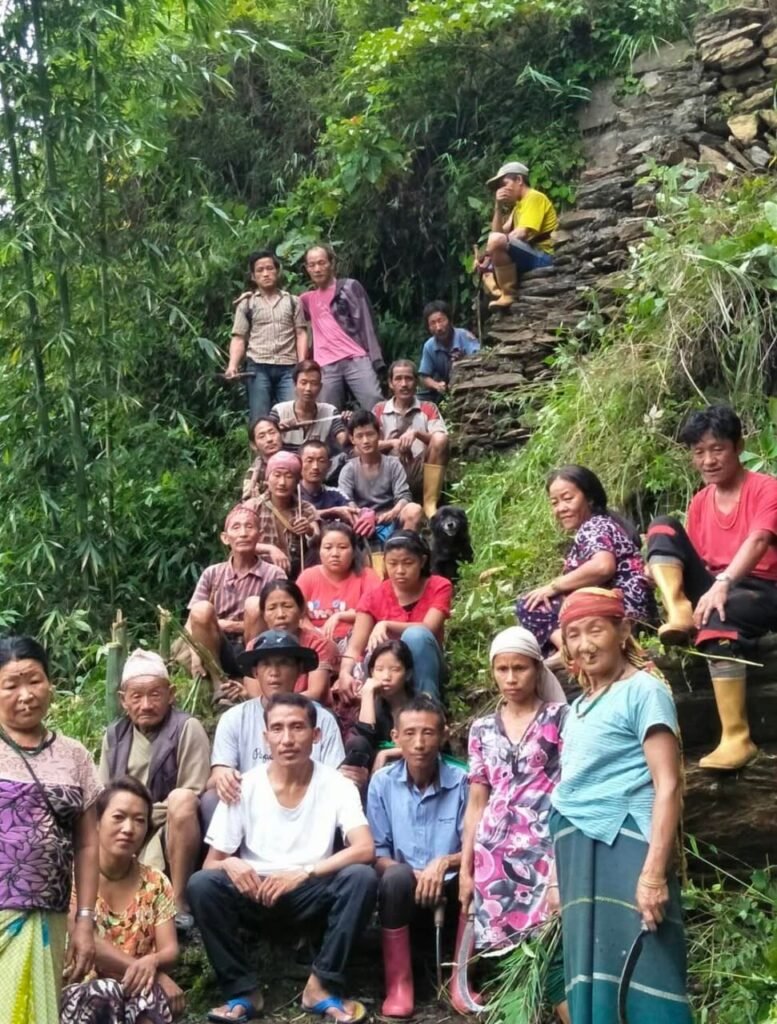
The Mangsabung community decided this sacred place needed to be accessible, not only for tourists but for future generations of their own people.
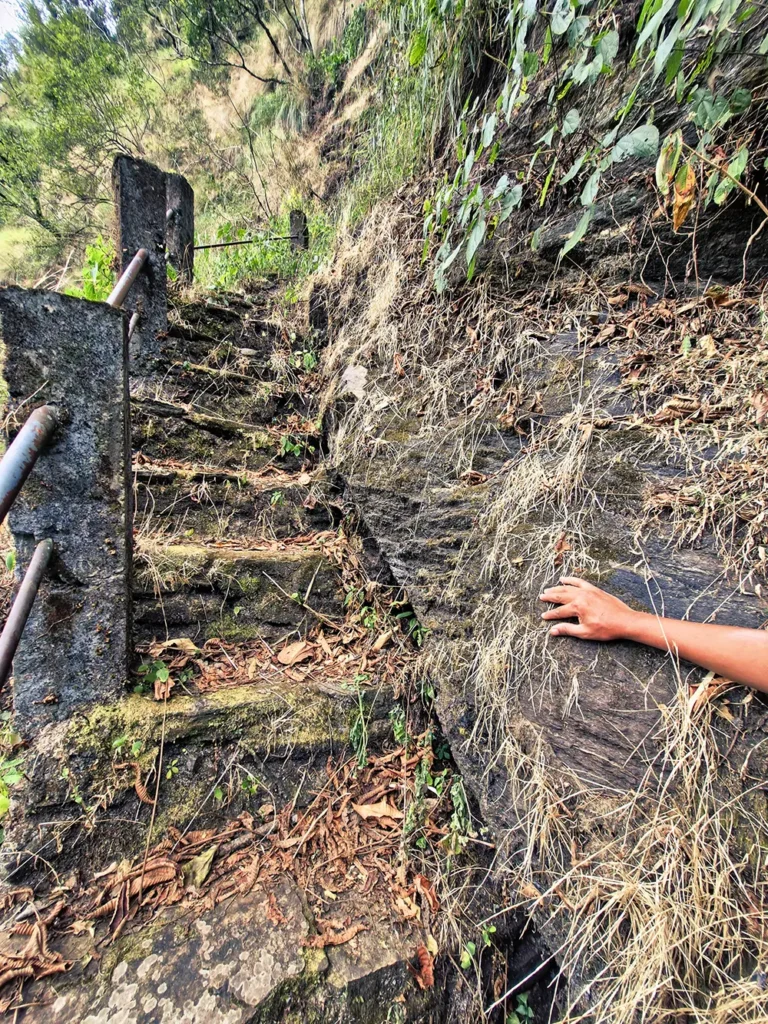
With no roads for vehicles and no modern machinery, the villagers carried iron rods and bags of cement on their backs down treacherous slopes. They built a well-beaten route with stone steps carved into the sheer rock face.
When you’re descending, pause and think about what you’re walking on. This isn’t government infrastructure. It is people honoring their sacred site by making it accessible.
What You’ll Encounter
The Upper Section: The trail starts with a gentle walk through Mangsabung village. Children wave. Chickens scatter. The air smells of wood smoke and mountain mist.
The Descent Begins: Then you reach the stairs. The metal steps cling to the sheer cliff face like a geometric spider web. If your heart skips a beat, don’t worry, that’s normal.
The Rock Formations: As you descend, you’ll pass through extraordinary geological features. Massive boulders lean against each other, forming natural caves and grottos. Moss covers everything. Water seeps from hidden springs.
Yabboko Sambhkho Fakku

Just above the main pond, you’ll find a holy cave that served as a meditation site for Limboo shamans for centuries. The cave sits within a split in the cliff, its entrance almost disguised by the overhanging rock shelf.
What strikes you first is the scale. The massive rock overhang creates a natural shelter, and inside, tall slabs of stone stand upright like sentinels. These aren’t random rocks. They’re placed deliberately, marking sacred space.
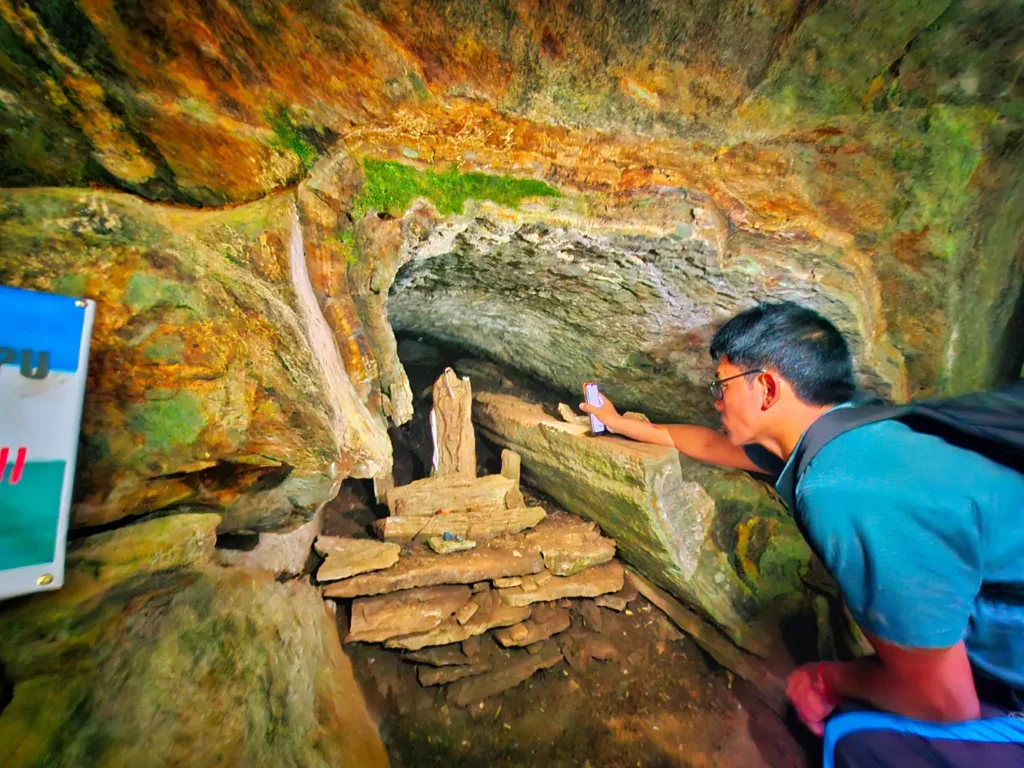
But the most remarkable feature is the tunnel, which curves into the cliff face. The rock has weathered into a smooth, arching passage that looks almost too perfect to be natural. The curve of the ceiling, the way the tunnel tapers inward, it feels crafted, though it’s the work of countless years of water and time.
The ground is covered with flat stone slabs, some stacked, creating a ritual platform. Green moss clings to parts of the rock, especially where moisture seeps through. The layered sedimentary rock shows beautiful horizontal striations in shades of rust, grey, and pale cream.
The air inside is noticeably cooler than outside, almost chilled, but not unwelcoming.
This was the meditation chamber where shamans came alone, seeking visions and strength. They performed rituals here. Called upon deities. Read signs from dreams.
Some say certain shamans still return here quietly during special ceremonies.
The Sacred Pond
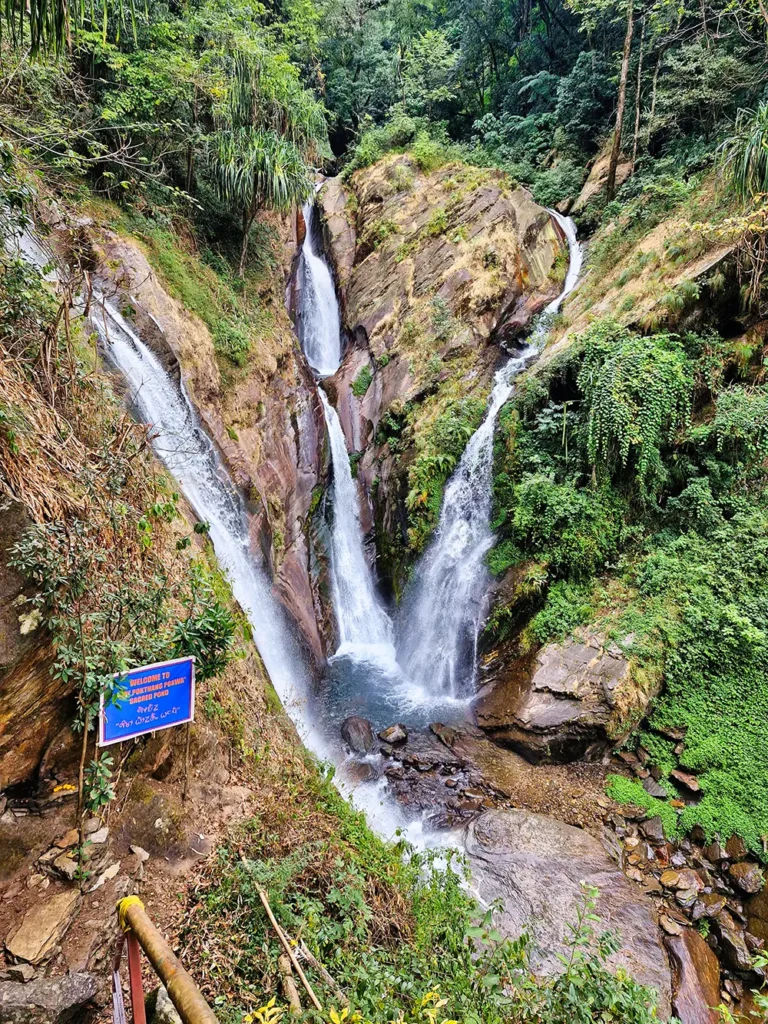
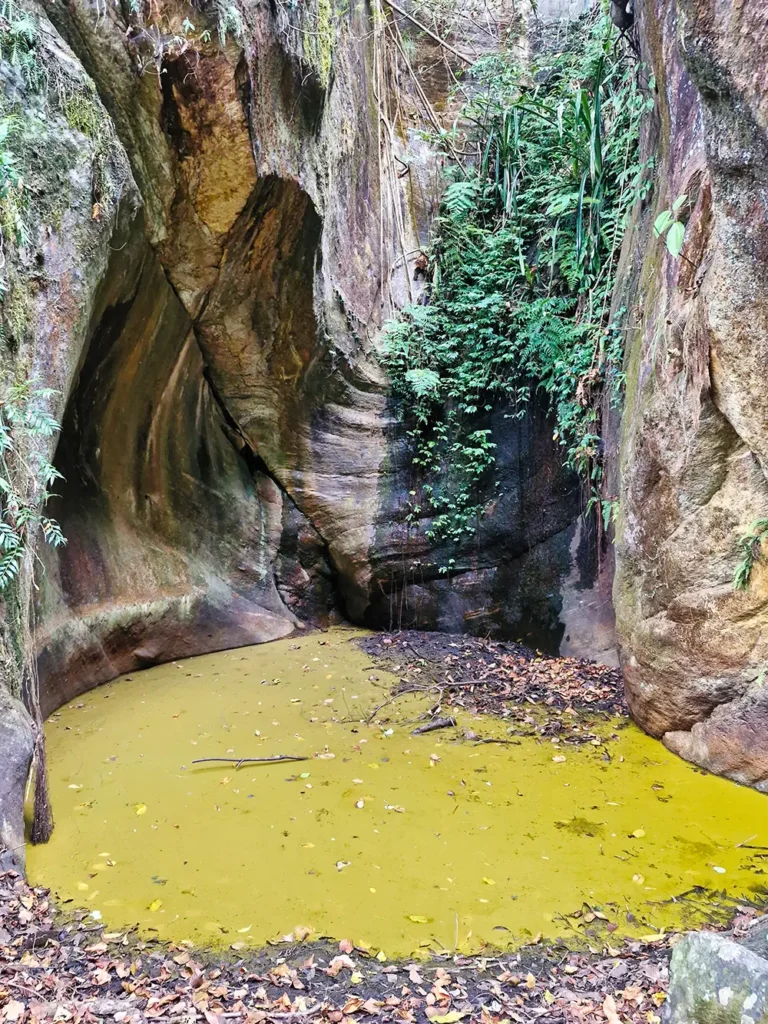
Finally, you arrive. To the right, Wadhum Falls sends multiple cascades of white water down the rock face, the sound filling the narrow gorge. Just beside it, separated and calm, lies the Golden Pond. The final stretch flattens into a wide stone basin shaped over centuries by wind and water. The pond rests within this natural hollow, surrounded by steep rock walls that curve up like the sides of a bowl.
The water in the pond is remarkably still, almost too still.
The sound of the waterfall is overwhelming. The air is thick with spray. Yet, beside it, at the pond, there is a deeper silence. The Golden Pond rests on a rock slope that, according to local elders, was created by Warak Mang himself.
But here’s something the elders will tell you with sadness in their voices:
This pond isn’t what it used to be.
According to the ancestors, the lake was once filled with golden fish, not the ornamental goldfish of modern aquariums, but fish made of actual gold that shimmered beneath the water’s surface. The lake held one of the most powerful spiritual vibrations in all of Sikkim. This energy ensured the well-being of the entire village for as long as people honored the pond. Crops grew abundantly without effort. Children were born healthy. Illnesses were rare.
But as time passed and the modern world encroached, the sacred connection weakened. Nature began to be seen as a resource to exploit rather than a deity to honor. Pollution crept into the water. The rituals became less frequent. The offerings stopped. The devotion dimmed.
As respect for nature declined, so did the lake’s power.
The spiritual energy weakened.
The golden fish disappeared.
Today, the pond still holds beauty. It still holds mythology. Some villagers believe the energy remains dormant, waiting for people to remember and for devotion to return.
When you visit, you’re seeing a shadow of what once was. In the legend, neglect brought the anger of the Ocean God. Here, neglect has cost the pond its power. It is a call to restore what can still be saved.
Ancient. Powerful. Watching.
Practical Information for Visitors
Best Time to Visit
Peak Season (October to December): Clear skies, perfect weather, best for photography. The waterfalls are still flowing from monsoon runoff, but the trails are dry and safe.
Monsoon (June to September): The waterfalls are at their most dramatic, but the descent can be slippery and potentially dangerous. Only for experienced trekkers.
Winter (January to March): Cold but clear. Water flow is reduced, but the mystical atmosphere intensifies. Fewer crowds.
Spring (April to May): Rhododendrons bloom on the hills. The weather is pleasant. Good middle ground.
What to Wear and Bring
Footwear: This is non-negotiable: wear shoes with a firm grip. Proper trekking shoes or hiking boots. Not slippers. Not fashionable sneakers with smooth soles. Not sandals. The metal steps and rock faces demand traction.
Clothing: Layers. The descent is warmer, but Mangsabung village can be cool. Quick-dry clothing is smart because you’ll encounter spray from the waterfalls.
Essentials:
- Water bottle (at least 1 liter per person)
- Some snacks (energy bars, fruits, dry fruits)
- Small first-aid kit
- Camera or smartphone (fully charged!)
- Cash for any purchases in Mangsabung village
- Respect and an open mind
Important Safety Notes
Not recommended for:
- Children under 10 years old
- Anyone with mobility issues
- People with a severe fear of heights
- Anyone in poor physical condition
Why? The trail involves metal stairs on cliff faces, uneven terrain, and requires sure-footedness. This isn’t a stroll. It’s a legitimate trek with some exposure.
During the visit:
- Be mindful while taking photographs: don’t step backward or venture off-trail for better angles
- Hold railings where provided
- Watch your step constantly
- Don’t rush
- If it’s raining, consider postponing
- Stay on the marked path at all times: the cliffs are real and dangerous
How to Reach Sigey Pokthang Pokwa from Yuksom
Getting to Mangsabung Village
From Yuksom town center, you have two options:
Option 1 (Walk): It’s roughly 2 to 3 kilometers of gradual ascent. Takes roughly 1 hour. The path is clear, and locals can point the way. This is what I recommend if the weather is good, since it warms up your legs for the descent ahead.
Option 2 (Local Vehicle): Hire a local taxi, or if you’re driving, take the road toward Mangsabung. You can drive or hire a vehicle as far as Mangsabung village, but there is no vehicle access down to Sigey Pokthang Pokwa itself. The final descent and the climb back must be done on foot.
Reaching Mangsabung village does not mean you have reached the pond. Sigey Pokthang Pokwa lies further downhill, about an hour’s walk down and about two hours back up. From the village, ask locals to point you toward it. Everyone knows it, and some may offer to guide you for a small fee.
Hiring a Guide
The trail is now well-established, but a local guide adds a great deal to the visit.
They’ll share:
- The complete mythology in detail
- Stories of the shamanic practices
- Plant identification along the route
- The best spots for photographs
- Safe navigation during tricky sections
Guides can be arranged through your Yuksom homestay or by asking around in Mangsabung village. Expect to pay ₹1000-1500 for a guide for the full trip.
Why It Is Worth the Climb
I’ve grown up in these mountains. I know the monastery circuits, the lake pilgrimages, the trekking routes that fill every guidebook.
But Sigey Pokthang Pokwa is different.
Unlike the packaged tourism found elsewhere, this place feels raw. There are no ticket counters, no selfie points, no vendor stalls selling momos. And whether you consider yourself spiritual or not, standing where shamans have drawn their power for centuries forces you to respect the silence.
The descent on metal stairs clinging to a cliff face will get your adrenaline going. It’s accessible enough for reasonably fit travelers but challenging enough to feel like a real achievement when you make it down and back up.
Then there’s the beauty of it: the multi-tiered waterfalls, the golden pond reflecting ancient rocks, the cave formations, the lush vegetation. And because so few people know about it, you might have the entire place to yourself.
The cultural side is what sets this visit apart. You spend time in Mangsabung village, meet the Limboo community, and hear the legends firsthand from people who still believe them.
Responsible Tourism at the Sacred Pond
Since you’re among the first wave of visitors to discover this place, you have a responsibility.
Respecting the Sacred Site
This isn’t just a waterfall. It’s an active pilgrimage site. If you see offerings or ritual objects, don’t touch them. If locals are performing ceremonies, observe from a respectful distance or ask permission to watch.
Important: Do not leave your own offerings, such as khadas (ceremonial scarves), coins, or other items. While your intention may be respectful, non-degradable offerings accumulate over time and damage the site. The best offering you can give is your respectful presence and careful footsteps.
Photography with Awareness: The safety advice above applies here too, and no photograph is worth risking a fall. Be present in the moment, not just through your lens.
Leave No Trace
Carry back everything you bring. Every wrapper, every bottle, every scrap. The community has worked incredibly hard to maintain this site’s purity. Don’t be the tourist who ruins it.
If you see litter left by others, consider carrying it back too.
Supporting the Community
Stay in Mangsabung homestays if possible. Buy local products. Pay fair prices for guide services. Your tourism rupees should benefit the people who’ve preserved this heritage.
Share this place with others, but encourage responsible visits. We don’t want Sigey Pokthang Pokwa to become overcrowded or commercialized. Quality visitors who respect the site are far better than quantity.
A Four-Day Itinerary Around Yuksom
Here is one way to fit the pond into a longer stay in Yuksom:
Day 1:
- Arrive in Yuksom
- Visit the Norbugang Coronation Throne
- Karthok Lake and Monastery
- Explore Dubdi Monastery
- Phamrong waterfalls
- Tashi Tenka View Point
- Stay overnight in Yuksom
Day 2:
- Early start to Mangsabung village
- Full day exploring Sigey Pokthang Pokwa and surroundings
- Interact with Mangsabung villagers
- Return to Yuksom by evening
Day 3:
- Khecheopalri Lake excursion
- Kanchenjunga Waterfalls
Day 4:
- Tashiding Monastery
- Depart or continue to other West Sikkim destinations
Where to Stay
In Yuksom, multiple homestays and small hotels are available. My recommendation: stay with a family with connections to Mangsabung, since they can arrange guides and provide more context on the Limboo culture.
In Mangsabung, some families offer basic homestay facilities. If you’re interested, consider booking a stay for a deeper cultural immersion. Don’t expect luxury. Expect home-cooked meals and a warm welcome.
Before You Go
Too often, travel becomes a box-ticking exercise, a rapid tour of monuments and popular lakes.
But you can’t just “do” Sigey Pokthang Pokwa. It’s not a sightseeing spot you tick off in an hour. It demands your attention, your respect, and your willingness to descend into the unknown. It offers no convenience, no shortcuts, no Instagram-ready platforms.
Instead, it offers a genuine encounter with the sacred. You brush with living mythology and test your physical courage. It reminds you that some places still exist outside the tourism machine.
The Ocean God Warak Mang still lives in that pond, if you believe the old folks in Mangsabung. The Leopards might still roam the slopes in spirit form. The shamans still draw power from the Yabboko Sambhkho Fakku cave.
When you plan your time in Yuksom, ask the locals what lies beyond the usual list. That is how you find places like Sigey Pokthang Pokwa, the sacred leopard pond where gods still dwell, where waterfalls thunder down ancient rocks, and where the Limboo people keep their heritage alive through stories, rituals, and community effort.
The climb back up will give you time to think. You’ll remember the villagers who carried cement down that cliff. You’ll recall shamans making this descent long before any steps existed. Myths feel more real when you stand where they happened.
The trail that once belonged only to shamans is now open to travelers, and it hasn’t lost its soul. The mountain still protects it with cliffs. The community still guards it with devotion. The stories still hold it in memory.
See you on the trail. Watch your step, respect the sacred, and discover the side of Yuksom that tourism brochures leave out.
Credits:
This article would have been impossible without these people. Thank you for filling my heart and mind with rich history. Most of all, thank you for guiding me to the sacred pond.
SPPP(Sigay Pokthang Preservation & Protection Committee, Mangsabung Sukkhim
- Sambi Hang Limboo (President)
- Jas Hang Limboo (V-President)
- Uncho Hang Limboo (G-secretary)
- Phosu Hang Limboo (Publicity)
- Tencho Hang Limboo (Member)

Sigay pokthang pokwa is a sacred historical and cultural site that has been worshipped with immense devotion and faith by the Limboo community for generations.
According to Mundhum and Limbu traditions, protecting, worshipping, and making offerings at such sacred shrines and ancestral sites are deeply connected to our identity and heritage. To protect this Sigey Pok thang pond, our ancestors, grandparents, and parents have been performing worship on this land, and we are continuing to do so now and will continue to do so in the future.
Thank you for sharing your thoughts. It is encouraging to hear that the traditions associated with Sigey Pokthang Pokwa continue to be observed across generations. One of my reasons for writing this article was to bring greater attention to the history, beliefs and stories surrounding this sacred place, which remain largely unknown beyond the local community. I hope future generations will continue to preserve both the site and the traditions connected to it.
Very good information, this article is totally base on Yakthung Mundhum.
Thank you, Mona Hang Limboo. Much of what I’ve written about this place comes from the stories and beliefs passed down through generations. I’m glad you recognised the connection with Yakthung Mundhum.
This place is located in west Sikkim the place was named by limboo community and preserve by limboo people
Thank you so much for the informative article about “SEGAY POKTHANG POKWA” for the entire SPPP COMMITTEE. SEGAY POKTHANG POKWA is a name from our Limboo Language.This is Historical and the sacred placed of Limboo Community protected and secured by our Phedangmas since ancient times.❤🙏
I have beautiful memories of Yuksom and the lovely people I met there, but I did not know this place existed when I visited in 2024. I appreciate the local committee’s efforts to preserve this sacred place and its traditions. I will surely hike to this place if I visit Yuksom again.
Equally, I think Labun Hang Limboo deserves recognition for personally visiting the site, gathering information, documenting its history, and bringing these stories to a wider audience through his independent writing. The photographs, historical accounts, and detailed information clearly reflect the effort invested in this article. Such work requires dedication and a genuine interest in preserving cultural heritage.
Thank you, Labun, for your valuable contribution. I hope your efforts receive the appreciation they deserve. & Continue writing…
Thank you, Saanvi, for your thoughtful words and for appreciating the effort behind this article. Your encouragement means a great deal to me and motivates me to continue writing. Yuksom still has many beautiful hidden places waiting to be documented and explored. I hope you get to discover this one on your next visit!