
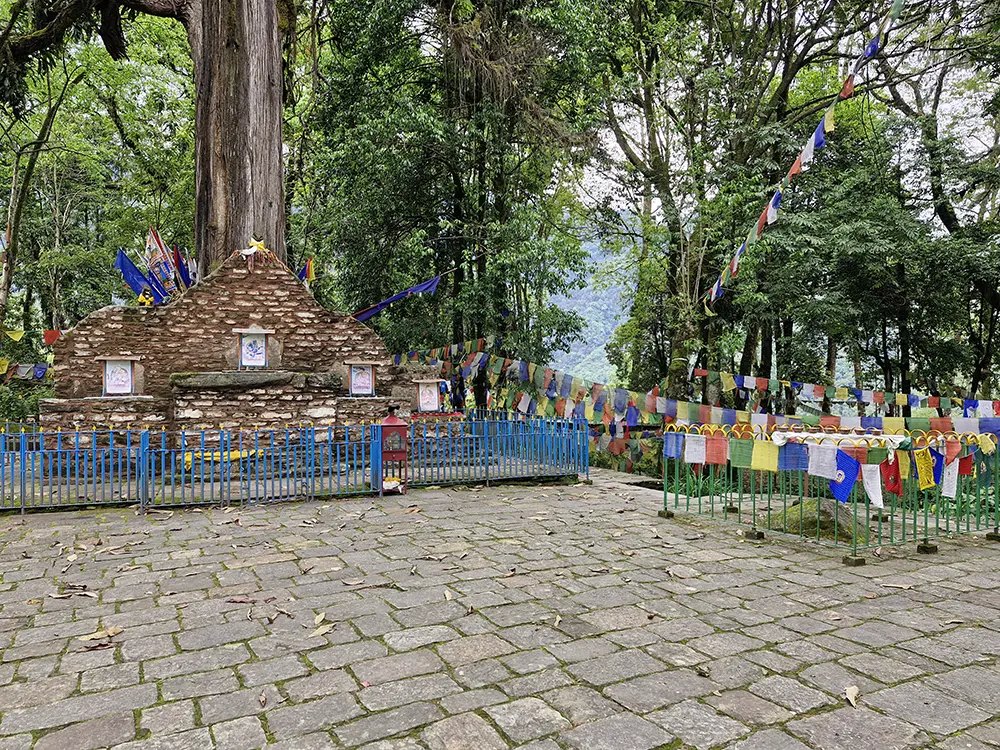
Planning a trip to Yuksom? Whether you are coming for the Goechala Trek, exploring the historical sites of West Sikkim, or simply looking for a peaceful mountain getaway, the first thing you need to figure out is how to get here.
Yuksom is reached by road. It has no airport or railway station of its own, and shared transport has limited seats and departure times. Knowing where to change vehicles is important, particularly if you are travelling from Siliguri.
You can take a reserved taxi directly from Bagdogra Airport or New Jalpaiguri Railway Station, or travel more economically using buses and shared jeeps with a change at Jorethang or another West Sikkim transport centre.
I grew up in Yuksom, and one thing I want to make clear from the beginning is that reaching the town does not necessarily mean travelling through Gangtok. That detour is unnecessary for most visitors arriving from Siliguri, Bagdogra or New Jalpaiguri.
How to Reach Yuksom: Quick Travel Information
For most travellers, the easiest way to reach Yuksom is to arrive at Bagdogra Airport or New Jalpaiguri Railway Station and continue by road.
A private taxi generally takes around six to eight hours, depending on the road chosen, traffic and weather conditions. Shared transport is cheaper but may require changing vehicles at Jorethang, Gyalshing or Pelling.
Here is a quick comparison of the main routes.
| Starting point | Approximate distance | Travel time |
|---|---|---|
| Siliguri | 145–160 km | 6–8 hours |
| New Jalpaiguri Railway Station | 150–160 km | 6–8 hours |
| Bagdogra Airport | 155–170 km | 6–8 hours |
| Gangtok | 120–130 km | 5–7 hours |
| Jorethang | 65–75 km | 2.5–4 hours |
| Gyalshing (Geyzing) | 43–45 km | 1.5–2.5 hours |
| Pelling | 33–40 km | 1.5–2 hours |
These are approximate road distances and driving times, not guaranteed schedules. Different approaches, diversions and road conditions can change the figures.
My recommendation is simple: if you are arriving by air or train and travelling with family, children or trekking equipment, a prearranged private taxi is the most convenient option. For solo travellers with a flexible schedule, shared jeeps can save a considerable amount of money.
Choose the road that brings you here
Every journey ends on the road to Yuksom. Find your starting point to see the approximate distance and the practical way forward.
Bagdogra Airport · New Jalpaiguri · SiliguriFlying, arriving by train or starting in the plains
- Bagdogra
- 155–170 km
- NJP
- 150–160 km
- Siliguri
- 145–160 km
- Starting point
- Jorethang
- Yuksom
Private taxi: usually about 6–8 hours to Yuksom. Shared transport: change at Jorethang, subject to the onward departure and seat availability.
GangtokPrivate taxi or limited Yuksom-bound shared jeeps
- Road distance
- 120–130 km
- Private taxi
- 5–7 hours
For shared jeeps, use the upper-level stand below MG Marg. An early-morning jeep may reach Yuksom around midday; another departure around 12:30–1:00 p.m. may reach in the evening. Confirm locally before relying on either.
Jorethang · Gyalshing · PellingShorter approaches from western and southern Sikkim
- Jorethang
- 65–75 km
- Gyalshing
- 43–45 km
- Pelling
- 33–40 km
Approximate driving times are 2½–4 hours, 1½–2½ hours and 1½–2 hours, respectively. Reserve a taxi for the simplest journey, or ask locally about shared connections.
Before You Leave for Yuksom: Essential Travel Checklist
Before setting off for Yuksom, make sure the following practical arrangements are in place. They matter particularly if you are using shared jeeps or travelling from outside Sikkim.
- Withdraw enough cash before reaching Yuksom. There is no regular bank ATM in Yuksom town as of October 2026. UPI payments are common at shops and accommodation, but mobile connectivity, electricity or payment services can fail. Carry cash for transport, meals and unexpected expenses instead of depending only on scan-and-pay.
- Indian citizens do not need an Inner Line Permit (ILP) to visit Yuksom. If you are trekking into a protected area such as the Dzongri or Goechala route, separate trekking permissions apply.
- Foreign nationals generally need a Sikkim ILP, also called a Restricted Area Permit (RAP). Check the requirements for your nationality, complete the application through an authorised office, and confirm whether online or provisional approval needs endorsement at the entry checkpoint. Carry the required passport, visa, copies and photographs. Specific exemptions and additional clearance rules apply to some nationalities.
- Do not depend on a shared jeep stopping for permit paperwork at Melli. If your road route enters Sikkim through Melli and you still need the ILP issued or endorsed, complete the arrangements before boarding a shared vehicle. The jeep driver is unlikely to wait while you visit the permit office. If travelling by reserved taxi, discuss a planned stop at the Melli Tourism Office with the driver before departure and check that the office will be open.
- Confirm shared taxi seats and departure times. The onward jeep from Jorethang generally leaves by about 1:30 to 2 PM. The Gangtok connection is also limited. Ask a Yuksom homestay or travel operator to help enquire in advance where possible.
- Match the reserved vehicle to your bags. Tell the operator how many passengers you have and whether you are carrying multiple suitcases, heavy trekking backpacks or oversized kit bags. Passenger capacity alone does not guarantee sufficient luggage space.
- Check the road and save essential details. Confirm whether rain, repairs or closures are affecting the route. Keep offline directions, your accommodation contact number, driver details and a reasonable time buffer.
The permit issuing locations and the specific warning for travellers crossing at Melli are explained below.
A small checklist for a smoother journey
Four practical details that are easy to overlook when travelling toward a mountain town.
Cash before the hills
- Yuksom has no regular bank ATM.
- UPI is common, but power or connectivity may fail.
- Carry small cash reserves for jeeps, food and unexpected expenses.
Entry and trek permits
- Indian citizens need no ILP to visit Yuksom town.
- Most foreign visitors need a Sikkim ILP/RAP, subject to nationality rules.
- Dzongri and Goechala treks need separate permissions.
Timing is everything
- Shared-transport seats are often pre-booked.
- Reach Jorethang before the early afternoon departure.
- A shared jeep is unlikely to wait at Melli for ILP paperwork.
Prepare for the road
- Check local road conditions and possible closures.
- Save contacts and directions for offline use.
- Allow space for luggage and a buffer day before a trek.
Where Is Yuksom and Which Road Leads to It?
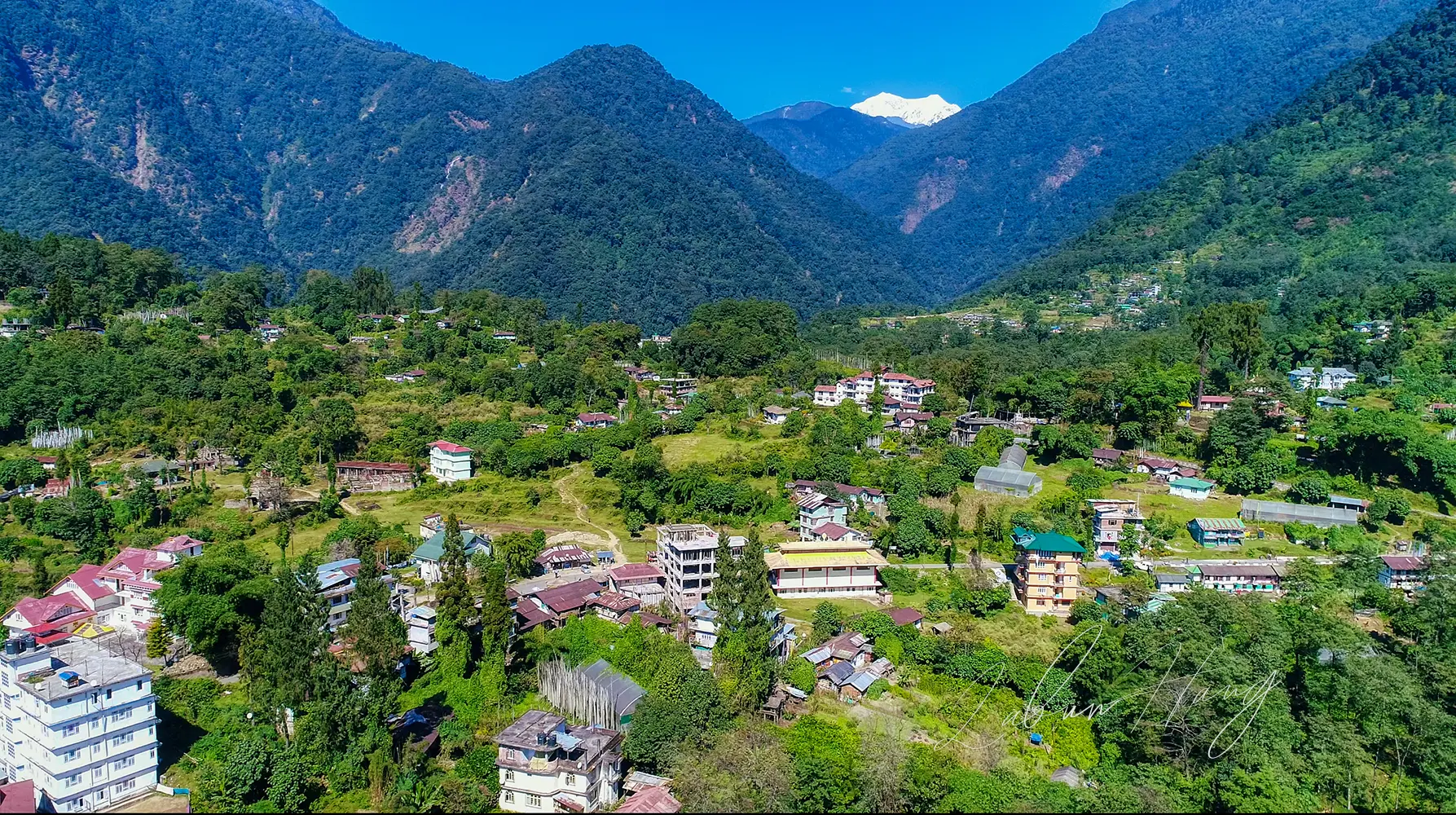
Yuksom lies in the Gyalshing district of West Sikkim. It is also the roadhead for the Goechala and Dzongri treks. For the town’s history, communities and places to explore, read my Yuksom local guide. Here, the focus is on the roads and transport that get you there.
Yuksom is away from the main highway, and the final stretch follows mountain roads through smaller settlements. Two approaches are especially useful.
The Jorethang and Tashiding approach: This is a practical route for travellers arriving from Siliguri, Bagdogra or New Jalpaiguri. It generally follows Siliguri, Melli, Jorethang, Legship, Tashiding and Yuksom, subject to road conditions.
The Gyalshing and Pelling approach: This is useful for visitors already exploring West Sikkim or travelling through Gyalshing. From the Pelling side, the road towards Yuksom passes through the Darap and Rimbi area.
These are not the only possible roads. Your driver may choose another approach when there are closures, repair works or traffic restrictions.
If you are planning the journey with Google Maps, check the suggested route before leaving. The shortest distance shown on a map is not always the fastest or most comfortable drive in the mountains.
How to Reach Yuksom by Air
Bagdogra Airport to Yuksom
Bagdogra Airport in West Bengal is the most practical airport for travellers flying to Yuksom.
It serves the Siliguri region and has scheduled domestic connections with major Indian cities. The onward road journey to Yuksom is approximately 155 to 170 kilometres, depending on the route.
Allow roughly six to eight hours for the drive. This does not include the time spent collecting luggage, arranging transport or waiting at the airport.
There are two main ways to continue from Bagdogra.
Option 1: Book a private taxi directly to Yuksom
This is the simplest option because you can leave from the airport and travel to your hotel or homestay without changing vehicles.
It is particularly suitable if you are carrying heavy luggage, travelling with elderly family members or arriving for a trekking expedition.
My recommendation is to arrange your airport pickup in advance through a travel operator or taxi provider based in Yuksom. A local driver can travel to Bagdogra Airport and meet you at the agreed pickup point. This is preferable to relying on a taxi arranged at the airport without first confirming the complete route and price. Some drivers operating around Siliguri may be less familiar with the Yuksom approach and could quote an unnecessarily high fare or take a longer route.
For a reserved transfer from Bagdogra to Yuksom, plan on approximately ₹5,000 to ₹8,000 for the vehicle, depending on its type and your requirements. Do not assume that a cheaper quote will be available. A larger vehicle, extra luggage or special arrangements may cost more.
Before booking, tell the operator how many people are travelling and exactly how much luggage they will carry, including trekking backpacks and large duffel bags. Confirm the vehicle’s permitted passenger capacity, luggage space, full fare, pickup arrangements, route and any additional charges.
Option 2: Travel to Siliguri and continue by shared transport
If you prefer a cheaper journey, first travel from Bagdogra Airport to the appropriate taxi or bus stand in Siliguri.
From there, look for a vehicle towards Jorethang or another suitable West Sikkim connection point.
This option works best if your flight arrives early in the morning. An afternoon arrival can make same-day shared transport to Yuksom difficult.
There is no direct public bus from Bagdogra Airport to Yuksom. Use a taxi to reach Siliguri first if you want to continue by bus or shared jeep.
What About Pakyong Airport?
Pakyong Airport is located within Sikkim, closer to Yuksom by road than Bagdogra. However, geographical distance alone does not make it the best choice.
Scheduled commercial passenger flights to Pakyong have been suspended since June 2024. As of this October 2026 guide, Pakyong is not a dependable flight option for reaching Yuksom. Bagdogra is the practical airport to use.
Do not make travel arrangements based on older articles that list flights to Pakyong without checking whether those flights are currently available through an airline.
If scheduled passenger services resume, Pakyong may become an alternative, but its flight availability and onward road journey will need to be checked separately.
How to Reach Yuksom by Train
New Jalpaiguri Railway Station to Yuksom
New Jalpaiguri Railway Station, commonly called NJP, is the principal railway gateway for travellers visiting Yuksom.
The station is in the Siliguri area of West Bengal and receives trains from major cities such as Kolkata, Delhi, Guwahati and other parts of India.
Yuksom is approximately 150 to 160 kilometres away by road, depending on the route.
Once you arrive, you can either hire a reserved taxi for the complete journey or travel to the Sikkim-bound transport stands in Siliguri to arrange shared transport.
Taking a Private Taxi from New Jalpaiguri
A reserved taxi can collect you directly outside New Jalpaiguri Railway Station and take you to Yuksom. For this journey, I recommend arranging the pickup in advance through a Yuksom-based travel operator or local driver who regularly uses the route. They can organise the vehicle to meet you at the station at the agreed time, rather than leaving you to negotiate a long-distance transfer on arrival.
This removes the need to transfer your luggage between different vehicles. It also allows you to stop for meals and short breaks during the journey.
Budget approximately ₹5,000 to ₹8,000 for a reserved pickup from New Jalpaiguri to Yuksom, with the final price depending on the vehicle and arrangements. A small car such as a WagonR may seat up to four passengers besides the driver, but it is not necessarily practical for four people carrying large trekking bags. Larger vehicles may accommodate around ten passengers, depending on the model and its permitted seating capacity, but luggage space must still be checked.
If you are travelling during the main trekking seasons, arranging your vehicle before reaching New Jalpaiguri is sensible.
Taking Shared Transport from New Jalpaiguri
Budget travellers need to make an additional connection.
First, travel from New Jalpaiguri Railway Station into Siliguri, where Sikkim-bound buses and shared taxis operate.
Do not assume that all shared taxis departing from outside the railway station travel towards Yuksom or even towards West Sikkim.
Confirm the destination before boarding.
Your onward journey will usually involve finding transport to Jorethang, Gyalshing or Pelling and then arranging the final connection to Yuksom.
If your train reaches New Jalpaiguri late in the morning or afternoon, a same-day journey using shared vehicles may not be realistic.
How to Reach Yuksom from Siliguri
Siliguri is the main road transport gateway for visitors arriving from the plains.
You can reach Yuksom from here by reserved taxi, shared jeep or a combination of a state transport bus and a local taxi.
Siliguri to Yuksom by Private Taxi
A private vehicle is the most straightforward choice. Even for a pickup in Siliguri, arranging a vehicle through a trusted Yuksom-based travel operator is sensible. The operator can send a driver familiar with the local roads and confirm the complete fare and route before you leave. This helps avoid surprises when negotiating with an unfamiliar driver at the taxi stand.
One of the established road approaches goes through Melli, Jorethang, Legship and Tashiding before reaching Yuksom.
The route changes gradually from the busy plains around Siliguri to quieter mountain roads. As you travel further into Sikkim, the road passes through river valleys and hill settlements before climbing towards Yuksom.
Under suitable conditions, the drive may take around six to eight hours.
The actual time depends on your departure location, traffic, road conditions and any diversions.
For a long mountain journey, leaving in the morning is preferable. It gives you more daylight, flexibility for breaks and time to deal with unexpected delays.
Siliguri to Yuksom by Shared Jeep
For a budget journey, take a shared taxi from one of Siliguri’s Sikkim-bound transport stands to Jorethang, then connect with a Yuksom-bound jeep. Do not depend on finding a direct Siliguri-to-Yuksom shared service.
The onward jeep has limited departures and is often booked in advance. If you miss it, ask about connections through Legship or Gyalshing, consider a reserved taxi, or plan an overnight stop. The stand location, fares and departure times are explained in the shared-jeep guide immediately below.
How to Reach Yuksom by Shared Jeep: A Practical Guide
Shared mountain taxis cost less than a reserved vehicle, but they do not run like frequent city buses. Some depart when enough passengers have gathered; others follow a local pattern and fill up through advance bookings. The final connection from Jorethang requires the most planning.
The Jorethang connection: four steps
The hardest part of the shared journey is catching the final jeep. Know where to go before you arrive.
Reach Jorethang before 1:00 p.m.
- STEP 01
Get to Jorethang early
Travel from Siliguri by shared jeep or other available transport. Allow sufficient time for the onward connection.
- STEP 02
Find the third-floor stand
In the main multistorey taxi stand, go to the third floor, left-hand side, and ask for the Yuksom jeep.
3rd floor ← Yuksom stand2nd floor1st floor - STEP 03
Confirm the seat first
Many seats are booked before departure. Ask your Yuksom host or local travel operator to enquire in advance.
- STEP 04
Board before it leaves
The vehicle normally leaves by 1:30 p.m. and may depart as late as 2:00 p.m. Do not expect the driver to wait.
Usual seat fare per person, excluding possible extra luggage charges. Carry about ₹500–₹600 for budgeting and confirm the fare.
Step 1: Reach Jorethang
Jorethang is one of the main transport connection points for western and southern Sikkim.
Shared jeeps travelling from Siliguri towards Jorethang are generally easier to find than vehicles travelling directly to Yuksom.
Allow approximately three to four hours for this part of the journey, depending on the road and traffic.
Aim to reach Jorethang well before 1 PM. The onward shared jeep to Yuksom usually leaves around 1:30 PM and no later than about 2 PM, so arriving in Jorethang late in the afternoon will not work for this connection.
Step 2: Find a Vehicle from Jorethang to Yuksom
This is the connection you need to plan most carefully. Once you arrive at the main, multi-storey Jorethang taxi stand, go up to the third floor. On that level, head towards the left-hand side and ask for the Yuksom shared taxi stand. The drivers or people working there can point you to the Yuksom-bound vehicle if it is operating.
The Yuksom shared jeep normally leaves by about 1:30 PM, with 2 PM being the latest departure you should plan around. Do not expect the driver to wait beyond that time for tourists who are still travelling from Siliguri. This is a local shared service, not a private transfer.
Seats are frequently booked in advance by local passengers, so finding the correct stand does not guarantee a seat. If you are travelling with a Yuksom-based trekking operator, homestay or travel organiser, ask them to contact the local driver and arrange your seat beforehand. The driver may then be expecting you at the stand, provided you arrive before the vehicle leaves. An advance arrangement does not mean the jeep will wait after its departure time.
The usual local fare is around ₹300 per person. Tourists carrying large backpacks, heavy duffel bags or luggage that requires extra space may be charged more. For practical budgeting, keep approximately ₹500 to ₹600 per person available for this Jorethang-to-Yuksom shared journey and confirm the fare, including any luggage charge, before boarding.
If you reach Jorethang without a pre-booked seat, go straight to the third-floor stand and check availability. If the vehicle is full or has already left, you will need to consider another connection, a reserved taxi or an overnight stop.
Step 3: What If the Direct Jeep Is Unavailable?
There are a few alternatives, depending on the time and transport available.
You can ask about a vehicle travelling to Legship and try to arrange an onward connection towards Tashiding and Yuksom.
Another possibility is travelling towards Gyalshing and continuing from there.
However, reaching Legship or Gyalshing does not guarantee that another shared taxi will be available on the same day.
If the onward connection is uncertain, staying overnight in a town with accommodation can be more practical than becoming stranded at a smaller roadside junction.
Is It Worth Using Shared Jeeps?
Yes, especially for solo travellers who are comfortable changing vehicles and have enough time.
However, I would not recommend depending entirely on last-minute shared connections if you have a strict trekking departure date, a large amount of luggage or a flight to catch the following day.
Shared transport is cheaper, but the savings come with less flexibility.
Is There a Direct Bus from Siliguri to Yuksom?
No, there is no direct bus service from Siliguri to Yuksom. You cannot take a government bus all the way to the town.
For a lower-cost journey, take a Sikkim Nationalised Transport (SNT) bus from Siliguri to Jorethang or Pelling and continue towards Yuksom by taxi. Jorethang is the more practical connection if you can reach it before the Yuksom shared jeep leaves.
These are the listed Siliguri bus departures and fares for those connecting towns:
| Bus route | Published departure | Listed fare |
|---|---|---|
| Siliguri to Jorethang | 10:30 AM | ₹200 |
| Siliguri to Jorethang | 1:30 PM | ₹200 |
| Siliguri to Pelling | 10:30 AM | ₹325 |
The fares and departures above are the SNT timetable listings. Confirm the current bus departure before travelling because transport schedules can change.
Do not assume the 10:30 AM bus from Siliguri will connect with the same-day Yuksom shared jeep. With the road journey to Jorethang taking roughly three to four hours, the bus may arrive around or after the jeep’s usual 1:30 to 2 PM departure window. The 1:30 PM Siliguri bus is too late for that connection. If you need to reach Yuksom the same day by shared vehicle, arrange an earlier transfer to Jorethang or prepare for an overnight stop.
Similarly, taking a bus to Pelling does not guarantee that a local taxi will be waiting when you arrive.
For current information, check the Sikkim Nationalised Transport bus schedule or contact its Siliguri booking office at +91 7319512233, as listed by the department.
How to Reach Yuksom from Gangtok
Gangtok is approximately 120 to 130 kilometres from Yuksom, depending on the road. A private taxi normally takes around five to seven hours. One established approach passes through Singtam and Ravangla towards Legship before continuing to Yuksom. A reserved vehicle is convenient, but travellers on a tighter budget can also look for the direct local shared jeep.
Where to Find the Yuksom Shared Taxi Stand in Gangtok
Below MG Marg in Gangtok, there is a shopping complex with taxi stands on different levels. The lower stand mainly serves local routes, including places such as Singtam and Rumtek. For Yuksom, go to the upper taxi stand on the second floor and ask for the Yuksom-bound shared jeep.
The layout can be confusing for first-time visitors because both levels can look like a ground floor from their respective road entrances. If you reach the lower local taxi stand, ask for the upper-level Yuksom stand rather than assuming that no Yuksom taxi is available. Finding the stand does not, however, mean a vehicle or a vacant seat will be available that day.
Gangtok to Yuksom Shared Jeep Timings
When the local services are operating, two jeeps generally travel in opposite directions in the early morning, then turn around after a short stop. That creates two possible departures from Gangtok, but these are limited local services, not guaranteed daily departures.
Early morning departure, around 6 to 7 AM: One jeep starts from Gangtok and normally reaches Yuksom around midday, approximately 12 to 1 PM. It stops in Yuksom for a short period before making its return trip towards Gangtok. This is the better option if you want to arrive in Yuksom during the day.
Midday departure, around 12:30 to 1 PM: Another jeep starts from Yuksom early in the morning, reaches Gangtok around noon, and departs again after roughly an hour. Travellers boarding this returning jeep in Gangtok will generally reach Yuksom in the evening, around 6 to 7 PM, depending on road conditions.
The same pattern can work in the opposite direction: a morning departure from Yuksom reaches Gangtok around midday, while the jeep returning from Yuksom after its midday stop reaches Gangtok later in the day. These timings are approximate, not a fixed published timetable.
Shared Taxi Fare, Advance Booking and Luggage
As of 2026, the usual shared jeep fare is about ₹500 per person, each way, whether travelling from Gangtok to Yuksom or from Yuksom to Gangtok. Confirm the price when booking because fares can change.
One ordinary backpack is different from travelling with several large suitcases, oversized kit bags or multiple heavily loaded trekking packs. Passengers carrying unusually bulky or heavy luggage may need to pay extra, particularly when their bags occupy space that would otherwise be used for passengers or other luggage. Tell the driver about these bags before agreeing on the fare.
Check availability at least a day before travelling. The shared jeeps do not necessarily operate every day and may take a break on Sundays. If you are already in Gangtok, visit the upper taxi stand beforehand and ask the drivers about the next day’s service and available seats. If you are in Yuksom and plan to take the morning jeep to Gangtok, your homestay or local travel operator may be able to contact the driver and help reserve a seat by telephone.
Do not arrange your day around an assumed departure without confirming it. If the direct shared jeep is not running or all seats are booked, a reserved taxi or another available connection through a West Sikkim transport centre such as Gyalshing may be necessary.
Finally, remember that Gangtok is not a compulsory stop when travelling to Yuksom. If you are arriving at Bagdogra Airport or New Jalpaiguri Railway Station and Yuksom is your main destination, going to Gangtok first generally adds an unnecessary detour. Gangtok makes sense when you are already staying there or have included it in your Sikkim itinerary.
How to Reach Yuksom from Pelling
Pelling is one of the most convenient places from which to visit Yuksom.
The distance is approximately 33 to 40 kilometres, depending on the starting point and road used. The drive generally takes around one and a half to two hours.
The approach through Darap and Rimbi is particularly relevant to visitors exploring the western part of Sikkim.
There are two practical options.
A private taxi can collect you from your hotel in Pelling and take you directly to Yuksom.
Alternatively, you can enquire about local shared transport towards Yuksom or travel to a connecting stand at Gyalshing if necessary.
Do not assume that a shared jeep will depart directly from your accommodation area in Pelling at any time you choose.
If your primary purpose is sightseeing, travelling between Pelling and Yuksom can also allow you to explore nearby attractions along the route. However, the time needed for stops should be planned separately from the normal driving time.
For travellers visiting both places, I suggest arranging the journey as part of a wider West Sikkim itinerary rather than repeatedly returning to the same base.
How to Reach Yuksom from Gyalshing (Geyzing)
Gyalshing, also written Geyzing, is the district headquarters and an important transport centre in West Sikkim.
It is approximately 43 to 45 kilometres from Yuksom.
Both reserved taxis and local shared transport provide connections between the district headquarters and Yuksom, although shared seats and departure times are limited.
The journey usually takes around one and a half to two and a half hours.
Gyalshing is useful as a transfer point if you are arriving from another part of Sikkim or have taken a vehicle that does not continue all the way to Yuksom.
If you arrive late in the afternoon, enquire about onward transport before assuming you can complete the journey that evening.
How to Reach Yuksom from Darjeeling and Kalimpong
Travellers who are combining North Bengal with West Sikkim can also reach Yuksom by road.
Darjeeling to Yuksom
From Darjeeling, you can arrange a private taxi towards West Sikkim, generally connecting through the Jorethang side before continuing towards Yuksom.
The road choice depends on the condition of the connecting roads and the route available on your travel date.
For a budget journey, ask about shared connections to Jorethang first. From there, follow the onward transport options explained earlier.
A reserved taxi is more convenient if you are travelling with luggage or want to avoid changing vehicles several times.
Kalimpong to Yuksom
Kalimpong also has road connections towards southern and western Sikkim.
Depending on the road being used, travellers may proceed towards Melli and Jorethang before continuing to Yuksom.
A private vehicle makes this journey easier because direct shared connections to Yuksom should not be assumed.
For both Darjeeling and Kalimpong, confirm the complete route and fare with your driver. Mountain road diversions can significantly change travel time.
Private Taxi Fares to Yuksom
Private taxis are convenient, but the price depends on several factors: your starting point, the vehicle, the season, the availability of returning passengers and whether the operator must send a vehicle from another town.
Based on local journey-planning advice, budget approximately ₹5,000 to ₹8,000 for a reserved vehicle from Bagdogra Airport or New Jalpaiguri Railway Station to Yuksom. Do not plan on getting a reliable prearranged pickup for less than ₹5,000. A larger vehicle or a special luggage arrangement may cost more. These are planning estimates rather than official fixed taxi tariffs.
| Starting point | Small reserved car | Larger reserved vehicle |
|---|---|---|
| Bagdogra or New Jalpaiguri | Budget ₹5,000–₹8,000 | Budget ₹5,000–₹8,000 or more, depending on capacity |
| Siliguri | Confirm with a Yuksom-based operator; plan around ₹5,000–₹8,000 | Confirm vehicle-specific fare; may cost more |
| Gangtok | ₹4,000–₹6,000 | ₹7,000–₹9,000 |
For departures from Pelling, Gyalshing, Jorethang, Darjeeling or Kalimpong, request a route-specific quotation rather than relying on a general fare chart.
Before confirming a pickup from Bagdogra, New Jalpaiguri or Siliguri, consider booking through a local Yuksom travel operator. A small car such as a WagonR can accommodate up to four passengers besides the driver, subject to the vehicle’s permitted seating, but four travellers with substantial trekking luggage may find it unsuitable. Larger jeeps or people carriers can accommodate more passengers, sometimes around ten depending on the model, yet they also need enough safe space for bags. Specify the exact number of travellers and heavy bags so the operator assigns the right vehicle.
Taxi quotations may increase during busy tourist periods, holidays or periods of limited vehicle availability.
When comparing prices, ask whether you are being quoted for the entire car or for one seat.
Also check the luggage allowance, pickup point, expected route and whether the driver will charge extra for extended stops.
A lower quotation is not necessarily a better deal if important charges have been excluded.
Is a Private Taxi Worth the Cost?
For one person travelling alone, the price can be substantial.
For a group of four or five people sharing a suitable vehicle, however, the amount per person becomes more manageable.
Private transport is also valuable when your schedule cannot accommodate an overnight stop or several uncertain shared-vehicle connections.
What Should You Do If You Reach Siliguri Late?
This is one of the most important situations to plan for, particularly if you are relying on public transport.
Suppose your train reaches New Jalpaiguri at 1 PM. By the time you collect your luggage and travel to the appropriate taxi stand in Siliguri, some morning shared services may already have departed.
You might still find transport towards Jorethang, but reaching Jorethang does not mean a Yuksom connection will remain available.
The same problem applies if your flight lands at Bagdogra in the afternoon.
In this situation, consider three options.
Stay overnight in Siliguri. This allows you to begin the following morning with more time to make your connections.
Arrange a reserved taxi. If conditions are suitable and a driver is available, you can travel directly to Yuksom without depending on multiple shared departures.
Break the journey at a suitable town. If you are already travelling towards West Sikkim, accommodation in Jorethang or another appropriate transport centre may allow you to continue the next morning.
I would avoid pushing ahead solely to save one night’s accommodation cost when the onward transport situation is uncertain.
A planned overnight stop is much easier to manage than an unexpected one.
How to Return from Yuksom to Siliguri, Bagdogra or New Jalpaiguri
Most visitors carefully plan their journey to Yuksom but give less attention to the return trip.
This can create problems, especially for trekkers finishing a long expedition.
Returning by Private Taxi
For travellers with a flight or train reservation, a prearranged vehicle is the easiest option.
Confirm your pickup location and departure time at least a day before leaving Yuksom.
Allow sufficient time for the mountain drive, possible road delays and your airline or railway reporting requirements.
If you have an early morning flight from Bagdogra, staying in Siliguri or near the airport the previous night is usually the safer choice.
Returning by Shared Jeep
Shared vehicles may be available from Yuksom towards Jorethang, Gyalshing or Gangtok, depending on local services.
However, the departure pattern should be checked in Yuksom before your intended travel date.
Do not assume that the same shared jeep you used to arrive will have an available seat for your return journey.
You may also need another transfer to reach Siliguri.
Returning After the Goechala Trek
For trekkers, I recommend keeping a separate day for the return road journey.
Finishing the trek in Yuksom and rushing to catch a flight several hours away on the same day creates unnecessary pressure.
Treks can be delayed by weather, trail conditions or changes to the itinerary. The road journey then introduces another possible delay.
A more sensible arrangement is to return to Yuksom, rest, travel to Siliguri or Bagdogra the following day, and arrange your onward departure with a reasonable buffer.
Road Conditions and Travelling to Yuksom Safely
The journey to Yuksom follows winding mountain roads, so travel time depends on more than distance. Traffic, road repairs, rainfall and unexpected diversions can affect the journey even when a route is normally open.
During heavy monsoon rainfall, landslides, falling debris and temporary road closures can cause significant delays. Before travelling, check the current situation with your local driver or travel operator, particularly after sustained rain. Leave enough flexibility for an alternative approach or an overnight stop if necessary.
Should You Travel to Yuksom at Night?
If you have a choice, I recommend travelling during daylight. Roads in western Sikkim have numerous curves, sections with limited lighting and places where rocks or debris may fall.
Night driving is not necessarily impossible, but unfamiliar mountain roads and poor weather make it less desirable. An experienced local driver, a suitable vehicle and a realistic departure time matter more than trying to complete the journey as quickly as possible.
Do You Need a Permit to Travel to Yuksom?
The entry rule for Yuksom is straightforward: Indian citizens do not need a Sikkim Inner Line Permit to visit the town. Foreign nationals generally need one. The Inner Line Permit (ILP), also called a Restricted Area Permit (RAP), is different from the permissions required for trekking in protected areas.
Indian Citizens: No Inner Line Permit Required
Indian citizens can travel to Yuksom without an ILP. Carry a valid government-issued identity document for your journey. If you are going beyond the town on the Dzongri or Goechala trek, you must arrange the separate permits and other required formalities for the protected trekking area through the appropriate registered operator or authority.
Foreign Visitors: Sikkim Inner Line Permit (ILP)
Most foreign visitors must obtain a Sikkim ILP or RAP to visit Yuksom. There are specific exemptions, including for Bhutanese nationals, and extra requirements for certain nationalities. Overseas Citizen of India cardholders should not assume they are exempt. Check the rule that applies to your travel documents before departing. An ILP allows eligible visitors to enter Yuksom, but it does not replace the separate permits for protected trekking routes.
You can check the online application facility linked from the official Sikkim Tourism Restricted Area Permit page. An online or provisional permit may still need to be checked and stamped or endorsed by the authorised officer at the Sikkim entry point. Do not assume that submitting an online form alone completes your entry formalities.
Where Can Foreign Visitors Obtain the Sikkim ILP?
Foreign visitors can obtain the Sikkim ILP from authorised issuing offices. The following locations are useful when planning a journey to Yuksom:
- Before arriving in India: authorised Indian embassies and consulates abroad.
- New Delhi: the designated Ministry of Home Affairs office and Sikkim House tourism office.
- Kolkata: the Sikkim Tourism office at 4/1 Middleton Street.
- Bagdogra: the designated airport immigration office or Tourist Information Centre, subject to their current procedures.
- Siliguri: the Tourist Information Centre at the Sikkim Nationalised Transport (SNT) Complex.
- Melli: the Sikkim Tourism office near the Melli Police Check Post, on the approach used by many vehicles travelling from Siliguri towards Jorethang and Yuksom.
- Rangpo: an authorised tourism office for travellers entering Sikkim by the Rangpo route.
The Melli office issues ILPs from 8 AM to 8 PM daily under the published operating schedule. Carry your original passport, valid Indian visa, photocopies and passport-size photographs; the exact documentation depends on your nationality and application route. The RAP is issued free of cost by authorised government offices. Confirm current opening hours before depending on a last-minute visit.
Important: Shared Jeeps Are Unlikely to Wait at Melli
This is particularly important if you are travelling by shared jeep from Siliguri. A local shared vehicle is carrying passengers on a route and timetable. Do not expect the driver to stop at Melli and wait while you apply for or complete your Sikkim ILP. Even when your paperwork is straightforward, you could miss the vehicle if the process takes longer than expected.
The safer approach is to arrange the permit and any required endorsement ahead of the shared-vehicle journey, using an authorised issuing office or guidance from your travel operator. If you intend to use the Melli office, consider hiring a reserved private taxi and telling the driver in advance that you need to stop for permit formalities. Allow enough time within the office’s issuing hours. A reserved taxi gives you more control over the stop, but it cannot guarantee that a permit will be approved or issued immediately.
For official details and nationality-specific rules, check the Sikkim Tourism ILP/RAP information and, if trekking, the separate Protected Area Permit guidance.
Practical Things to Know Before Arriving in Yuksom
Carry Enough Cash
There is no regular bank automated teller machine in Yuksom town as of this October 2026 review.
Visitors should withdraw sufficient cash before arriving, especially if they are paying for local transport or preparing for a trek.
Digital payments are widely used in Yuksom. Many businesses accept UPI payments through applications such as Google Pay.
However, mobile connectivity or banking services can occasionally be disrupted. Keeping cash available is still sensible.
Mobile Connectivity
Mobile connectivity is available in Yuksom, but coverage and data speeds depend on the operator and the exact location.
Do not expect continuous connectivity throughout every section of your road journey.
If you are travelling independently, save important addresses, contact numbers and route information before leaving Siliguri.
Food and Rest Stops
A direct road journey from Siliguri is long enough to justify at least one proper break.
Private taxi passengers can arrange meal stops with their driver.
Shared taxi passengers have less control over where and how long the vehicle stops.
Carry drinking water, light snacks and anything you may need during the journey.
Motion Sickness
The mountain roads leading to Yuksom contain numerous curves.
If you are susceptible to motion sickness, prepare before departure. Sitting where you can look forward, taking suitable breaks and avoiding a heavy meal immediately before a winding stretch may make the journey more comfortable.
Travellers who regularly use medication for motion sickness should follow appropriate medical advice.
Accommodation
Yuksom has a range of hotels, guesthouses and homestays.
Before booking, check the property’s actual location and access road, particularly if you are arriving late or travelling with substantial luggage.
If your accommodation is outside the central town area, confirm whether your driver can take you directly to the entrance.
Reaching Yuksom for the Goechala Trek
Yuksom is the starting point for the famous Goechala Trek, which takes trekkers through the protected landscapes of Khangchendzonga National Park.
For this journey, arriving in Yuksom is not simply a transport formality.
You may need time to meet your trekking guide, confirm arrangements, check equipment and rest before beginning the trail.
If you are joining an organised trekking group, ask whether the package includes transportation from Bagdogra, New Jalpaiguri or Siliguri.
Some trekking packages begin only after you reach Yuksom, while others include pickup and return transfers.
This can make a considerable difference when comparing the total cost of different operators.
For the route, permits, trekking costs and day-by-day itinerary, read my Goechala Trek guide. To understand the physical challenge, altitude and preparation before committing to the trek, see my Goechala Trek difficulty guide.
Reaching Yuksom for Sightseeing
Not everyone visiting Yuksom is coming for a trek.
The town is also a destination in its own right, with historical landmarks, monasteries, sacred sites and nearby natural attractions.
If sightseeing is your main purpose, I suggest staying at least one or two nights instead of treating Yuksom as a hurried stop between other destinations.
This gives you time to explore the historical centre and plan excursions without spending most of your visit inside a vehicle.
You can read my Yuksom sightseeing guide for the different routes, attractions and suggested itineraries.
For more background on the town, its history and everyday life, see my detailed Yuksom travel guide.
Frequently Asked Questions About Reaching Yuksom
What is the easiest way to reach Yuksom?
The easiest option for most visitors is to arrive at Bagdogra Airport or New Jalpaiguri Railway Station and hire a reserved taxi directly to Yuksom. It avoids the need to change vehicles along the way.
Which is the nearest railway station to Yuksom?
New Jalpaiguri Railway Station in West Bengal is the main practical railway connection. Yuksom is approximately 150 to 160 kilometres away by road, depending on the route.
Which is the nearest airport to Yuksom?
Pakyong Airport is geographically closer, but scheduled commercial flights have been suspended since June 2024. Bagdogra Airport is the practical choice for reaching Yuksom by air.
How long does it take from Bagdogra Airport to Yuksom?
Allow approximately six to eight hours by road under normal conditions. Traffic, rain, road repairs and diversions can increase the journey time.
Can I reach Yuksom directly from Siliguri?
Yes. A reserved taxi will take you directly from Siliguri to Yuksom. If you want to travel by shared jeep, plan to connect through Jorethang rather than depending on a direct vehicle from Siliguri.
Is there a bus from Siliguri to Yuksom?
No. There is no direct bus from Siliguri to Yuksom. You can take an SNT bus to Jorethang or Pelling and continue by taxi. Choose your bus carefully because late arrival in Jorethang means missing the usual Yuksom shared jeep.
Do Indian tourists need an Inner Line Permit to visit Yuksom?
No. Indian citizens do not need an Inner Line Permit to travel to Yuksom town. Trekking into protected areas such as Dzongri or Goechala requires separate permissions.
Do foreign tourists need an Inner Line Permit to visit Yuksom?
Most foreign nationals need a Sikkim Inner Line Permit, also called a Restricted Area Permit, to enter Yuksom. Nationality-specific exemptions and approvals apply. Obtain the permit from an authorised office and complete any required endorsement at the entry checkpoint. If you are using a shared jeep via Melli, arrange the paperwork in advance because the vehicle will not wait for it.
Can I reach Yuksom without going to Gangtok?
Yes. Travellers arriving from Siliguri, Bagdogra or New Jalpaiguri can travel directly towards West Sikkim through Jorethang and Tashiding. There is no need to make a detour through Gangtok unless it is part of your travel plans.
How far is Yuksom from Pelling?
Yuksom is approximately 33 to 40 kilometres from Pelling, depending on the starting point and route. The drive usually takes around one and a half to two hours.
Are shared taxis available from Jorethang to Yuksom?
Yes. At the main Jorethang taxi stand, go up to the third floor and turn left for the Yuksom-bound shared jeep. It usually leaves by 1:30 PM, or 2 PM at the latest. Seats are frequently pre-booked, so arrange yours ahead of time when possible. Budget ₹500 to ₹600 per person if you have large or heavy luggage.
Is it possible to reach Yuksom in one day from New Jalpaiguri?
Yes, particularly with a private taxi and an early arrival at New Jalpaiguri. Travelling entirely by shared vehicles may take longer or require an overnight stop if you miss a connection.
Can I drive my own car to Yuksom?
Indian travellers can generally reach Yuksom in a private car using ordinary public roads. Make sure the vehicle is suitable for mountain driving, carry the required documents and check for temporary road restrictions. Separate rules may apply to commercial or hired vehicles.
How many days should I keep for travelling to and from Yuksom?
For a straightforward private transfer, allocate a travel day in each direction. If you depend on shared transport, have international travel arrangements or are returning from a high-altitude trek, allow additional flexibility for delays.
Final Thoughts: Getting to Yuksom Without Unnecessary Complications
Reaching Yuksom requires some planning, but the journey is manageable once you understand the transport connections.
For travellers arriving by train or flight, Siliguri, New Jalpaiguri and Bagdogra are the main starting points. From there, a reserved taxi is the simplest way to reach the town.
If you are travelling on a budget, shared vehicles through Jorethang or other West Sikkim transport centres are possible. The most important thing is to start early, confirm the onward connection and avoid assuming that every town has a regular late-afternoon service to Yuksom.
And if you are coming from Pelling or Gyalshing, Yuksom is much closer than it may appear when planning a larger Sikkim itinerary.
Having grown up here, I know that Yuksom is more than a starting point for the Goechala Trek. It has its own history, communities and places worth exploring.
My suggestion is to plan the road journey carefully, arrive with enough time to settle in, and give yourself the opportunity to experience Yuksom rather than treating it simply as a place to pass through.

Conversation