
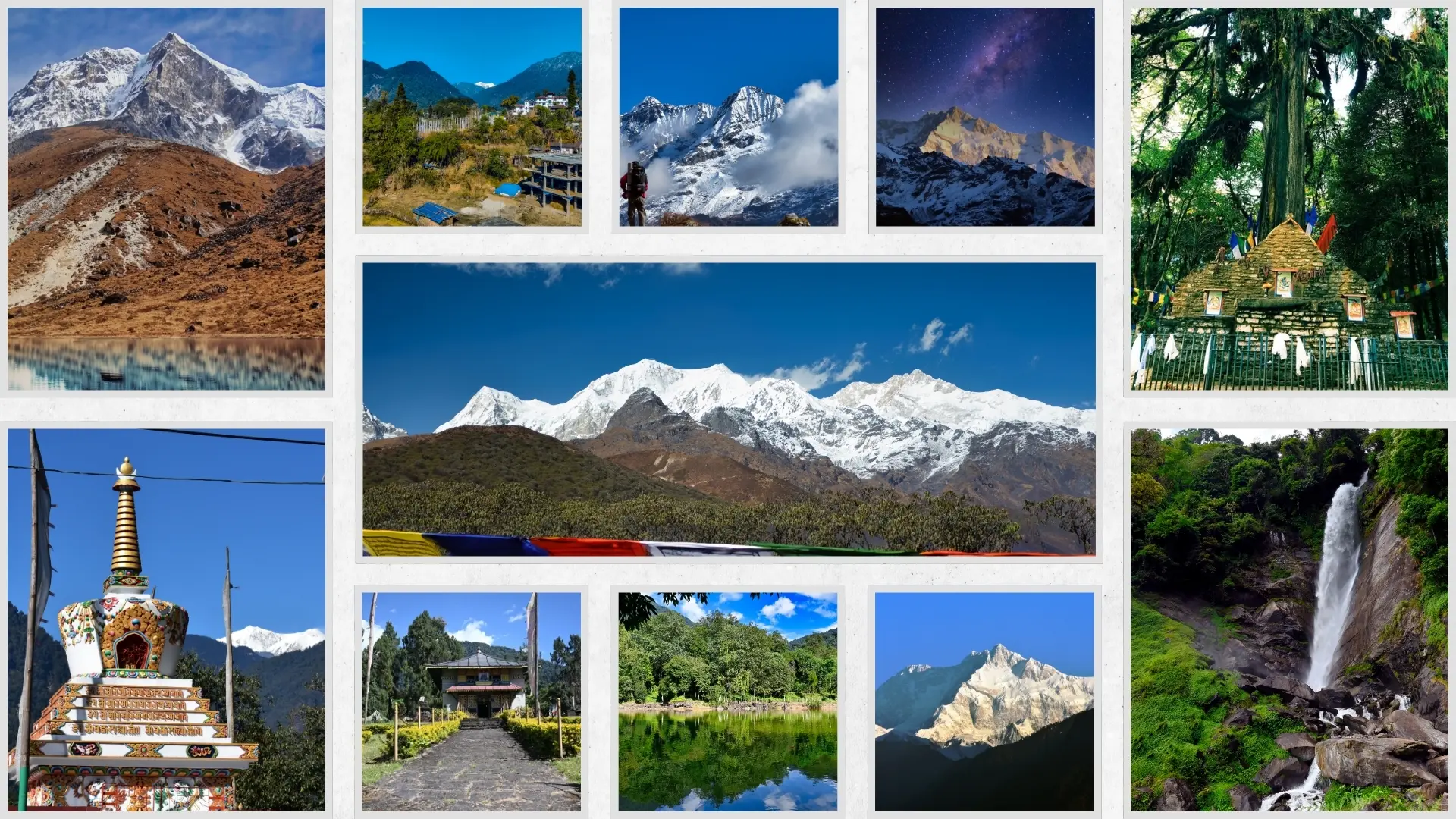
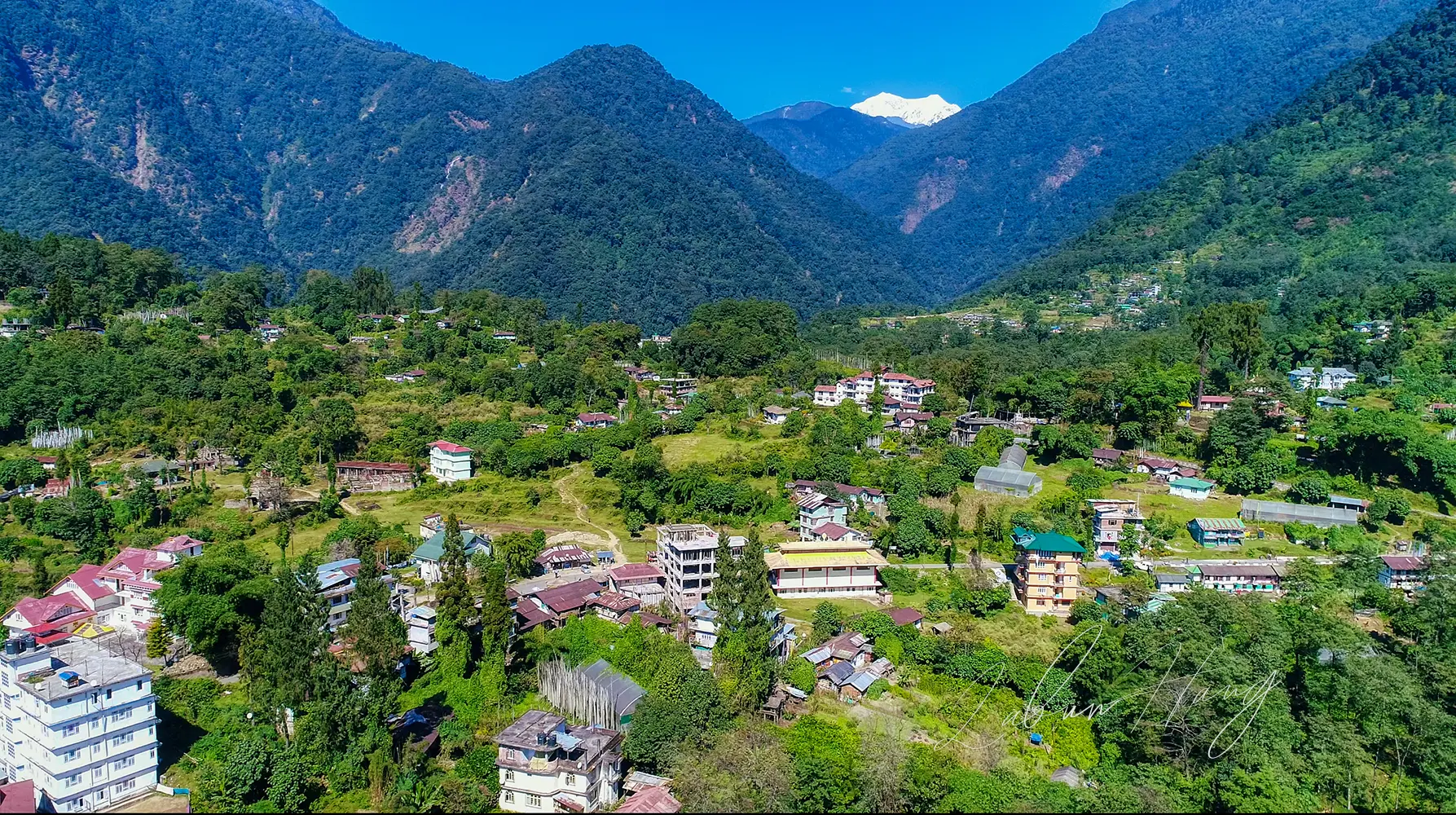
Yuksom sightseeing is easier to enjoy when you plan by route instead of collecting a long list of places. In and around this historic Sikkimese town, you can visit the Norbugang Coronation Throne and Kathok Lake, walk uphill to Dubdi Monastery, discover small local waterfalls and take longer excursions towards Tashiding or Pelling.
Those attractions are not all on the same road. Phamrong Waterfalls is on the Yuksom–Tashiding side, while Kanchenjunga Waterfalls and Khecheopalri Lake belong to a different excursion towards Pelling. Mixing them together without considering the route can waste a good part of your day.
I grew up in Yuksom, and this guide also introduces lesser-known local walks alongside its famous historical places. You will find realistic sightseeing options for one, two or three days, with clear distinctions between independent visits, guided hiking routes and vehicle excursions. For the history, communities and practical background of the town, read my main Yuksom travel guide.
Yuksom Sightseeing at a Glance: Choose Your Route
Four ways to explore Yuksom
Choose a walking day, a longer hike or an excursion by road. Each has its own rhythm.
Yuksom walking circuit
Tashi Tenka, Dubdi Monastery, Kathok Lake, Norbugang and possibly Tsong Elephant Falls.
Phamrong or Hongri
Choose the Tashiding-side waterfall shortcut or the separate Dubdi–Tsong–Hongri trail.
Falls, lake & Pelling
Kanchenjunga Falls, Khecheopalri Lake, Rimbi, then selected Pelling attractions.
Sigey Pokthang Pokwa
A separate guided Mangsabung heritage experience, not a roadside photo stop.
The Yuksom Historical Walking Circuit
This is where I would begin. The main historical places can be grouped together, but the hill climb to Dubdi and the side trip to Elephant Falls make the route longer than a simple stroll through the centre. A local guide can help if you plan to take lesser-known trails.
Tashi Tenka Viewpoint: Begin early if the weather is clear
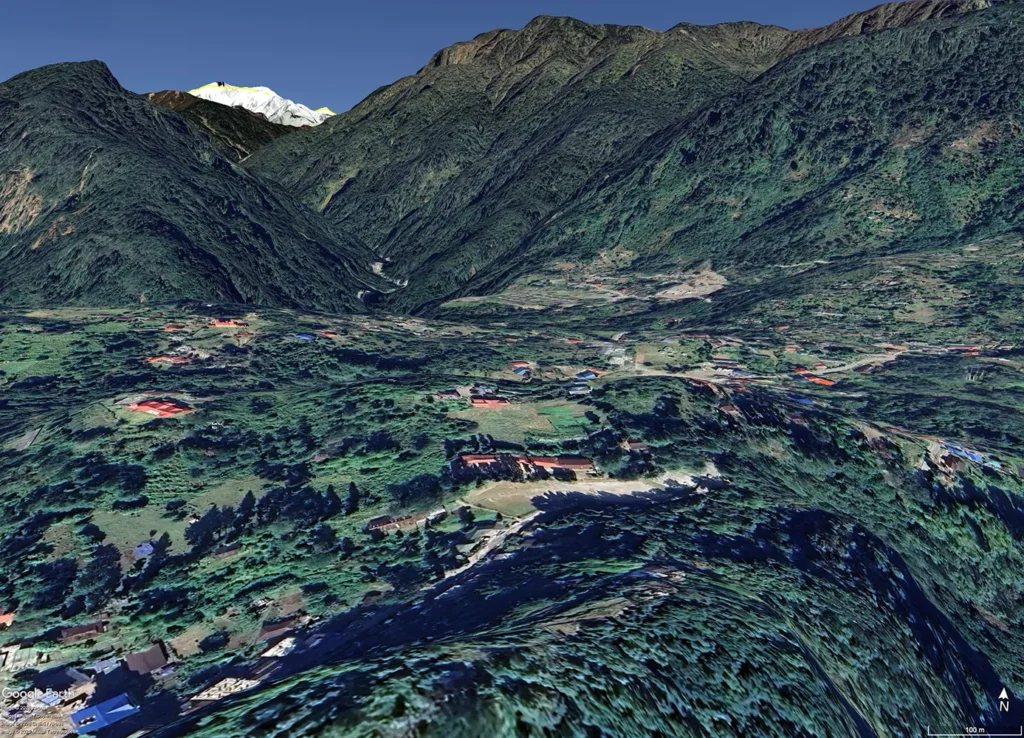
Tashi Tenka is associated with Yuksom’s royal past and overlooks the surrounding town and hills. It is worth checking the sky before making an early visit, as cloud and mist can hide the distant mountain scenery. If conditions are favourable, enjoy the view before returning to your hotel or homestay for breakfast.
Do not build the entire day’s plan around a guaranteed sunrise. Mountain visibility changes quickly, and there is still plenty worth exploring if the viewpoint is cloudy.
Dubdi Monastery: The important uphill walk
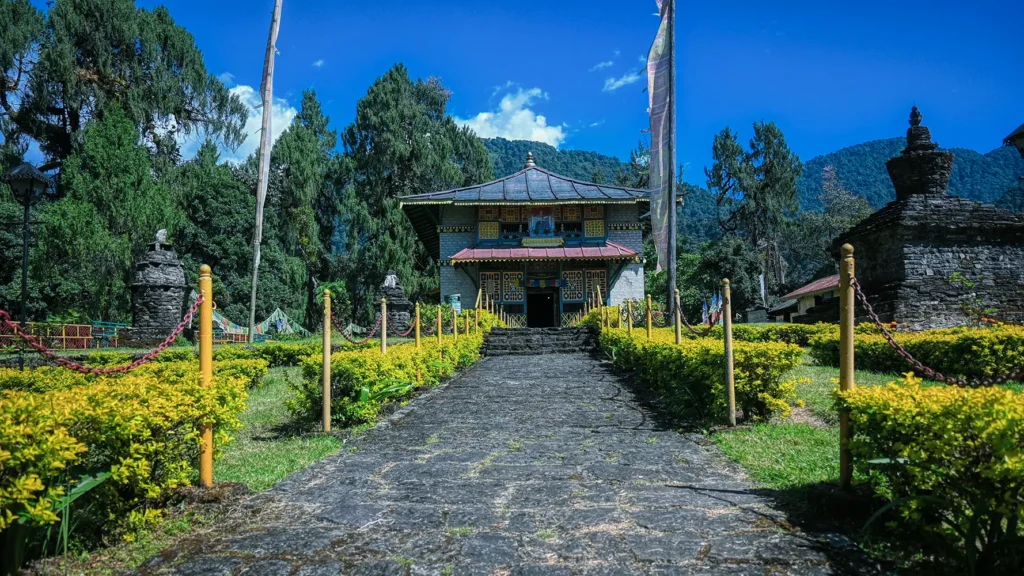
After breakfast, make your way towards Dubdi Monastery. One of Sikkim’s oldest monasteries, it sits on a wooded hill above Yuksom. The route involves a real ascent, not simply a short roadside visit. Depending on your starting point and walking pace, allow roughly half an hour to an hour for the uphill section, plus time at the monastery and for the return.
The walk to Dubdi leaves the town behind and climbs through wooded hillside paths and steps. Wear shoes suitable for uneven or damp ground, allow enough time for the ascent and treat the monastery as a place of worship.
Tsong Elephant Falls: The lesser-known local waterfall
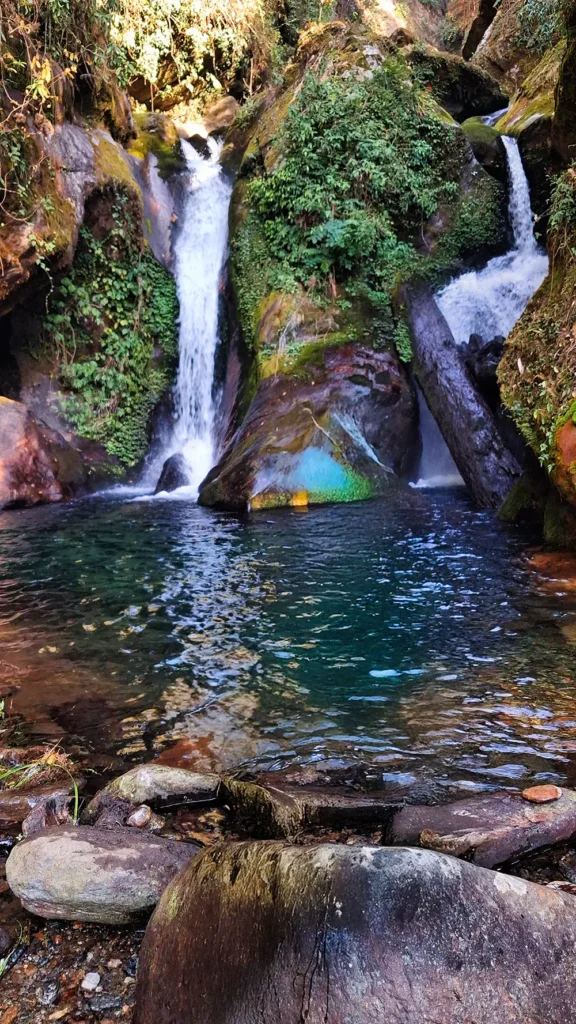
A smaller waterfall near the Dubdi–Tsong side of Yuksom has recently become known locally as Tsong Elephant Falls. It is separate from Phamrong Waterfalls. The source and flow of waterways in the wider landscape do not make these two tourist places the same.
A visit may be combined with the Dubdi side of the walking route when the local paths are accessible. Because this is a newer sightseeing spot, obtain current directions from a knowledgeable local guide rather than relying on generic map pins. It is also not the famous Elephant Falls in Shillong, Meghalaya.
Kathok Lake: A sacred lake inside Yuksom
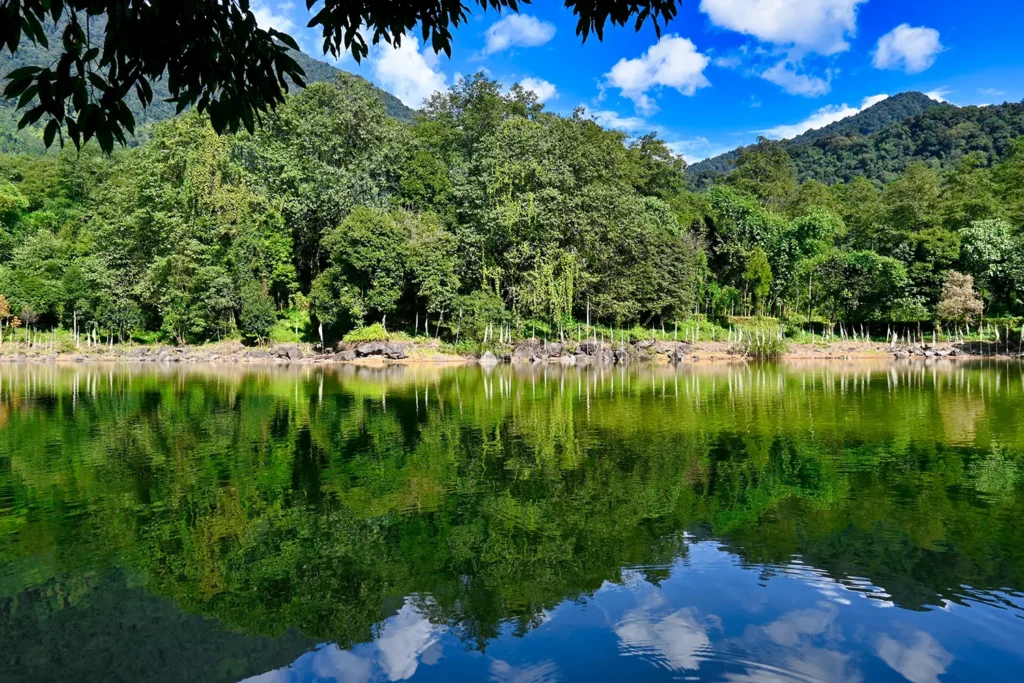
Kathok Lake, also written Karthok Lake, belongs to the historic Yuksom circuit. It is close to the town’s religious landmarks and provides an attractive place to slow down after a longer walk. Its sacred character deserves respect, even when the surroundings are quiet.
Importantly, Kathok Lake is not Khecheopalri Lake. The latter is a different pilgrimage site roughly 28 km from Yuksom by road. Confusing their names can lead visitors to plan the wrong route.
Norbugang Coronation Throne and Kartok Monastery
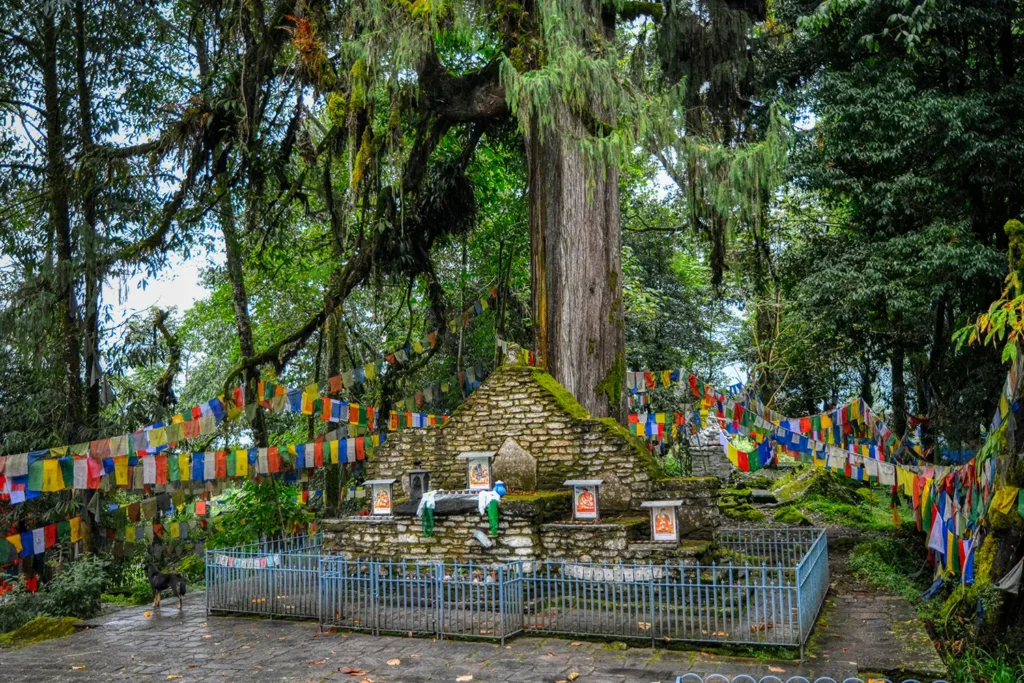
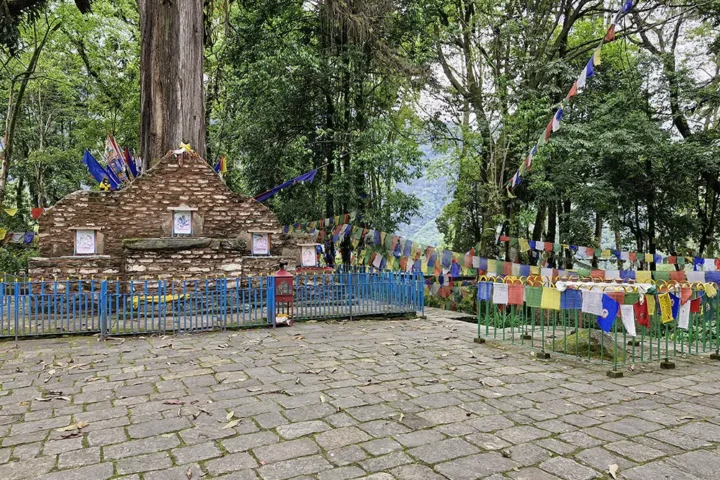
Norbugang is the place most closely associated with the coronation of Phuntsog Namgyal as Sikkim’s first Chogyal in 1642. The traditional account involves three lamas, not four. The stone throne, chorten and surrounding sacred landscape explain why Yuksom occupies such an important place in Sikkimese history.
Nearby Kartok (Kathok) Monastery is another useful stop in the same local area. Visiting Norbugang, Kathok Lake and Kartok together is a sensible way to explore the town without unnecessary backtracking.
Can you do this in a day? Many visitors can cover Tashi Tenka, Dubdi and the main heritage sites if they start early. Adding Tsong Elephant Falls depends on trail conditions and walking ability. A long hike to Hongri or Phamrong should not be automatically added to this already busy day.
Longer Hiking Routes: Phamrong Waterfalls and Hongri Monastery
Phamrong Waterfalls: On the road towards Tashiding
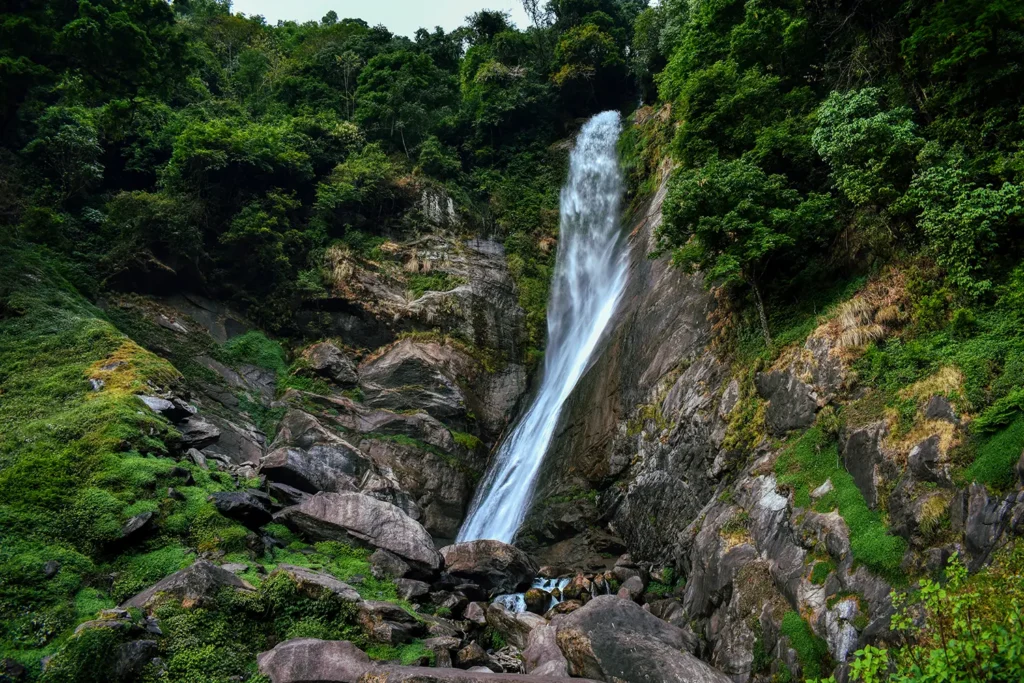
Phamrong Waterfalls is on the Yuksom–Tashiding road, above the roadside on the approach towards Yuksom from Tashiding. It is a separate attraction from the smaller Tsong Elephant Falls near the Dubdi side of town. You can visit Phamrong by vehicle, or take one of the shorter local hiking paths with a guide.
The waterfall can be approached from the roadside, but some travellers prefer to hike from Yuksom using local shortcuts. Those connecting paths can save considerable road walking, but are not necessarily easy to follow independently.
If you want to hike, hire a local guide and allow up to approximately two hours for the outward journey, depending on fitness, trail conditions and the route chosen. You still need time at the waterfall and for the return. Slippery ground around running water makes wet-weather decisions particularly important.
Hongri Monastery: A separate heritage hiking day
The longer route beyond Dubdi towards the Tsong side can continue through hillside settlements and cardamom-growing areas towards Hongri Monastery, also described as Hongri Gompa. This is not the short central Yuksom heritage loop.
The Dubdi–Tsong–Hongri trail is a longer hillside walk that deserves its own day. Arrange a local guide who knows the route and can advise on the walking conditions. Do not combine the Hongri hike with a Phamrong Waterfalls hike on the same day.
Birdwatching, local walks and outdoor activities
The wooded routes around Dubdi, the surroundings of Kathok Lake and quieter paths near Yuksom provide rewarding opportunities for patient birdwatchers. Take binoculars, keep noise low and remember that sightings are never guaranteed.
The helipad-side locality and surrounding residential paths can also offer a look at everyday Yuksom, away from the familiar monuments. These are people’s homes and neighbourhoods, so ask permission before photographing residents or entering private areas.
Adventure activities such as climbing at Yeba Rock should only be arranged with an operator able to confirm safe access, suitable equipment and qualified supervision. Do not assume that prices or instructor availability quoted in older blogs remain current.
Kanchenjunga Waterfalls and Khecheopalri Lake: A Different Direction
This excursion is not the Tashiding road route. Visitors commonly combine the two attractions, either as a vehicle journey with additional stops or, for experienced walkers, through an ambitious guided hiking plan involving local shortcuts.
Kanchenjunga Waterfalls: About 10 km from Yuksom
Kanchenjunga Waterfalls is approximately 10 km from Yuksom by road. The waterfall is reached from a roadside stopping area, with steps leading closer to the cascade. Water flow can be dramatic after rainfall, although spray and damp steps demand care.
For a vehicle excursion towards Pelling, this works well as the first sightseeing stop. It is not necessary to spend an entire day here alone.
Khecheopalri Lake: About 28 km from Yuksom

Khecheopalri Lake is approximately 28 km from Yuksom by road. Known as the wish-fulfilling lake, it is sacred to Buddhist and Hindu pilgrims. The traditional belief that birds remove leaves from the lake’s surface forms part of its religious heritage and should not be presented as a guaranteed sighting.
The wetland became Sikkim’s first Ramsar Site in February 2025, recognising its ecological importance alongside its long-standing religious significance. Allow time to experience the lake quietly, follow site rules and respect visitors who come here to pray.
Option A: Guided hiking towards the lake
Local shortcuts can connect parts of this landscape more directly than the main roads. A guided hike linking the Kanchenjunga Waterfalls and Khecheopalri area may be planned for a full day by suitable walkers. But a road-distance estimate is not a hiking distance, and the precise trails should never be assumed from an online map.
Discuss the starting point, total walking distance, climbs, fitness requirements and return transport with a knowledgeable local guide before committing to the trip. It is not a suitable independent shortcut for newcomers to the region. This hiking plan does not also include the distant Pelling attractions.
Option B: Drive from Yuksom towards Pelling
For the wider road excursion, start from Yuksom around 7 AM in a hired vehicle. A sensible order is Kanchenjunga Waterfalls, then Khecheopalri Lake, followed by the Rimbi area and onward towards Pelling.
- Kanchenjunga Waterfalls: Your first waterfall stop after leaving Yuksom.
- Khecheopalri Lake: Spend meaningful time at the sacred wetland rather than rushing.
- Rimbi Orange Garden and Rimbi Waterfalls: Add these if access, season and timing permit.
- Darap area: Continue towards Pelling through its surrounding settlements, with a possible stop in the village area.
- Pelling: Choose from the Skywalk, Pemayangtse Monastery, Rabdentse Palace Ruins and Sidkeong Tulku Bird Park.
These are potential stops along a long route, not a promise that every one can be comfortably visited in a single day. Rabdentse involves walking, and individual attractions may close before you arrive. If you want to explore all four Pelling attractions properly and still enjoy the lake, split the itinerary or stay overnight in Pelling.
The Tashiding Road: Phamrong Falls and Tashiding Monastery
If you are travelling by vehicle in the opposite direction, a separate outing can combine Phamrong Waterfalls and Tashiding Monastery. The latter is an important Buddhist pilgrimage site with a rich religious history, including its association with the Bumchu festival.
The drive-and-visit option is different from hiking to Phamrong by shortcut. Leave enough time for stops, walking and the return to Yuksom. Do not confuse this route with the Kanchenjunga Falls–Khecheopalri–Pelling circuit.
Sigey Pokthang Pokwa: A Distinct Mangsabung Experience
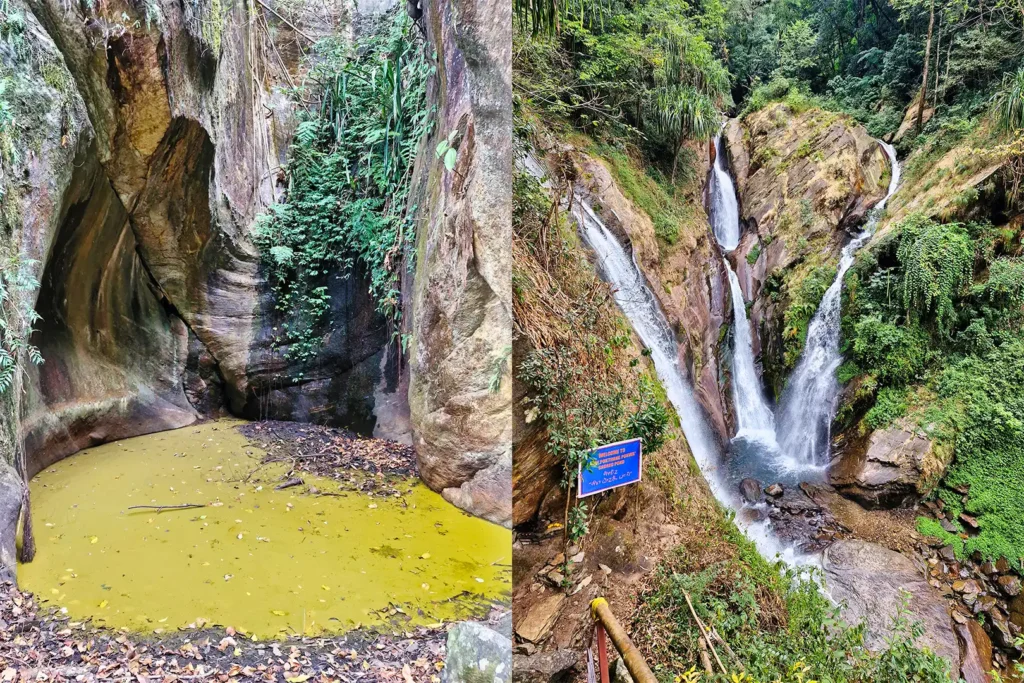
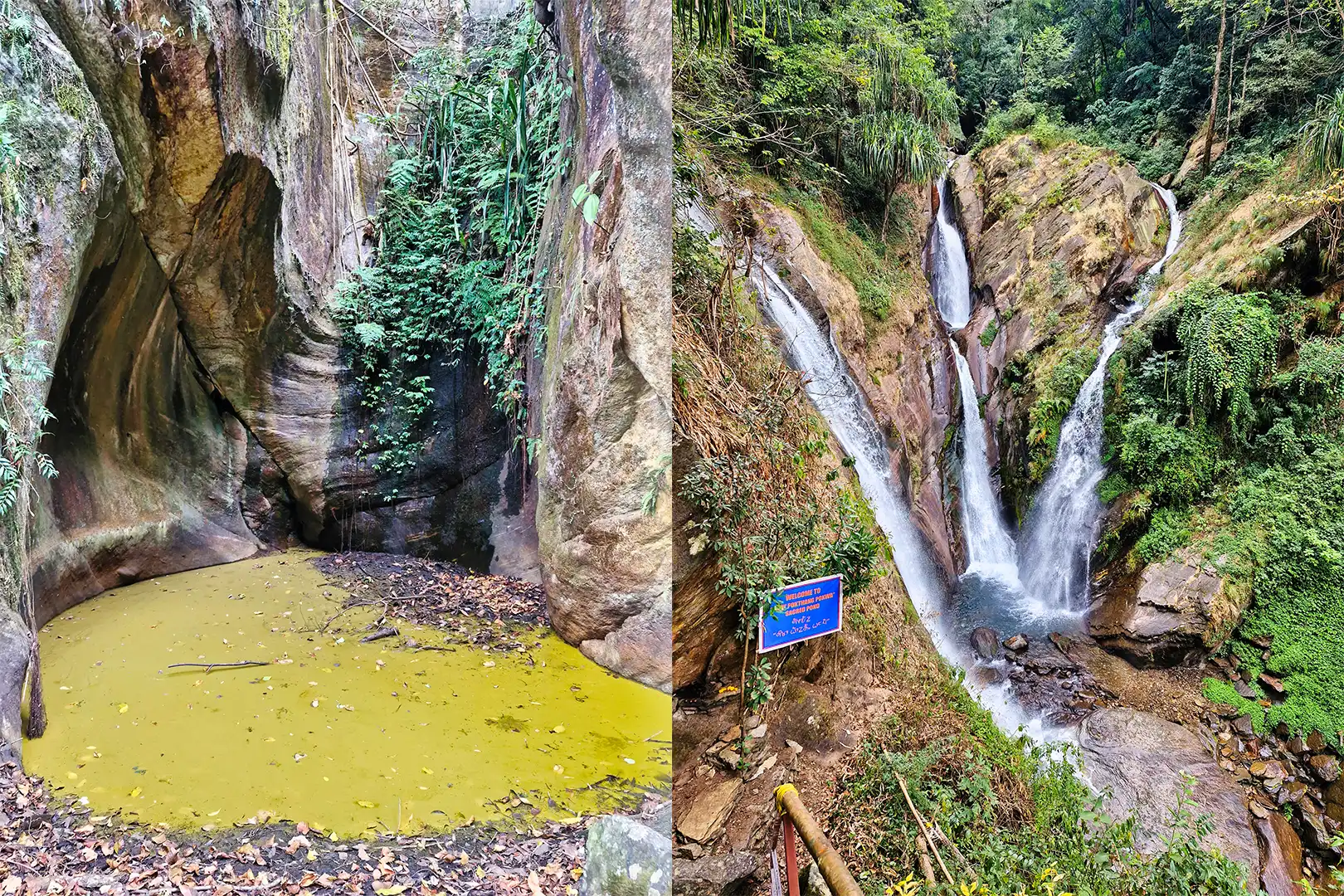
One of the lesser-known but culturally significant places near Yuksom is Sigey Pokthang Pokwa, associated with Mangsabung and the traditions of the indigenous Limboo community. This is a sacred pond and waterfall landscape connected with local oral traditions, not merely another waterfall to add between two road stops.
The journey involves a demanding descent on paths and constructed steps, with exposed or slippery sections in places. A local guide, proper footwear, favourable weather and a realistic assessment of your fitness are essential. Heavy rain is a good reason to postpone.
I have written a separate detailed guide to Sigey Pokthang Pokwa and the Mangsabung heritage area. Give it a dedicated day rather than mixing it with the long Pelling road excursion.
Practical Yuksom Sightseeing Advice
When is a guide necessary?
Many central historical landmarks can be visited independently. However, hire a knowledgeable local guide for unfamiliar forest shortcuts, the Phamrong Falls hiking route, the longer Hongri trail, the Tsong Elephant Falls extension where navigation is uncertain, and the challenging Mangsabung descent. For a guided lake hike, agree on the complete route and safe return plan in advance.
Cash, ATMs and digital payments
There is currently no regular bank ATM in Yuksom town. Withdraw sufficient cash before arriving, especially for guides, transport or emergencies. Shops, hotels and homestays widely accept QR-based UPI payments, including Google Pay, although transactions require working connectivity.
Handheld micro-ATM services may occasionally be accessible through a local Gram Panchayat unit, and some shopkeepers may exchange a small amount of cash for a QR payment with a service charge. Neither should be treated as a dependable replacement for having cash on hand.
Accommodation and local transport
Yuksom now offers budget and more comfortable hotels, luxury-oriented accommodation and established homestays. Choose based on your preferred location and whether you want help arranging transport or a local guide. A hired vehicle is more practical than attempting the long Pelling circuit on foot. For getting to Yuksom from Bagdogra, New Jalpaiguri, Siliguri or Gangtok, see my How to Reach Yuksom guide.
Do you need trekking permits for sightseeing?
Ordinary sightseeing around town is not the same as trekking into protected areas. Foreign visitors must comply with the applicable Sikkim entry permit (Inner Line Permit or Restricted Area Permit) rules. These are separate from trekking and national park permissions.
For regulated routes such as Dzongri and Goechala, registered local operators coordinate the necessary trekking permits and protected-area procedures. Yuksom has local arrangements for designated treks that start here, but it is not a general issuing centre for unrelated areas of Sikkim. Confirm nationality-specific rules with the Sikkim Tourism and Civil Aviation Department and a registered local operator. For the trekking route, itinerary and permit overview, see the Goechala Trek guide.
Weather and visiting seasons
Spring and autumn are popular for general sightseeing. Waterfalls can be more powerful during rainy months, but heavy rainfall increases the risk of landslides, slippery paths and poor visibility. Choose safety and flexibility over completing a predetermined checklist.
What about entry fees and taxi prices?
Transport fares, attraction fees, business hours and guide rates change. A full-day Pelling circuit, a short town taxi ride and a guided hillside trek involve different arrangements. Obtain current quotations locally rather than relying on fixed figures from older articles.
Suggested Itineraries: One, Two and Three Days
One day: The historical core
Early morning: If conditions are clear, visit Tashi Tenka and return for breakfast. Morning: Walk up to Dubdi Monastery, with an optional guided Tsong Elephant Falls extension. Later: Visit Kathok Lake, Kartok Monastery and Norbugang Coronation Throne. If the uphill walk takes longer than expected, remove a stop rather than rush.
Two days: Add one major excursion
Day 1: Enjoy the local heritage circuit at a comfortable pace. Day 2: Choose one: a guided Phamrong Waterfalls hike, a longer Hongri Monastery walk, or a vehicle journey to Kanchenjunga Waterfalls and Khecheopalri Lake. Each is a different direction or level of effort.
Three days: Explore more of West Sikkim
Day 1: Historic Yuksom. Day 2: Phamrong Waterfalls and the Tashiding side by vehicle, or the Hongri route on foot. Day 3: An early road departure for Kanchenjunga Waterfalls, Khecheopalri Lake and selected Rimbi or Pelling attractions. Extend the stay if you want to cover all of Pelling without hurrying.
Four days or longer: Include Mangsabung
Reserve another day for Sigey Pokthang Pokwa or enjoy less demanding local walks. A longer stay should give you time to appreciate Yuksom and the surrounding communities, not only an opportunity to add more destinations to a list.
Frequently Asked Questions About Yuksom Sightseeing
What are the must-see places in Yuksom itself?
Norbugang Coronation Throne, Kathok Lake, Kartok Monastery, Dubdi Monastery and Tashi Tenka are core historical and scenic stops. Tsong Elephant Falls is a less-established local extension.
Are Kathok Lake and Khecheopalri Lake the same?
No. Kathok Lake is in Yuksom; Khecheopalri Lake is approximately 28 km away by road and requires a separate excursion.
Is Phamrong Waterfalls near Tsong Elephant Falls?
They are separate visitor attractions. Phamrong Waterfalls is on the Yuksom–Tashiding road, while the smaller Tsong Elephant Falls is approached from the Dubdi–Tsong side.
Can I visit Kanchenjunga Waterfalls and Khecheopalri Lake in one day?
Yes, the two sites can be combined by vehicle. A guided hiking outing may also be possible for fit walkers, subject to a locally confirmed route and return arrangements.
Can I visit Pelling on the same day?
A vehicle trip can continue towards Pelling through the Rimbi and Darap areas, but visiting every Pelling attraction as well may be rushed. Choose priority stops or spend an additional day.
Do I need a guide for Yuksom sightseeing?
Central historic sites are generally straightforward. Unfamiliar forest paths, Phamrong hiking shortcuts, Hongri, Tsong Elephant Falls extensions and the Mangsabung gorge are better explored with local guidance.
How many days are enough for Yuksom sightseeing?
One day covers the main historic places if you are comfortable walking. Two to three days let you add longer excursions. Plan another day for Mangsabung or unhurried exploration.
Final Thoughts: Explore Yuksom Without Rushing It
Yuksom is not merely the starting point for Dzongri and Goechala. Its religious landmarks, forests, smaller community places and surrounding roads offer very different experiences. Knowing which direction each attraction lies in is the key to a useful sightseeing plan.
Start with the historical places, choose a hike that suits you, and give the lake or waterfall circuit the time it needs. The aim is not to finish the longest list. It is to see Yuksom properly and return safely, with a better understanding of the place.

Conversation