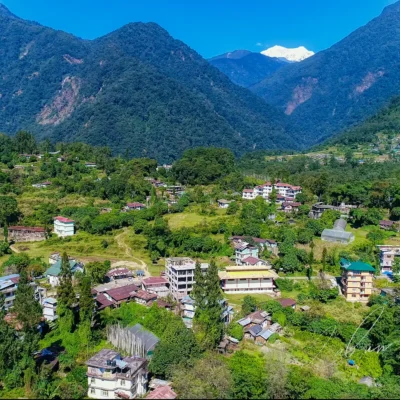


Yuksom is the gateway to Kanchenjunga National Park and the adventure capital of West Sikkim. As the former capital of Sikkim and the starting point for the legendary Goechala trek, Yuksom sightseeing offers a rare blend of historical depth and adrenaline-pumping outdoor activities. This small Himalayan village sits at 1,780 meters and serves as the base camp for serious trekkers attempting to reach the world’s third-highest mountain.
But here’s the problem: most online guides are outdated, geographically confused, and written by people who’ve never set foot in West Sikkim. They mix up waterfalls, misplace monasteries, and send travelers on wild goose chases through unmarked forest trails.
This guide is different. It covers the Walking Loops for history lovers, the Adventure Spots for climbers and trekkers, and the Driving Excursions to sacred lakes and hidden waterfalls. Whether you’re spending two days or a full week, this itinerary will help you experience Yuksom like a local.
The Historical Walking Loop (Day 1)
Yuksom’s town center is compact and walkable. All historical sites sit within a 3-kilometer radius, making this an ideal first-day orientation. Start early to beat the fog that typically rolls in by mid-morning. This Yuksom sightseeing circuit covers the essential historical landmarks.
Norbugang Coronation Throne:
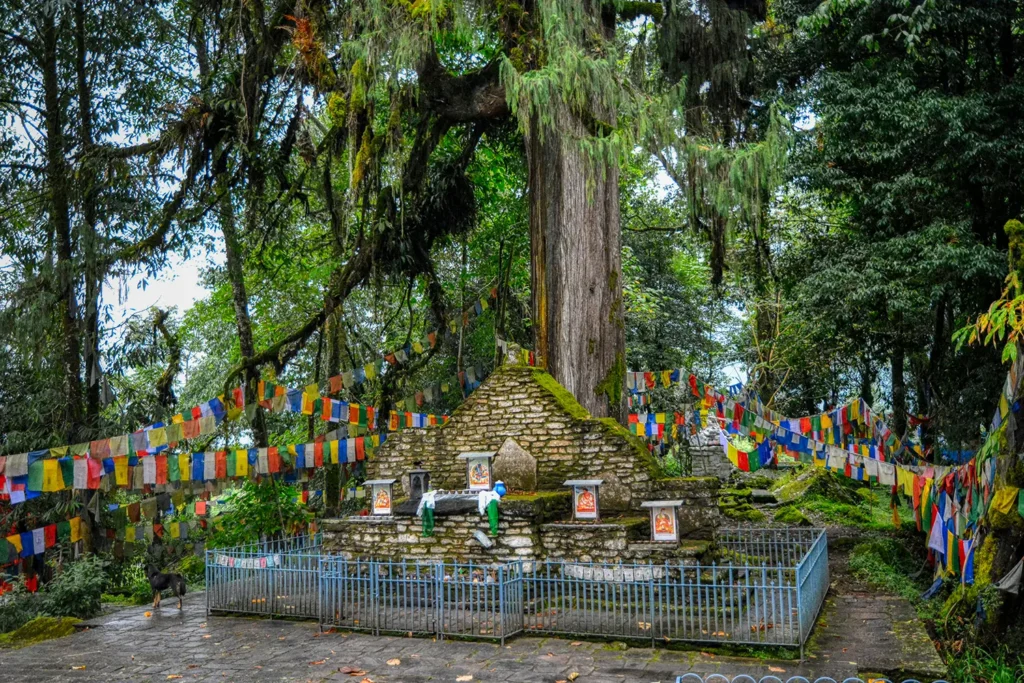
The Norbugang Coronation Throne marks the exact spot where Phuntsog Namgyal was crowned as the first Chogyal (king) of Sikkim in 1642. It is the birthplace of Sikkim as a kingdom.
The site features a sacred stone throne surrounded by four directional chortens, representing the four cardinal lamas who performed the coronation ceremony. Ancient cypress trees tower overhead, and prayer flags create a canopy of color. The energy here is palpable, even for non-believers.
Location: 10-minute walk from town center
Best time: Morning (7 AM – 10 AM) for soft light and solitude
Kathok Lake: The Sacred Mirror
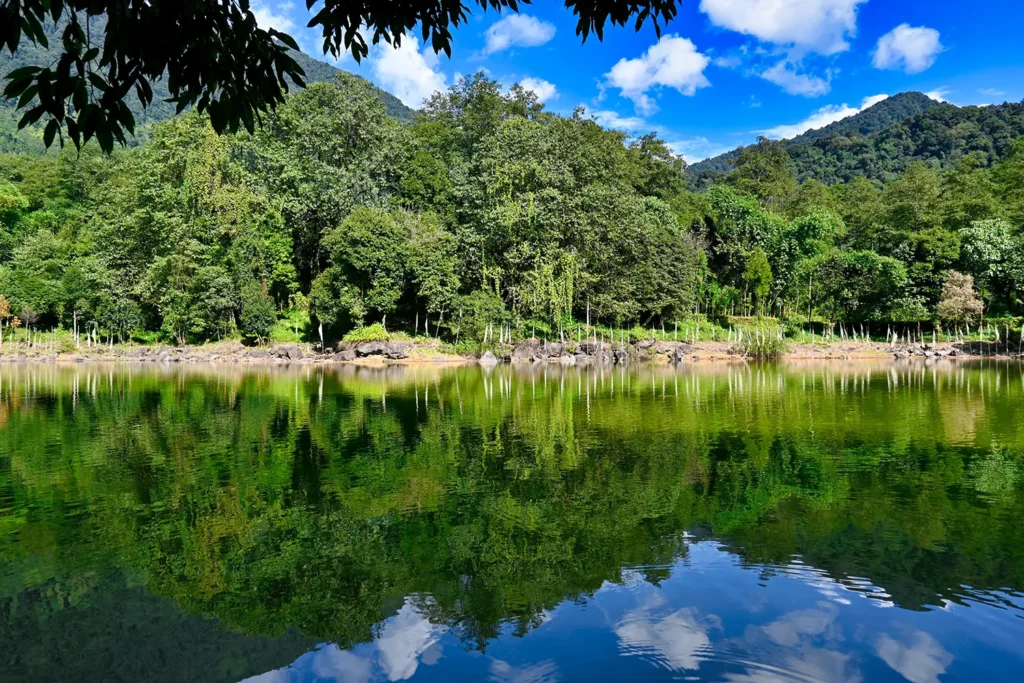
Just a short walk from the Coronation Throne, Kathok Lake is considered sacred by locals and serves as a peaceful complement to the historical monuments. Surrounded by prayer flags and dense greenery, this small lake offers mirror-like reflections on calm mornings.
The lake sits in a natural depression and is part of the same sacred geography that made Yuksom the spiritual center of early Sikkim. It’s an ideal spot for quiet contemplation or bird watching—Grey Treepies and Himalayan Bulbuls are commonly spotted in the surrounding trees.
Time needed: 20-30 minutes
Photography tip: Visit at sunrise for glass-like reflections
Dubdi Monastery: The Ancient Hermitage
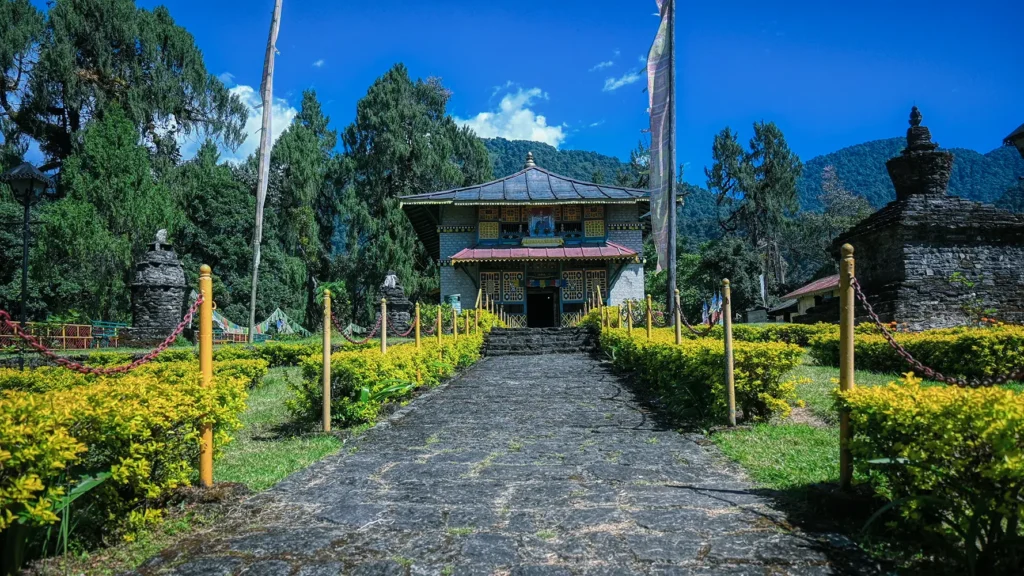
Dubdi Monastery is the oldest monastery in Sikkim, established in 1701 by Chogyal Namgyal. The name translates to “The Retreat” in Sikkimese Bhutia. The monastery sits atop a forested hill, and the hike is your cardio startup—it’s steep but mercifully short, taking about 40 minutes from the town center.
The trail passes through dense rhododendron forests and offers glimpses of prayer flags strung between ancient oaks. Inside the monastery, you’ll find original murals depicting Buddhist cosmology and a meditation hall that still hosts monks during retreat seasons. The altitude gain is approximately 200 meters, so pace yourself.
Timings: Dawn to dusk (no fixed hours)
Entry: Free (donations welcome)
Tsong Elephant Falls: Yuksom’s Secret Cascade
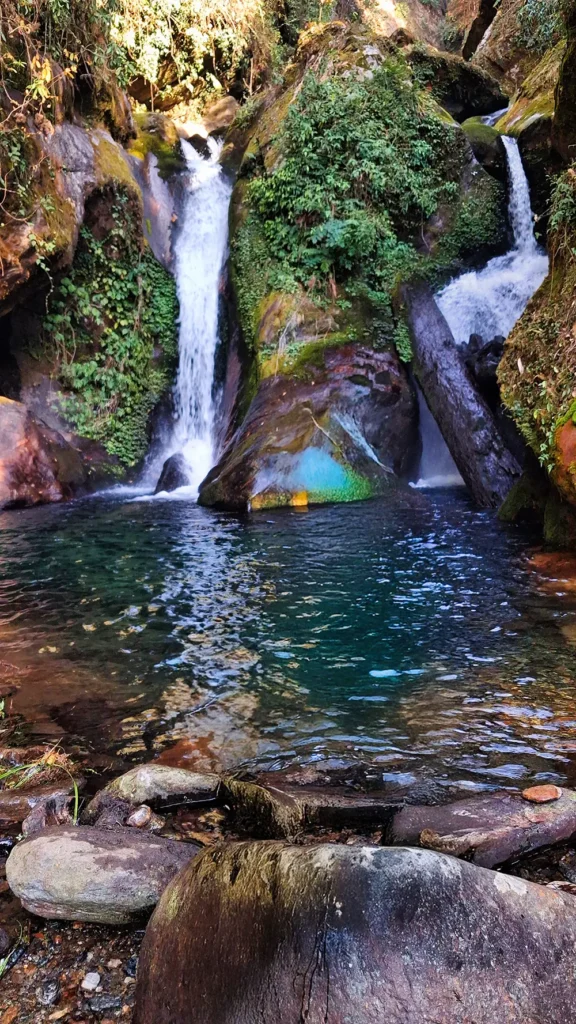
Located near the base of Dubdi trail, Tsong Elephant Falls is Yuksom’s best-kept secret. This is a seasonal waterfall that roars during the monsoon months (June-September) and trickles to a gentle stream in winter.
[CRITICAL CLARIFICATION]: Do NOT confuse this with the famous Elephant Falls in Shillong, Meghalaya. Google Maps and several travel blogs get this wrong, often mixing up locations or providing incorrect GPS coordinates. Tsong Elephant Falls is specific to Yuksom and sits within the Limboo community forest area.
The approach involves a short 15-minute walk from the main road. Local guides can point you to the trail head near the Yuksom taxi stand.
Tashi Tenka Viewpoint: The Conditional Vista
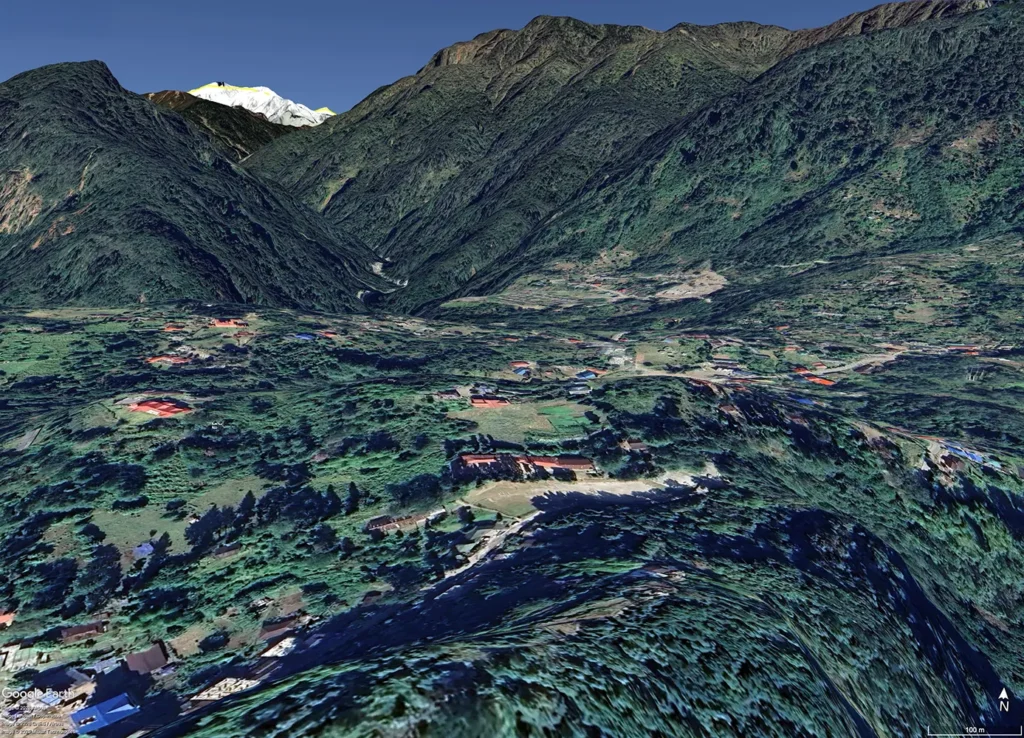
Tashi Tenka is a hilltop viewpoint offering breathtaking 360-degree panoramic vistas of West Sikkim’s landscape. From this elevated vantage point, you’ll witness Yuksom township nestled in the valley below, the majestic Mt. Kabru (7,338m) towering in the distance, winding river valleys, neighboring villages scattered across the horizon, and multiple mountain ranges stretching as far as the eye can see.
However, this spectacular viewpoint comes with a critical condition: visit only when the sky is clear. If clouds blanket the valleys or mist obscures the peaks, skip it entirely. The 20-minute uphill walk isn’t worth it for a white-out view where you’ll see nothing but fog.
Best time to visit: Check weather conditions at your guesthouse before heading out. The best visibility windows are typically early morning (6 AM – 8 AM) or late afternoon (4 PM – 5 PM) during the dry months of October-November and March-May, when clear skies reveal the full grandeur of this all-around panoramic viewpoint.
The “Deep Local” Adventure: Sigey Pokthang Pokwa (Day 2)
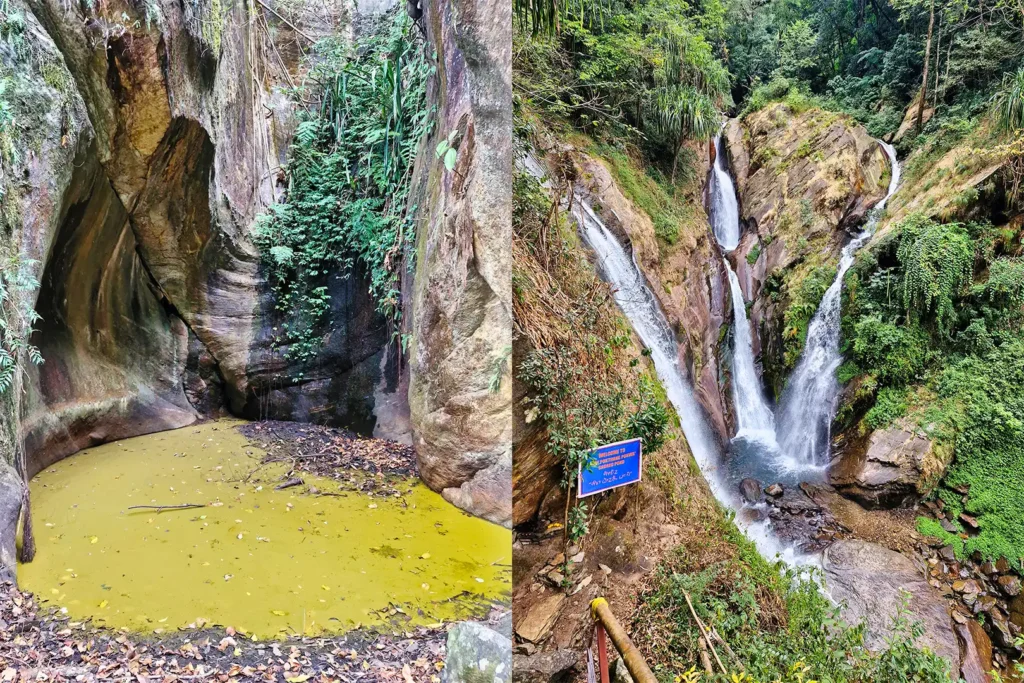
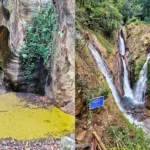
This is not your typical tourist trail, and it’s not widely known outside local communities. Sigey Pokthang Pokwa is a mystical sacred pond and waterfall hidden in the gorge below Mangsabung village, just 5 kilometers from Yuksom. In the Limboo (Tsong) language, “Sigay” means Leopard, “Pokthang” means “come by raising,” and “Pokwa” means pond—the Leopard Pond, steeped in mythology.
The Sacred Site and Mythology
According to Limboo legend, Warak Mang (the Ocean God) descended into this very pond centuries ago. He blessed the people of Mangsabung by creating the pond on bare rock and gifting them golden fish. When the community later neglected the sacred site, the angry deity created two spirit leopards that terrorized the village. After hunters killed these sacred leopards, a curse fell upon Mangsabung—bringing illness and crop failure—until massive purification rituals restored balance.
Today, Sigey Pokthang Pokwa remains an active pilgrimage site for the Limboo community, where shamans have performed rituals for centuries.
The Journey
Distance from Yuksom: 5 kilometers to Mangsabung village
Trek to pond: 1 hour descent from Mangsabung
Total round trip: 5-6 hours (plan full day)
The trail begins with a walk through Mangsabung village (“a place surrounded by deities”), a traditional Limboo settlement perched dramatically on a finger ridge between three river gorges: Sidakwa, Ladung, and Phamrong rivers.
From the village, the descent to the sacred pond begins. Until recently, this site was accessible only to experienced locals and shamans who had to climb down sheer cliff faces using wires and roots. The Mangsabung community has since built an extraordinary trail—carrying iron rods and cement bags on their backs down treacherous slopes to construct metal stairs and stone steps carved into the rock face.
What You’ll Encounter
Yabboko Sambhkho Fakku: A sacred meditation cave above the main pond where Limboo shamans have sought visions for centuries. The cave features deliberate stone placements and a natural tunnel carved by time into the cliff face. The atmosphere inside is noticeably cooler—a true power spot.
The Sacred Pond: Rests in a natural stone basin carved by wind and water over centuries. According to elders, it once contained actual golden fish and held immense spiritual power. While that energy has diminished due to modern neglect, the site remains atmospherically powerful.
Wadhum Falls: Multiple cascades of white water thunder down the rock face beside the pond, filling the narrow gorge with spray and sound.
⚠️ CRITICAL WARNINGS:
This is a Full Day Excursion requiring 6-8 hours. It is an immersive spiritual and physical experience. Do not attempt to combine this with other sightseeing spots.
Not recommended for:
- Children under 10 years
- Anyone with mobility issues or fear of heights
- People in poor physical condition
The trail involves: Metal stairs on cliff faces, vertical descent into gorges, exposed sections, and requires sure-footedness. If raining, postpone your visit—slippery conditions are dangerous.
Mandatory equipment: Proper trekking shoes with grip (not slippers or smooth-soled sneakers), water (1+ liter per person), snacks, and a local guide.
Responsible Tourism
This is an active sacred site—not just a waterfall photo-op. If you see ritual offerings or ceremonies, observe respectfully from a distance. Do not leave your own offerings (scarves, coins)—these accumulate and damage the site. Practice Leave No Trace principles strictly.
How to arrange: Hire a local guide through Yuksom homestays or in Mangsabung village (₹1,000-₹1,500). Guides provide safe navigation, share complete mythology, and support the community that built this incredible access trail.
Best Season: October-December (clear skies, flowing waterfalls, dry trails) or April-May (rhododendron bloom)
Avoid: June-September monsoon (slippery, potentially dangerous)
Bird Watching: Yuksom Sightseeing for Nature Lovers
Yuksom sits at the edge of Kanchenjunga National Park, making it a natural haven for bird watchers. The surrounding forests, farmlands, and high-altitude trails host a rich diversity of Himalayan bird species—an often-overlooked aspect of Yuksom sightseeing that rewards early risers.
Common sightings include Grey Treepies, Himalayan Bulbuls, Rufous Sibias, Green-tailed Sunbirds, and occasionally the Fire-tailed Sunbird or Satyr Tragopan in deeper forested zones.
Best locations: Kathok Lake, Dubdi Monastery trail, village paths around homestays, Tshoka trail
Best time: Early morning (6:00–8:00 AM), especially spring (March–May) and autumn (October–November)
Equipment: Binoculars, camera with zoom lens, muted-colored clothing
Local tip: Many homestays can arrange guided bird walks with locals familiar with the region’s avifauna.
Adventure Activities: Rock Climbing & Trekking
Yuksom isn’t just a historical footnote—it’s a legitimate adventure hub. The region offers rock climbing in Yuksom and serves as the launchpad for some of Sikkim’s most challenging treks.
Rock Climbing: Yeba Rock & Natural Faces
Yeba Rock, located at the top of Yuksom in Khyongtey Khamthang Village, is the primary climbing destination. The site is named after a famous Limboo shaman—”Yeba” meaning shaman in the Limboo language. The rock face offers routes ranging from beginner-friendly climbs to challenging advanced routes. The granite is solid, and the location provides excellent views of the valley.
Natural climbing faces also exist along riverbanks and in higher elevations toward Bakhim. These are less developed but offer pristine climbing experiences for experienced climbers.
How to arrange: Contact local travel operators such as Black Yak Expedition, one of the premium local travel agencies in Sikkim specializing in adventure activities. Sessions typically include equipment rental (harnesses, ropes, helmets) and certified instruction. Half-day sessions start around ₹2,000-₹3,000 per person.
Best season: October-November and March-May (dry rock)
Trekking Hub: Base Camp for Giants
Yuksom is the official starting point for trekking in Sikkim’s most iconic routes:
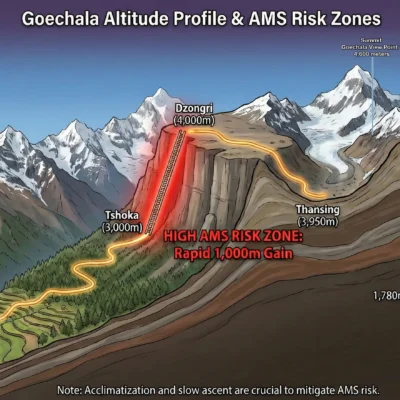
1. Goechala Trek (8-10 days): The crown jewel. This trek takes you to Goecha La pass (4,940m) with face-to-face views of the Kanchenjunga massif. Permits required, and only possible with registered agencies.
2. Dzongri Top Trek (4-5 days): A shorter alternative that reaches Dzongri peak (4,200m) for 360-degree Himalayan panoramas. This is the “greatest hits” version—stunning views without the full Goechala commitment.
3. Dubdi to Hongri Monastery (Day trek): A lesser-known trail connecting two ancient monasteries through rhododendron forests. This 5-6 hour trek offers solitude and birdwatching opportunities, ideal for acclimatization or rest days.
4. Hung Hri (Hongri) Monastery Full-Day Trek: An authentic village heritage route taking you through Tshong village and beautiful cardamom fields to one of Sikkim’s oldest monasteries. The trail is not clearly marked, so a local guide is essential. This trek immerses you in Lepcha community culture and provides a different perspective on Yuksom sightseeing beyond standard tourist circuits. (6-7 hours round-trip, moderate difficulty)
Permits for foreigners: Protected Area Permit (PAP) required for Kanchenjunga National Park
Cost: Multi-day treks range from ₹20,000-₹30,000 (including permits, guides, porters, food, tents)
Extended Yuksom Sightseeing: West Circuit & Tashiding Routes
Places to visit in Yuksom extend beyond the town limits. Two primary routes offer full-day or half-day explorations, each revealing different facets of West Sikkim’s sacred geography.
Option A: The West Circuit (Pelling Road)
This route takes you toward Pelling, covering sacred lakes and powerful waterfalls.

Khecheopalri Lake (27 km, 1 hr 15 mins): Known as the “Wish-fulfilling Lake,” Khecheopalri is a sacred pilgrimage site for both Buddhists and the indigenous Limboo community. Legend says leaves never float on its surface—birds immediately remove them. The lake is surrounded by prayer-flag-draped forests and offers a circumambulation trail (45 minutes).
Admission: ₹20 per person
Facilities: Basic cafeteria, toilets
Kanchenjunga Falls (35 km from Yuksom): This roadside waterfall on the Pelling route cascades from significant height and is best experienced during monsoon (July-September). It’s a quick photo stop, not a destination.
⚠️ HIKING WARNING: If attempting the direct forest trail from Yuksom to Khecheopalri Lake (the shortcut route), a local guide is MANDATORY. The trail is unmarked, passes through dense forest, and has multiple confusing junctions. Several trekkers have gotten lost attempting this without proper guidance. Hiring a guide costs approximately ₹1,500-₹2,000 for the day.
Option B: The Tashiding Route
The southeastern route leads to monasteries and Sikkim’s highest district waterfall.
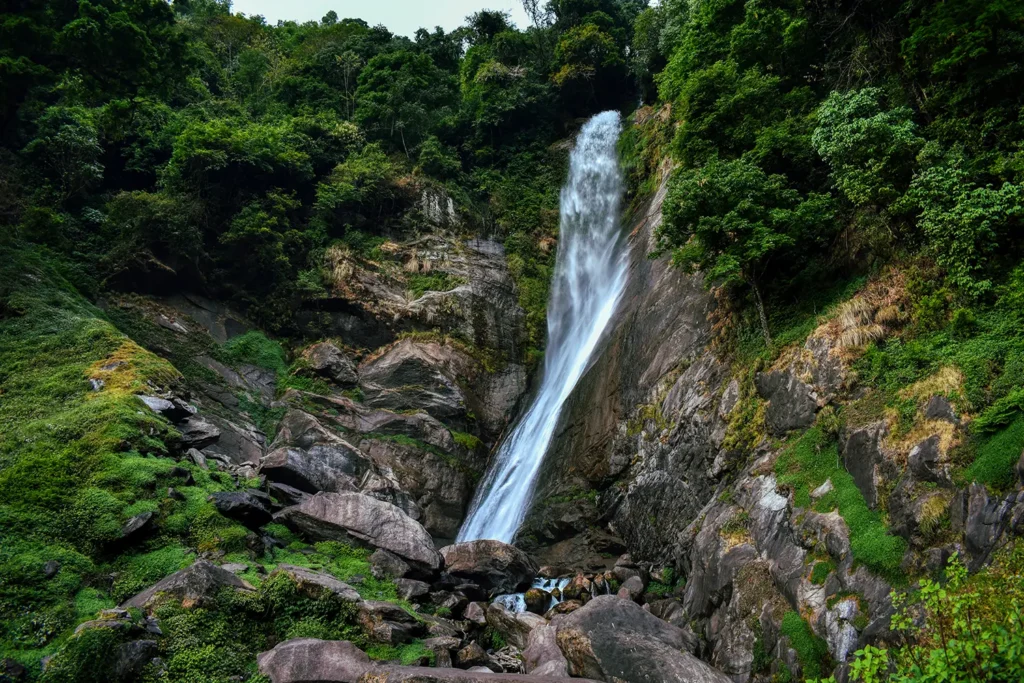
Phamrong Falls (16 km toward Tashiding): [LOCATION CORRECTION] This waterfall is located on the Tashiding route, NOT the Pelling route as many blogs incorrectly state. Phamrong is the highest waterfall in West Sikkim district, plunging approximately 300 feet down a vertical cliff face. The falls are visible from the main road, but a short scramble down offers closer viewing angles.
Best season: May-September (maximum flow)
Tashiding Monastery (19 km, 1 hour): One of Sikkim’s most sacred monasteries, Tashiding sits atop a conical hill offering panoramic valley views. The monastery hosts the annual Bumchu festival where a sacred water vase is opened, and its water level is believed to predict the coming year’s fortune for Sikkim.
The monastery complex features intricate murals, a large prayer wheel house, and numerous chortens. The approach involves climbing approximately 200 steps.
Timings: 6 AM – 6 PM
Entry: Free (donations accepted)
Essential Logistics (Permits & Costs)
Permits
For Foreign Nationals:
IMPORTANT UPDATE: As per the latest directive from the Sikkim Tourism & Civil Aviation Department, no physical PAP/RAP permits are issued at entry points. All foreign nationals must now apply for permits online in advance through the e-FRRO portal at www.efro.in before entering Sikkim.
- Restricted Area Permit (RAP) / Protected Area Permit (PAP): Must be obtained online via e-FRRO portal on the IVFRT platform before arrival. No offline permits will be issued.
- Protected Area Permit (PAP) for Kanchenjunga National Park trekking must also be arranged through registered trekking agencies who will coordinate with e-FRRO requirements.
- Apply immediately upon arrival in India if not done beforehand. No physical permits at Rangpo, Melli, or airport checkpoints.
For Indian Nationals:
- No special permits required for Yuksom town and standard sightseeing.
- Only a valid Photo ID (Aadhaar, Driving License, Voter ID) is needed for entry into Sikkim.
- PAP required for national park trekking (arranged through trekking agencies).
Distance & Travel Time
| Destination | Distance from Yuksom | Drive Time (Approx) |
|---|---|---|
| Pelling | 40 km | 1.5 hrs |
| Tashiding | 19 km | 1 hr |
| Khecheopalri Lake | 27 km | 1 hr 15 mins |
| Gangtok | 123 km | 5 hrs |
Road conditions: The Yuksom-Pelling road is narrow and winding. Landslides are common during monsoon (June-September). Always check road status before departing.
Taxi Fare Estimates
Rates vary by season and fuel costs. These are current approximate ranges:
| Trip Type | Estimated Cost Range |
|---|---|
| Local Sightseeing (Half Day) | ₹3000 – ₹4000 |
| Drop to Pelling | ₹4000 – ₹5000 |
| Full Day West Circuit | ₹ 5000 + |
Tip: Share taxis are available from Yuksom taxi stand for popular routes (Pelling, Gangtok). These are significantly cheaper (₹200-₹500 per seat) but operate on fixed schedules and full-capacity departure.
When to Visit
Best months: October-November (post-monsoon clarity, rhododendron seed pods) and March-May (rhododendron bloom, pre-monsoon warmth)
Avoid: June-September (heavy monsoon, landslides, leech-infested trails)
Winter (December-February): Possible but cold. Temperatures drop to near-freezing at night. Higher-altitude treks are snow-covered and require specialized equipment.
Where to Stay for Your Yuksom Sightseeing Base
Choosing the right accommodation enhances your Yuksom sightseeing experience, especially when you need early starts for treks or monastery visits.
Homestays: The Authentic Choice
Yuksom’s homestay network offers the most authentic experience. Family-run accommodations provide home-cooked meals featuring Sikkimese flavors, cultural conversations, and insider knowledge about trails and timing.
What to expect:
- Traditional wooden cottages or modern rooms with attached bathrooms
- Hot water (solar or geyser-heated)
- Garden settings with mountain views
- Walking distance to major Yuksom sightseeing spots
- Assistance with guide arrangements and trek logistics
- Genuine cultural immersion through shared stories
Price range: ₹800-₹2,000 per night (including meals)
Booking tip: Many homestays have connections to Mangsabung village and can arrange experienced guides for Sigey Pokthang Pokwa and other offbeat locations. Ask specifically about their local network when booking.
Hotels & Guesthouses
Several small hotels provide slightly more privacy while maintaining the local character. These typically offer:
- Private rooms with attached bathrooms
- Restaurant facilities
- WiFi (though connectivity can be intermittent)
- Tour and taxi arrangements
Price range: ₹1,200-₹3,000 per night
Suggested Yuksom Sightseeing Itineraries
2-Day Quick Visit
Day 1: Historical Walking Loop (Norbugang Throne, Kathok Lake, Dubdi Monastery, Tsong Elephant Falls, Tashi Tenka if clear)
Day 2: Khecheopalri Lake and Kanchenjunga Falls circuit
4-Day Immersive Experience
Day 1: Historical sites + Phamrong Falls
Day 2: Sigey Pokthang Pokwa full-day adventure
Day 3: Tashiding Monastery and surrounding areas
Day 4: Hung Hri Monastery trek or rock climbing at Yeba Rock
6-Day Complete Circuit
Days 1-2: Town-based Yuksom sightseeing (historical, waterfalls, bird watching)
Day 3: Sigey Pokthang Pokwa
Day 4: Khecheopalri-Pelling circuit
Day 5: Tashiding route
Day 6: Prepare for multi-day trek (Dzongri/Goechala) or departure
Frequently Asked Questions
Is Yuksom worth visiting?
Yes, especially if you’re a history enthusiast, serious trekker, or adventure traveler. Yuksom offers a rare combination: the cradle of Sikkimese history and the base camp for Kanchenjunga expeditions. It’s not a resort destination—it’s a place for slow travel, deep cultural immersion, and hard adventure.
If you’re looking for luxury hotels and nightlife, head to Gangtok or Pelling. Yuksom is for those who prefer guesthouses, genuine local interactions, and trails over shopping streets.
Can we see Mt. Kanchenjunga from Yuksom?
Partially. From Yuksom town itself, views of the Kanchenjunga massif are largely obstructed by intervening ridges. However, you can see Mt. Kabru (7,338m) from Tashi Tenka viewpoint on clear days.
For spectacular Kanchenjunga views, you need to trek to higher elevations like Dzongri Top (4,200m) or Goecha La (4,940m). These vantage points offer unobstructed, close-range views of the entire Kanchenjunga range, including the main summit (8,586m).
Where is rock climbing available in Yuksom?
Rock climbing is available at Yeba Rock located at the top of Yuksom in Khyongtey Khamthang Village. The site is named after a famous Limboo shaman (“Yeba” means shaman in Limboo language). Additional natural rock faces exist along riverbanks and toward Bakhim for experienced climbers.
Sessions must be arranged through local travel operators like Black Yak Expedition, a premium adventure travel agency in Sikkim. Equipment is available for rent, and certified instructors lead climbing sessions. Half-day beginner sessions cost approximately ₹2,000-₹3,000 per person, including equipment and instruction.
Do I need a guide for the Khecheopalri Lake hike?
Yes, absolutely. If you’re attempting the direct forest trail shortcut from Yuksom to Khecheopalri Lake, a local guide is MANDATORY. The trail is unmarked, passes through dense forest with multiple confusing junctions, and has no signage.
The road route (27 km by vehicle) does not require a guide. But the hiking shortcut, which saves distance but involves navigation through community forests, is impossible without local knowledge. Multiple trekkers have gotten lost on this trail.
Hire guides through your guesthouse or the Yuksom Tourism Centre. Day guide fees are approximately ₹1,500-₹2,000.
What makes Sigey Pokthang Pokwa special?
It’s Yuksom’s best-kept secret—a sacred pond and waterfall hidden in a gorge below Mangsabung village, steeped in Limboo mythology. Until recently, only shamans and experienced locals could access it via vertical cliff faces. The Mangsabung community has now built an incredible trail with metal stairs and stone steps, making it accessible to fit travelers. This is an active spiritual site, not a commercialized tourist spot, offering genuine cultural immersion. Plan a full day (6-8 hours round trip) and hire a local guide for safety and storytelling.
How many days should I spend in Yuksom?
For basic Yuksom sightseeing covering historical sites and one day excursion, allocate 2-3 days. For a comprehensive experience including Sigey Pokthang Pokwa, Hung Hri Monastery trek, and multiple day trips, plan 4-5 days. If you’re using Yuksom as a base for the Dzongri or Goechala trek, add 6-10 additional days. The town rewards slow travel—rushing through diminishes the cultural and spiritual depth.
Final note : Yuksom Is Not a Drive-Through
Yuksom sightseeing rewards the slow traveler. This is not a destination for Instagram checkpoints and quick selfies. It’s a place where you wake to roosters and mist, where monks chant at dawn in 300-year-old monasteries, and where the peaks reveal themselves only to those patient enough to wait.
Base Camp Yuksom earned its reputation not through resort development but through authenticity. The same trails that carried the first Chogyal to his coronation now carry trekkers toward the world’s third-highest mountain. The same rivers that watered medieval rice terraces now challenge climbers on vertical granite faces. The same sacred ponds where shamans drew power for centuries still hold their spiritual charge for those willing to descend into the gorges.
Whether you’re here for the history, the adventure, or simply to breathe Himalayan air without the tourist crowds, Yuksom delivers. From the coronation throne where Sikkim began to the hidden sacred ponds known only to locals, every element of Yuksom sightseeing connects you to something deeper than typical tourism.
Don’t just visit. Stay, hike, and climb.
This guide represents current conditions and rates. For the latest permit requirements, road status, and weather forecasts, consult the Sikkim Tourism Department or your accommodation provider.