
A journey to West Sikkim’s best-kept secret, where mythology meets adventure.
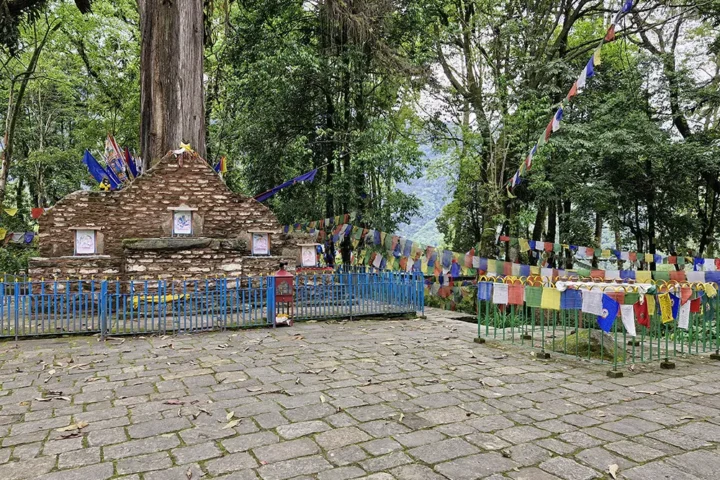
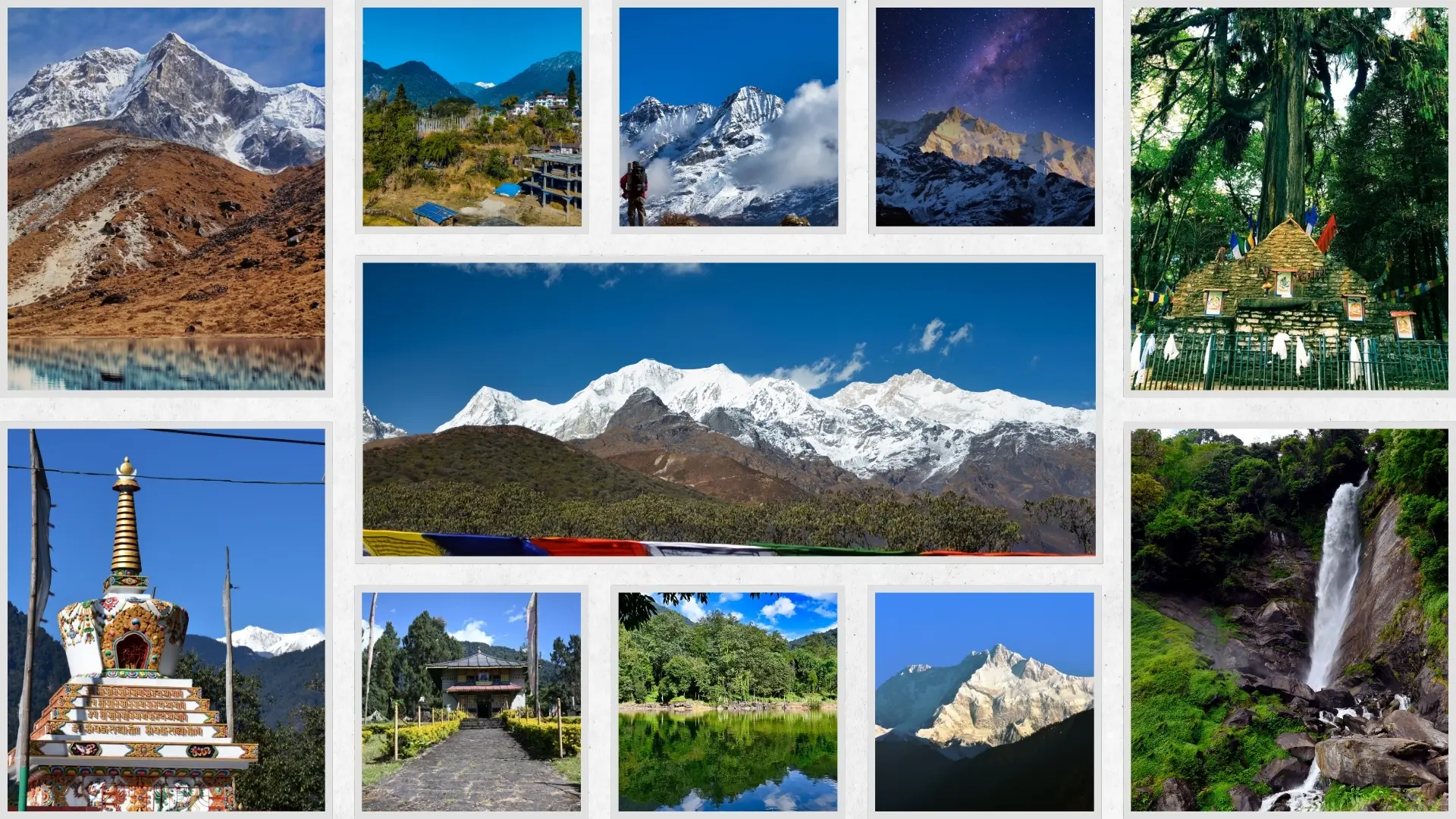
When planning your Yuksom sightseeing itinerary, most travelers stick to the usual suspects: Dubdi Monastery, Norbugang Coronation Throne, and Karthok Lake.
But what if I told you there’s a place so sacred, so breathtakingly beautiful, yet so hidden that even seasoned travelers have no idea it exists?
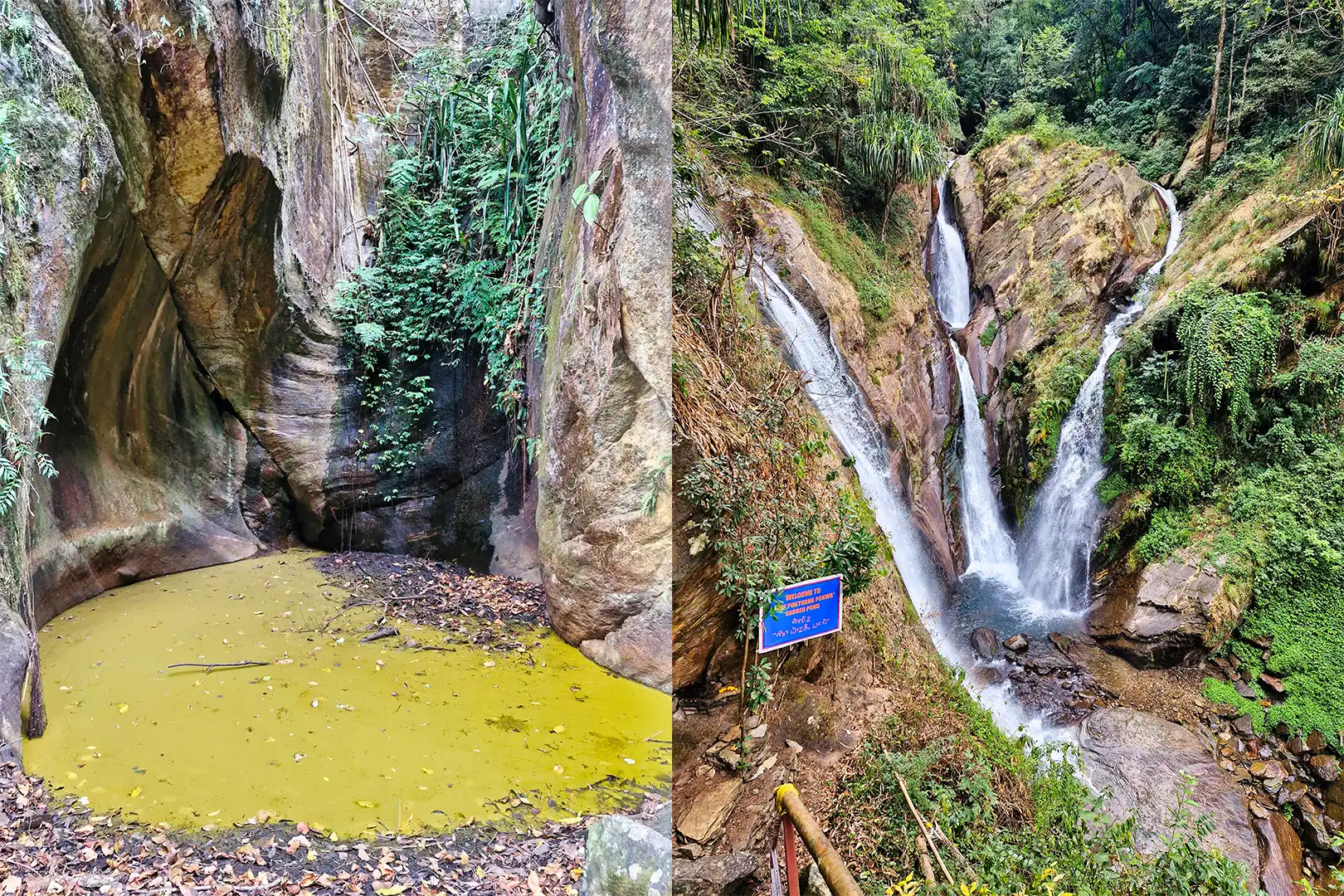
Welcome to Sigay Pokthang Pokwa, a mystical waterfall and sacred pond nestled below Mangsabung village, just 5 kilometers from Yuksom.
This isn’t your typical tourist spot. Until recently, reaching this place required locals to navigate vertical rock faces, hanging from thin wires and roots. Local shamans were among the few brave souls who ventured here for spiritual rituals.
Today, thanks to the extraordinary efforts of the Mangsabung community, you can experience this hidden wonder. And trust me, it’s worth every step.
The Convergence of Rivers and Myth: What Makes Sigay Pokthang Pokwa Special?
Sigay Pokthang Pokwa sits at one of nature’s most breathtaking and mystical intersections, where the power of water and the power of story meet.
The Sidakwa River flows on the left, the Ladung River on the right, and the mighty Phamrong River joins them right at the base of Mangsabung village. At this sacred confluence, carved into steep cliffs and ancient rock formations, lies the Sigay Pokthang Pokwa Sacred Pond.
The name itself tells a story. In the Limboo (Tsong) language, “Sigay” means Leopard, “Pokthang” means “come by raising,” and “Pokwa” means pond.
The Leopard Rising Pond.
But why a Leopard pond? Let me share the legend that’s been passed down through generations of the Limboo community.
The Legend of Sigey Pokthang Pokwa: When Gods Walked the Earth
Long before Yuksom became the first capital of Sikkim, long before tourists came looking for sightseeing spots, this land belonged to ancient spirits and deities.
The story begins with Warak Mang, the Ocean God, who descended into this very pond you can visit today.
His arrival brought an air of wonder and change across the valley.
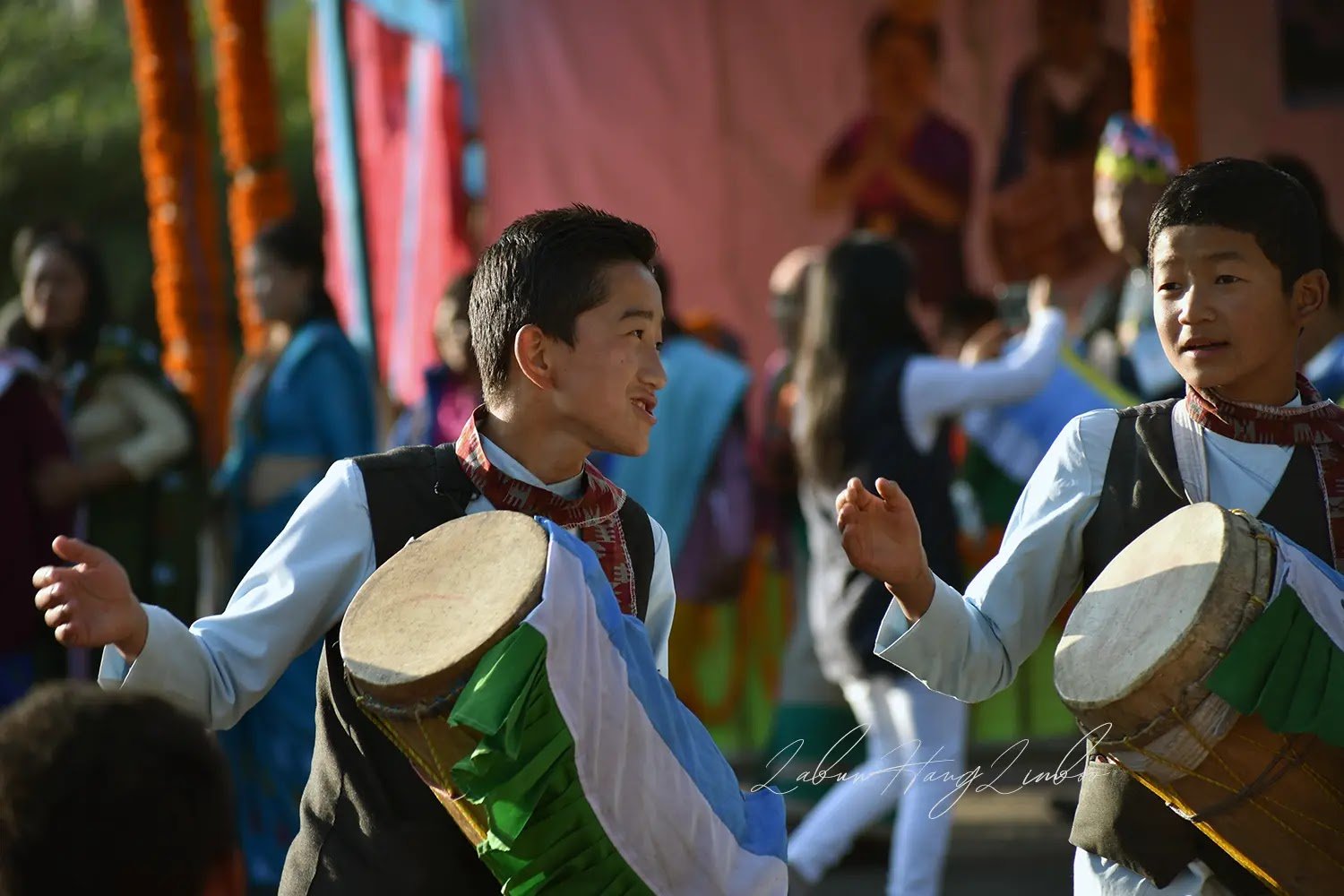
The people of Mangsabung were simple folks who lived off their land. When Warak Mang, the Ocean God, arrived in their humble village, the villagers welcomed him with drums, traditional dances, and offerings of fresh crops and millets.
Pleased with their devotion, Warak Mang blessed them in return. He touched the rocky slope and created a pond where there had been only hard rock. Using his divine power, he fashioned a magical golden fish and presented it to the people as a blessing. As he bestowed this gift, he made a promise: “Care for these fish, and you shall prosper.”
For generations, the people of Mangsabung prospered. Wealth and happiness filled the land.
However, as time passed, the community gradually forgot its sacred duties. First, the pond became dirty. Then, prayer offerings stopped. As a consequence of this neglect, the Ocean God became angry.
Birth of Sigay the Twin Leopard:
When Warak Mang returned to the neglected pond, he found that the Mangsabung people had failed to properly welcome him. Furious at their disrespect, the deity created two powerful spirits, Lubun Mang and Wasang Mang, who then took on a terrifying physical form: the Sigay, the Leopards that would give the pond its name.
According to legend, whenever the village fell into chaos, when animals were killed unnecessarily, or when harmony was disrupted, these two Leopards would emerge from the forest and attack people and livestock.
From that day, the village lived in constant fear of these attacks.
The Shamans’ Solution that brought trouble:
The village elders, the Tumyanghangs, and the shamans (Yeba) held a sacred meeting to pray and conduct rituals. Finally, two spiritually powerful hunters, Tsongbang Hang and Paaba Hang, were chosen for a divine mission.
Through elaborate Tongsing rituals and by chanting the sacred Mundhum (Limboo spiritual texts), these hunters tracked and killed both Leopards with traditional weapons, following the instructions given by the elders and shamans.
The village rejoiced, and for a brief moment, peace returned. However, the peace was short-lived, and they soon paid a heavy price for slaying the two leopards.
The Price of Peace
Soon after their celebration, illness spread through Mangsabung like wildfire. Crops failed. People died mysteriously.
The shamans consulted the oracles and discovered the truth: killing the sacred Leopards had brought a curse upon the land.
To lift the curse, the entire village needed to perform a massive purification ritual at the sacred pond: the Sigey Pokthang Pokwa.
The villagers had to cleanse the pond, make offerings, and appease the Ocean God to restore harmony.
When the rituals were finally completed, harmony was restored. The golden fish returned to the pond, and prosperity flowed back to Mangsabung.
To this day, the pond remains a pilgrimage site for the Limboo community. The place where Leopards emerged. The place where gods were angered and appeased. The place where the old ways still hold power.
Mangsabung Village: Gateway to Sacred Mysteries
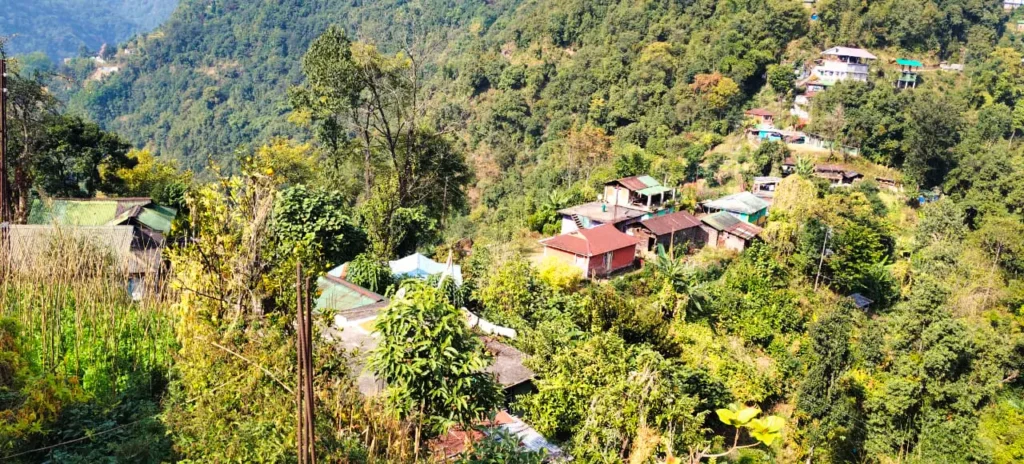
Before you reach Sigey Pokthang Pokwa, you’ll wander through the delightful Mangsabung village, a charming stop that truly deserves a place in your Yuksom sightseeing plans.
The name “Mangsabung” comes from the Limboo language, meaning “a place surrounded by deities.”
Pause for a moment at the heart of the village and let the atmosphere draw you in.
This unique settlement sits on what appears to be a finger of land jutting out between deep river valleys. From above, it appears almost flat, but don’t be fooled. The terrain drops dramatically on all sides. The Sidakwa River carves through the gorge on the left, the Ladung River thunders through on the right, and down below, the Phamrong River Joins them both.
Mangsabung isn’t just built on a hill; it’s perched on a ridge surrounded by some of the steepest terrain in West Sikkim. Dense forest blankets every slope. The rivers are hundreds of feet below, their roar a constant presence.
Looking at the landscape, you realize why the villagers call it a place surrounded by deities. The geography itself feels protective, almost supernatural. It’s a natural fortress, a spiritual stronghold, a place where the earth’s bones break through the skin.
The Limboo Heritage village
The people of Mangsabung are members of the Limboo (Tsong) community, which maintains a unique set of cultural practices, language, and spiritual beliefs. As one of Sikkim’s indigenous groups alongside the Lepcha (Rongs), the Limboo people are the original inhabitants of this land and have preserved ancient traditions that offer deep insight into the area’s history and identity.
When you visit, take the opportunity to connect with the villagers. Their genuine warmth will welcome you, their stories will captivate you, and their deep connection to the land will inspire you. Here, you won’t just check off a sightseeing spot, you’ll be embraced by a vibrant living heritage.
The Journey: What to Expect on Your Trek
Here’s what your Yuksom sightseeing adventure to Sigey Pokthang Pokwa actually involves.
Distance and Duration
- Distance from Yuksom: Approximately 5 kilometers
- Trek to Mangsabung: 1 hour
- Descent to Sigey Pokthang Pokwa: 1 hour
- Total round trip: About 5 hours (but plan for a full day)
Why a full day? Because you won’t want to rush. The scenery will stop you in your tracks. The villagers will invite you for tea. The sacred atmosphere will demand your quiet attention.
The Trail: A Monument to Human Determination
Let me be honest with you: reaching Sigey Pokthang Pokwa wasn’t always possible for casual visitors.
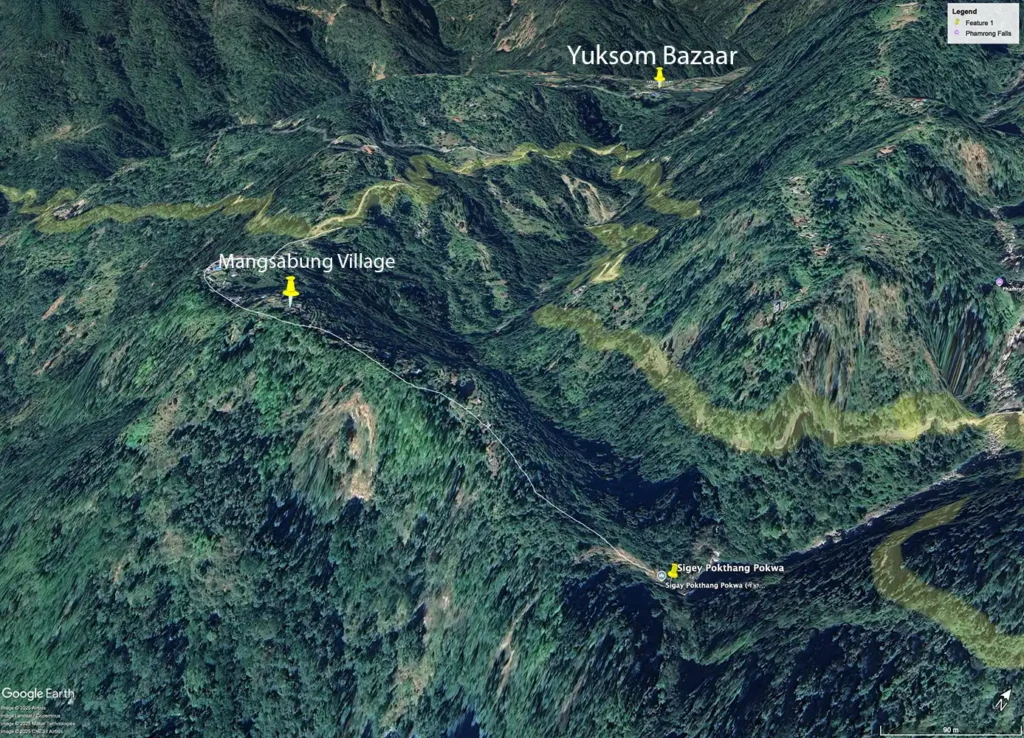
Looking at the terrain map, you can see why. Sigey Pokthang Pokwa lies deep in the gorge below Mangsabung village. What appears as a short distance on a map translates to a vertical descent down a cliff face that drops into the river valley. The forest is so dense that from above, you can barely tell there’s a sacred pond hidden in there at all.
The descent requires navigating a steep cliff face. Until recently, locals essentially had to climb down like the monkeys that inhabit these woods, trusting their weight to thin wires and roots stretched across the vertical rock. Only the most experienced locals and shamans would attempt it, usually for important rituals.
Then something remarkable happened.
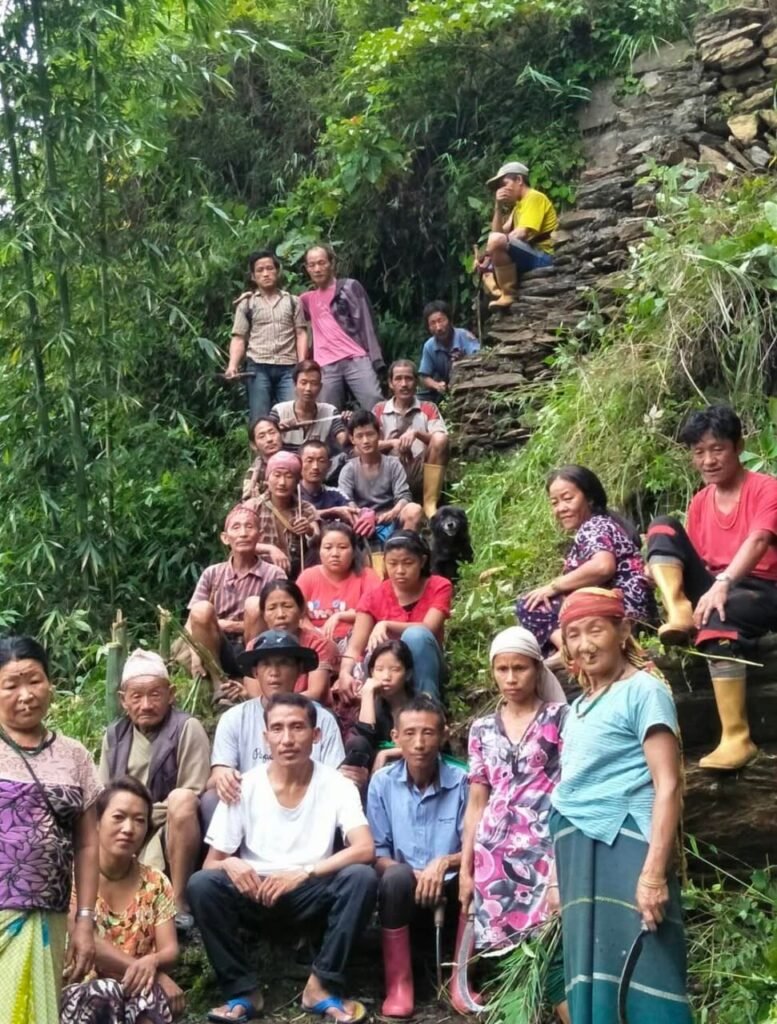
The Mangsabung community decided this sacred place needed to be accessible – not just for tourists, but for future generations of their own people.
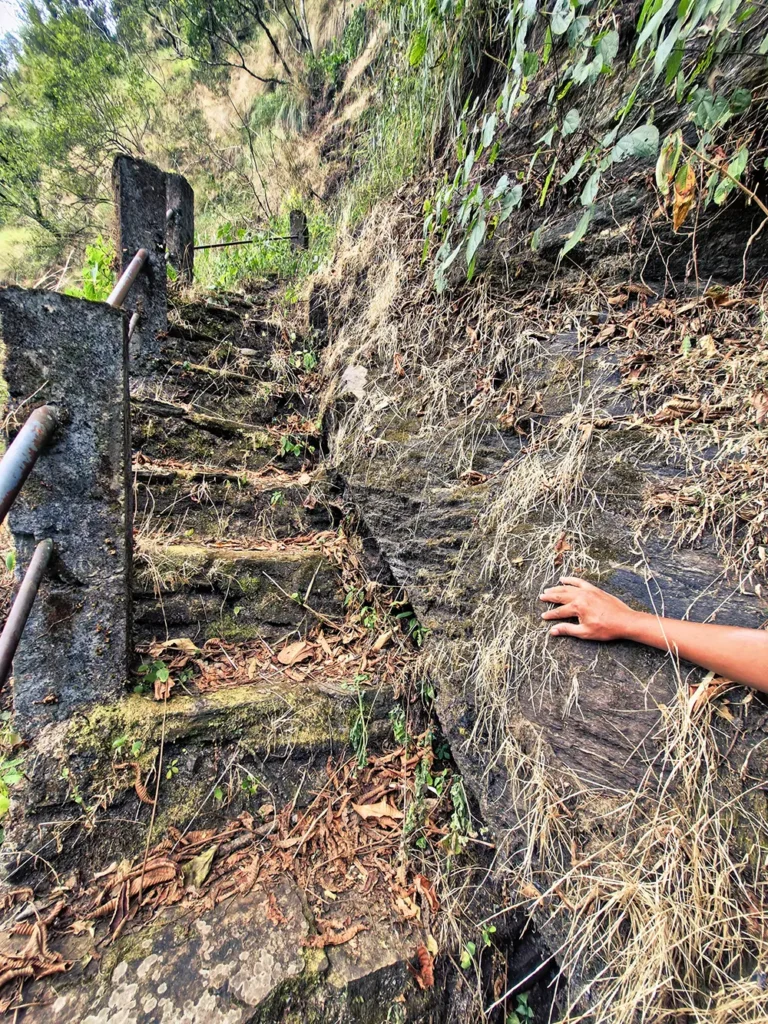
With no roads for vehicles, no modern machinery, these incredible folks carried iron rods and bags of cement on their backs down treacherous slopes. They built a well-beaten route with stone steps carved into the sheer rock face.
When you’re descending, pause and appreciate what you’re walking on. This isn’t government infrastructure. This is community determination. This is people honoring their sacred sites by making them accessible.
It’s one of the most admirable feats you’ll witness in your Yuksom sightseeing experience.
What You’ll Encounter?
The Upper Section: The trail starts with a gentle walk through Mangsabung village. Children wave. Chickens scatter. The air smells of wood smoke and mountain mist.
The Descent Begins: Then you reach the stairs. The metal steps cling to the sheer cliff face like a geometric spider web. If your heart skips a beat, don’t worry, that’s normal.
The Rock Formations: As you descend, you’ll pass through extraordinary geological features. Massive boulders lean against each other, forming natural caves and grottos. Moss covers everything. Water seeps from hidden springs.
Yabboko Sambhkho Fakku:

Just above the main pond, you’ll find a holy cave that served as a meditation site for Limboo shamans for centuries. The cave sits within a split in the cliff, its entrance almost disguised by the overhanging rock shelf.
What strikes you first is the scale. The massive rock overhang creates a natural shelter, and inside, you’ll find something extraordinary – tall slabs of stone standing upright like ancient sentinels. These aren’t random rocks. They’re placed deliberately, marking sacred space.
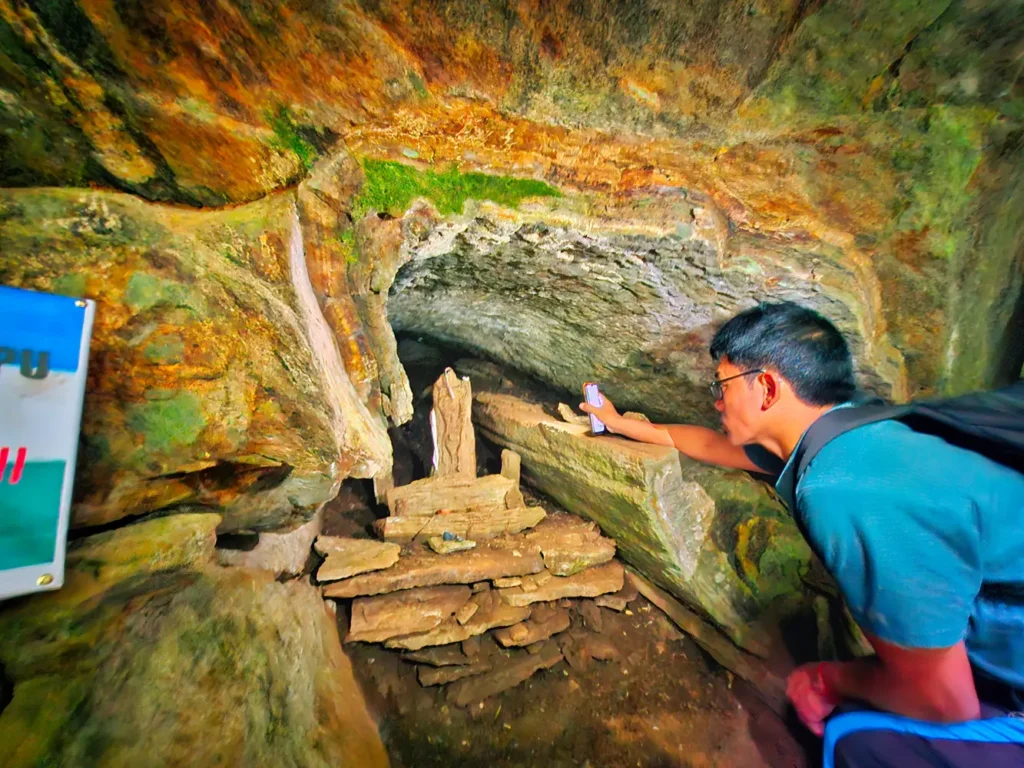
But the most remarkable feature is the tunnel, which curves into the cliff face. The rock has weathered into a smooth, arching passage that looks almost too perfect to be natural. The curve of the ceiling, the way the tunnel tapers inward, it feels crafted, though it’s the work of countless years of water and time.
The ground is covered with flat stone slabs, some stacked, creating a ritual platform. Green moss clings to parts of the rock, especially where moisture seeps through. The layered sedimentary rock shows beautiful horizontal striations in shades of rust, grey, and pale cream.
The air inside is noticeably cooler than outside, almost chilled, but not unwelcoming, exactly what one imagines a place of deep meditation feels like.
This was the meditation chamber where shamans came alone, seeking visions and strength. They performed rituals here. Called upon deities. Read signs from dreams.
Some say certain shamans still return here quietly during special ceremonies.
It’s still an active spiritual site.
The Sacred Pond:
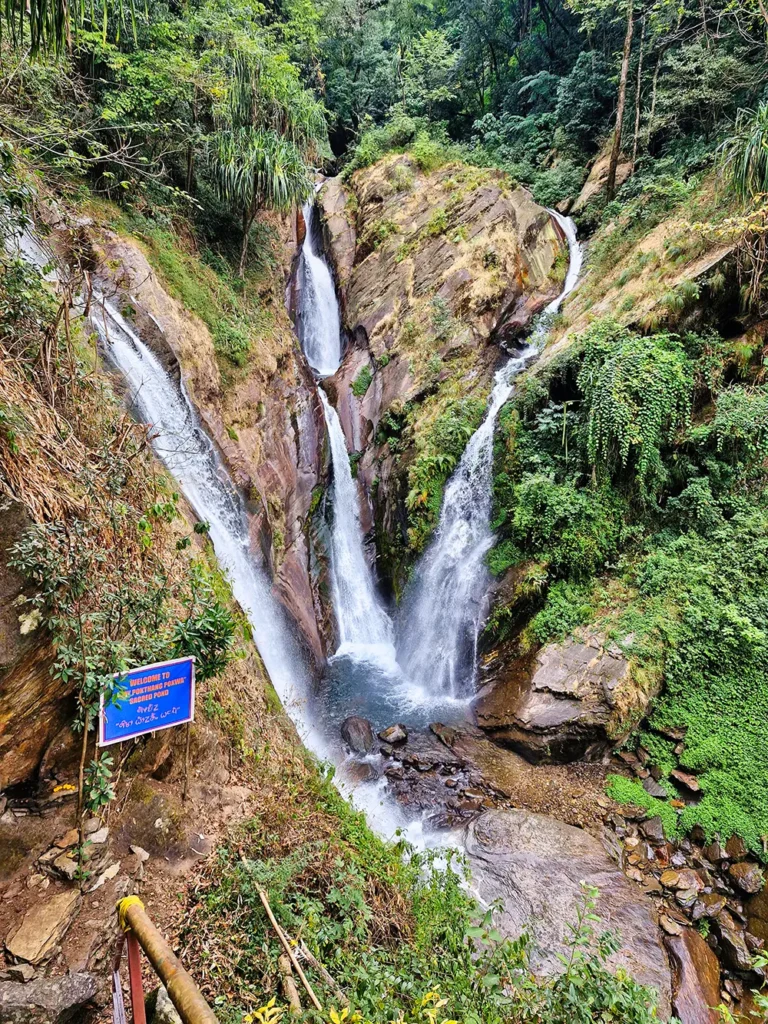
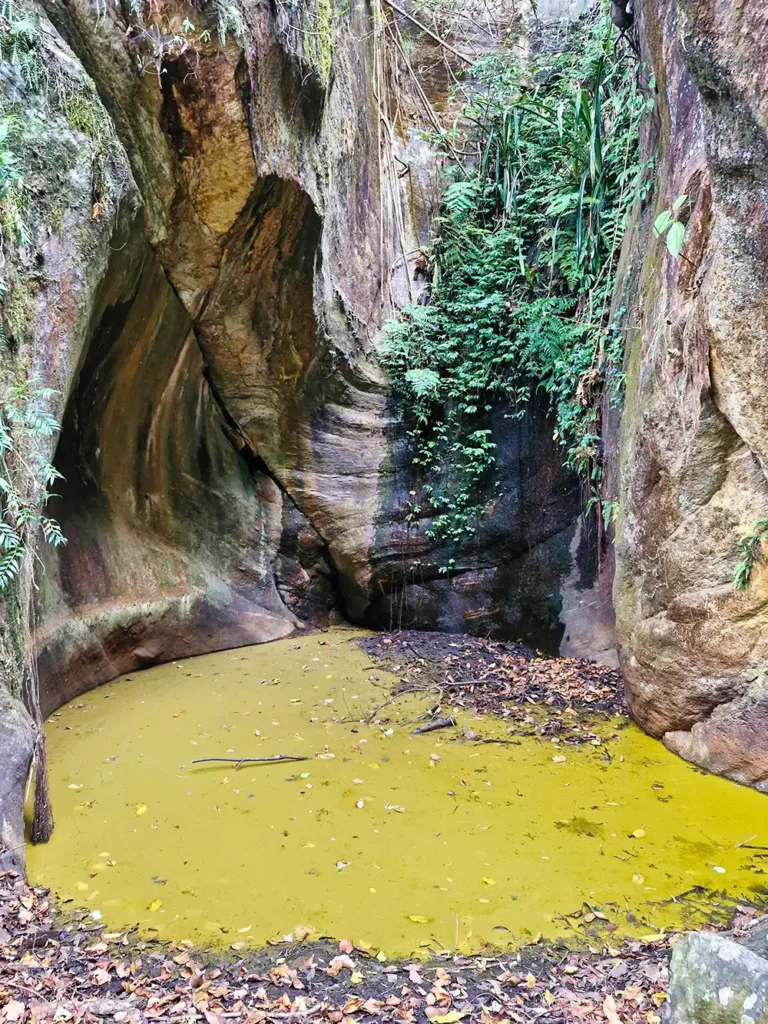
Finally, you arrive. To the right, Wadhum Falls sends multiple cascades of white water down the rock face, the sound filling the narrow gorge. Just beside it, separated and calm, lies the Golden Pond. The final stretch flattens into a wide stone basin shaped over centuries by wind and water. The pond rests within this natural hollow, surrounded by steep rock walls that rise like a bowl carved by time itself.
The water in the pond is remarkably still, almost too still.
The sound of the waterfall is overwhelming. The air is thick with spray. Yet, beside it, at the pond, there is a deeper silence. The elders say the Golden Pond rests on the rock slope created by Warak Mang himself.
But here’s something the elders will tell you with sadness in their voices:
This pond isn’t what it used to be.
According to the ancestors, the lake was once filled with golden fish, not the ornamental goldfish of modern aquariums, but fish made of actual gold that shimmered beneath the water’s surface. The lake held one of the most powerful spiritual vibrations in all of Sikkim. This energy ensured the well-being of the entire village. Crops grew abundantly without effort. Children were born healthy. Illnesses were rare. The spiritual power of the pond protected and nourished everyone who honored it.
But as time passed and the modern world encroached, something shifted in human consciousness. Materialism grew. The sacred connection weakened. Nature began to be seen as a resource to exploit rather than a deity to honor. Pollution crept in, not just physical pollution of the water, but spiritual pollution of intent. The rituals became less frequent. The offerings stopped. The devotion dimmed.
As humanity’s respect for nature declined, so did the lake’s power.
The spiritual energy weakened.
The golden fish disappeared.
Today, the pond still holds beauty. It still holds mythology. Some villagers believe the energy remains dormant, waiting – waiting for people to remember, waiting for devotion to return, waiting for humanity to reconnect with the sacred.
But it’s not the same.
The elders know this. They feel it.
When you visit, you’re seeing a shadow of what once was. A reminder of what we’ve lost through neglect. A call to restore what can still be saved.
Something about this place still feels different.
Ancient. Powerful. Watching.
Visiting Sigey Pokthang Pokwa: Practical Information
Best Time to Visit
Peak Season (October to December): Clear skies, perfect weather, best for photography. The waterfalls are still flowing from monsoon runoff, but the trails are dry and safe.
Monsoon (June to September): The waterfalls are at their most dramatic, but the descent can be slippery and potentially dangerous. Only for experienced trekkers.
Winter (January to March): Cold but clear. Water flow is reduced, but the mystical atmosphere intensifies. Fewer crowds.
Spring (April to May): Rhododendrons bloom on the hills. The weather is pleasant. Good middle ground. With the seasons covered, focus next on preparation for your trek.
What to Wear and Bring
Footwear: This is non-negotiable – wear shoes with a firm grip. Proper trekking shoes or hiking boots. Not slippers. Not fashionable sneakers with smooth soles. Not sandals. The metal steps and rock faces demand traction.
Clothing: Layers. The descent is warmer, but Mangsabung village can be cool. Quick-dry clothing is smart because you’ll encounter spray from the waterfalls.
Essentials:
- Water bottle (at least 1 liter per person)
- Some snacks (energy bars, fruits, dry fruits)
- Small first-aid kit
- Camera or smartphone (fully charged!)
- Cash for any purchases in Mangsabung village
- Respect and an open mind
Important Safety Notes
Not recommended for:
- Children under 10 years old
- Anyone with mobility issues
- People with a severe fear of heights
- Anyone in poor physical condition
Why? The trail involves metal stairs on cliff faces, uneven terrain, and requires sure-footedness. This isn’t a stroll – it’s a legitimate trek with some exposure.
During the visit:
- Be mindful while taking photographs – don’t step backward or venture off-trail for better angles
- Hold railings where provided
- Watch your step constantly
- Don’t rush
- If it’s raining, consider postponing
- Stay on the marked path at all times – the cliffs are real and dangerous
How to Reach Sigey Pokthang Pokwa from Yuksom
Getting to Mangsabung Village
From Yuksom town center, you have two options:
Option 1 – Walk: It’s about 3 kilometers of gradual ascent. Takes roughly 1 hour. The path is clear, and locals can point the way. This is what I recommend if the weather is good – you’ll warm up your legs for the descent ahead.
Option 2 – Local Vehicle: Hire a local taxi, or if you’re driving, take the road toward Mangsabung. Note that you can’t drive all the way to Sigey Pokthang Pokwa itself, but you can reach the village.
From Mangsabung village, ask locals to point you toward Sigey Pokthang Pokwa. Everyone knows it. Some might even offer to guide you for a small fee, absolutely worth it for the stories they’ll share. Speaking of which, consider hiring a local guide.
Hiring a Guide
While the trail is now well-established, hiring a local guide enriches the experience immensely.
They’ll share:
- The complete mythology in detail
- Stories of the shamanic practices
- Plant identification along the route
- The best spots for photographs
- Safe navigation during tricky sections
Guides can be arranged through your Yuksom homestay or by asking around in Mangsabung village. Expect to pay ₹1000-1500 for a guide for the full trip.
Why Sigey Pokthang Pokwa Should Be on Your Yuksom Sightseeing List
I’ve grown up in these mountains. I know the monastery circuits, the lake pilgrimages, the trekking routes that fill every guidebook.
But Sigey Pokthang Pokwa is different.
Unlike the packaged tourism found elsewhere, this place feels raw. There are no ticket counters, no selfie points, no vendor stalls selling momos. It’s uncommercialized in a way that’s becoming increasingly rare. And whether you consider yourself spiritual or not, standing where shamans have drawn their power for centuries forces you to respect the silence.
The descent on metal stairs clinging to a cliff face will get your adrenaline going. It’s accessible enough for reasonably fit travelers but challenging enough to feel like a real achievement when you make it down and back up.
Then there’s the sheer beauty of it. The multi-tiered waterfalls, the golden pond reflecting ancient rocks, the cave formations, the lush vegetation – every angle deserves a photograph. And because so few people know about it, you might have the entire place to yourself.
But what makes it truly special is the cultural immersion. Spending time in Mangsabung village, meeting the Limboo community, hearing firsthand accounts of the legends from people who still believe them – this transforms a vacation into something meaningful.
Responsible Tourism at Sigey Pokthang Pokwa
Since you’re among the first wave of visitors to discover this place, you have a responsibility.
Respecting the Sacred Site
This isn’t just a waterfall. It’s an active pilgrimage site. If you see offerings or ritual objects, don’t touch them. If locals are performing ceremonies, observe from a respectful distance or ask permission to watch.
Important: Do not leave your own offerings, such as khadas (ceremonial scarves), coins, or other items. While your intention may be respectful, non-degradable offerings accumulate over time and damage the site. The best offering you can give is your respectful presence and careful footsteps.
Photography with Awareness: Take photos while staying mindful. Don’t step backward without looking. Don’t venture off the marked trail in search of a better angle. The cliffs are real, the drops are serious, and no photograph is worth risking a fall. Be present in the moment, not just through your lens.
Leave No Trace
Carry back everything you bring. Every wrapper, every bottle, every scrap. The community has worked incredibly hard to maintain this site’s purity. Don’t be the tourist who ruins it.
If you see litter left by others, consider being a hero and carrying it back too.
Supporting the Community
Stay in Mangsabung homestays if possible. Buy local products. Pay fair prices for guide services. Your tourism rupees should benefit the people who’ve preserved this heritage.
Share this place with others, but encourage responsible visits. We don’t want Sigey Pokthang Pokwa to become overcrowded or commercialized. Quality visitors who respect the site are far better than quantity.
Combining Sigey Pokthang Pokwa with Other Yuksom Sightseeing
Make this hidden gem part of a larger Yuksom itinerary:
Day 1:
- Arrive in Yuksom
- Visit the Norbugang Coronation Throne
- Karthok Lake and Monastery
- Explore Dubdi Monastery
- Phamrong waterfalls
- Tashi Tenka View Point
- Stay overnight in Yuksom.
Day 2:
- Early start to Mangsabung village
- Full day exploring Sigey Pokthang Pokwa and surroundings
- Interact with Mangsabung villagers.
- Return to Yuksom by evening.
Day 3:
- Khecheopalri Lake excursion
- Kanchenjunga Waterfalls
Day 4.
- Tashiding Monastery
- Depart or continue to other West Sikkim destinations.
Follow this suggested itinerary to experience both the popular Yuksom sites and discover the extraordinary hidden gem of Sigey Pokthang Pokwa. Start planning your journey for a unique adventure.
Where to Stay
In Yuksom, Multiple homestays and small hotels are available. My recommendation: stay with a family with connections to Mangsabung – they can arrange guides and provide more context on the Limboo culture.
In Mangsabung, some families offer basic homestay facilities. If you’re interested, consider booking a stay for a deeper cultural immersion. Don’t expect luxury, expect authenticity, home-cooked meals, and genuine warmth.
Final Thoughts: The Soul of Sikkim
Too often, travel becomes a box-ticking exercise, a rapid tour of monuments and popular lakes.
But you can’t just “do” Sigey Pokthang Pokwa. It’s not a sightseeing spot you tick off in an hour. It demands your attention, your respect, and your willingness to descend into the unknown. It offers no convenience, no shortcuts, no Instagram-ready platforms.
Instead, it offers something increasingly rare in modern travel. Here, you find a genuine encounter with the sacred. You brush with living mythology and test your physical courage. It reminds you that some places still exist outside the tourism machine.
The Ocean God Warak Mang still lives in that pond, if you believe the old folks in Mangsabung. The Leopards might still roam the slopes in spirit form. The shamans still draw power from the Yabboko Sambhkho Fakku cave.
And you? You get to witness it all.
When you’re planning your Yuksom sightseeing, don’t just stick to Google’s top results. Dig deeper. Ask locals. Be adventurous.
That’s how you discover places like Sigey Pokthang Pokwa – the sacred tiger pond where gods still dwell, where waterfalls thunder down ancient rocks, and where the Limboo people keep their heritage alive through stories, rituals, and incredible community effort.
The climb back up will give you time to think. You’ll remember the villagers who carried cement down that cliff. You’ll recall shamans making this descent long before any steps existed. Myths feel more real when you stand where they happened. A place can be both landscape and legend, both rock and reverence.
The trail that once belonged only to shamans is now open to travelers. But it hasn’t lost its soul. The mountain still protects it with cliffs. The community still guards it with devotion. The stories still guard it with memory.
See you on the trail. Watch your step, respect the sacred, and prepare to discover the Yuksom that tourism brochures don’t know exists.
Credits:
This article would have been impossible without these people. Thank you for filling my heart and mind with rich history. Most of all, thank you for guiding me to the sacred pond.
SPPP(Sigay Pokthang Preservation & Protection Committee, Mangsabung Sukkhim
- Sambi Hang Limboo (President)
- Jas Hang Limboo (V-President)
- Uncho Hang Limboo (G-secretary)
- Phosu Hang Limboo (Publicity)
- Tencho Hang Limboo (Member)

Conversation