
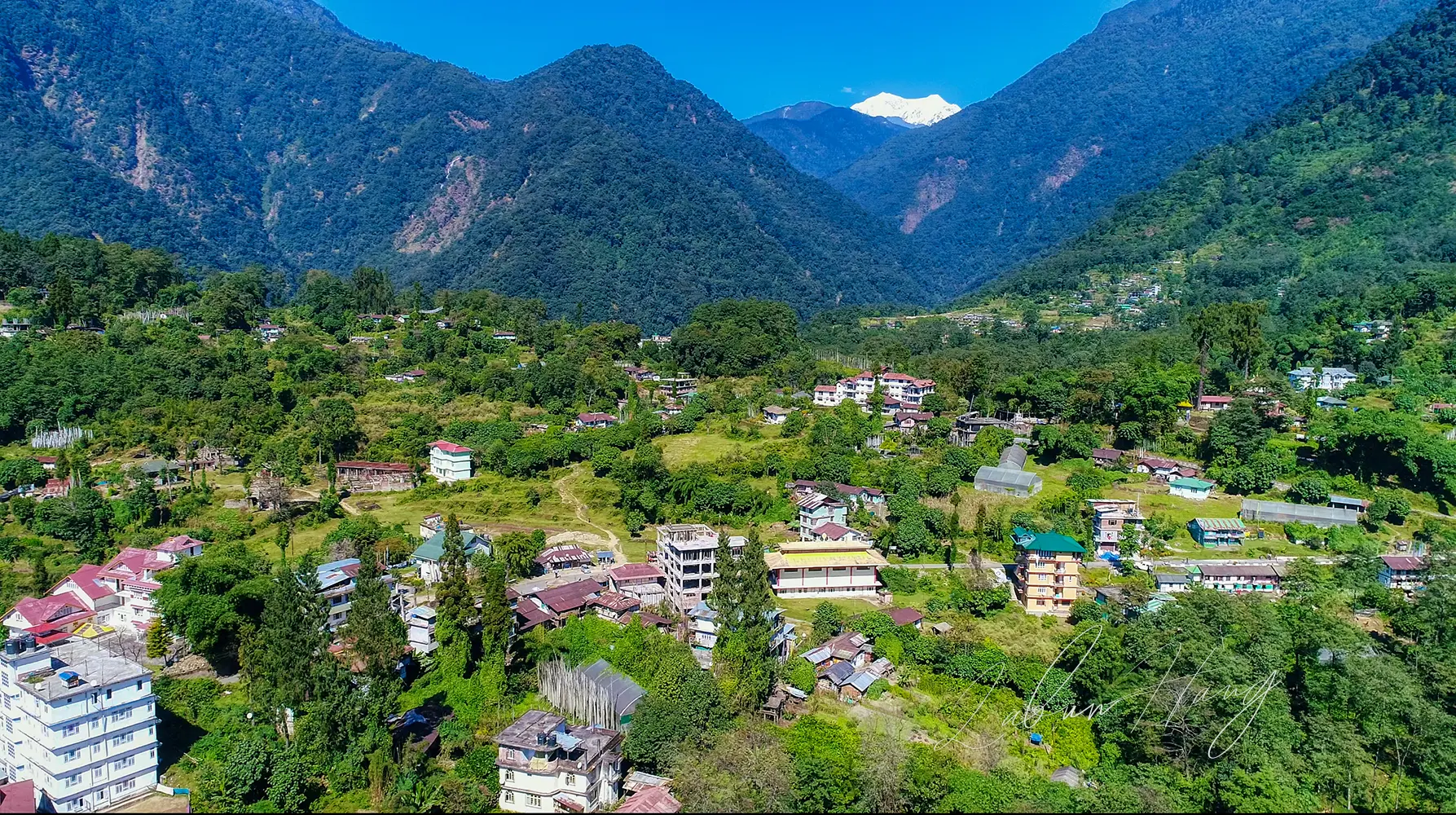
Yuksom is a historic Himalayan town in the Gyalshing district of Sikkim, India. It is where Phuntsog Namgyal was crowned the first Chogyal of Sikkim in 1642, and it remains the starting point for the famous Dzongri and Goechala treks. At approximately 1,780 metres above sea level, Yuksom combines early Sikkimese history, sacred sites, forested hills and access to the Khangchendzonga landscape.
But Yuksom is not simply a former capital or a place where trekkers spend one night before leaving for the mountains. It is also a small, developing town, with its own communities, schools, healthcare facilities, local administration, hotels and homestays. If you only see it as a trekking base, you miss much of what makes it worth visiting.
Sewaro, Khamree Mo, Tashi Delek and Namaskaar.
I was born and raised in Yuksom, and I belong to Sikkim’s indigenous Limboo, or Tsong, community. This guide draws on the town I know from growing up here, alongside documented history and practical information for visitors. I want to show both the celebrated landmarks and the ordinary changes in local life that most travel guides overlook.
Yuksom at a Glance
Yuksom. More than a place on the map.
A snapshot of Sikkim’s first capital, its people, local services and mountain heritage.
01 People & community
Yuksom, 2011 Census
Yuksom, 2011 Census
2024 Sikkim Assembly election · Entire Yuksom–Tashiding constituency, not Yuksom town alone
02 Experiences & local facilities
Dzongri & Goechala, among other routes
Highlighted in this guide, not a townwide total
1 government & 2 private schools mentioned in this guide
Public primary-care facility; not a full-service hospital
| District | Gyalshing, Sikkim |
|---|---|
| Historical identity | First capital of the Kingdom of Sikkim |
| Nearest airport | Bagdogra |
| Nearest major railway station | New Jalpaiguri (NJP) |
| ATM availability | No regular ATM in Yuksom; UPI QR payments widely used |
| Good visiting periods | March–May and October–November |
| Suggested visit | About 2 days, longer for excursions or trekking |
The spelling Yuksam or Yuksum also appears in local usage and historical records. Official tourism descriptions often call Yuksom a village. Its surrounding communities still have rural character, but the main settlement now functions as a developing small town. That is a description of what the place has become, not a claim about a particular municipal designation.
What Does Yuksom Mean?
Yuksom is commonly interpreted as the “meeting place of three lamas.” The name recalls three Buddhist masters whose gathering is associated with the consecration of Phuntsog Namgyal in 1642. The event placed Yuksom at the centre of the new kingdom’s political and religious life.
The first capital was later moved to Rabdentse, but Yuksom retained its place in Sikkim’s historical memory. Its importance is visible today at Norbugang, in the monasteries connected with the early kingdom, and in the many sacred associations that extend into the surrounding mountains.
The History of Yuksom, Seen Through Indigenous Eyes
The land had a history before the monarchy
Most introductions to Yuksom begin in 1642. That is a useful starting date for the Namgyal kingdom, but not for the entire history of the people and landscape. Sikkim’s older indigenous histories, including those of the Lepcha (Rong) and Limboo (Tsong or Yakthung) communities, deserve to be recognised alongside the story of the monarchy.
The Lepcha relationship with mountains, forests, waterways and sacred places is deeply rooted in their traditions. The Limboo community likewise preserves its own language, ancestral history and spiritual knowledge, including traditions associated with the Mundhum. These should not be treated as identical belief systems, nor folded into a single simplified account of Sikkimese culture.
As someone from the Limboo community, I believe visitors should understand that the coronation marks an important historical change, not the sudden beginning of all culture in this region. Yuksom belongs to a landscape where different communities, practices and religious traditions have interacted over centuries. If you would like a deeper introduction, I have also written about the Tsong Limboo community of Sikkim.
The coronation of Phuntsog Namgyal in 1642
According to Sikkim’s established historical tradition, three lamas gathered at Yuksom and consecrated Phuntsog Namgyal as the first Chogyal, a title often translated as religious king. This began the Namgyal dynasty, which remained part of Sikkim’s political life until the monarchy ended in 1975, when Sikkim became a state of India.
The coronation story is essential to understanding why Yuksom is called Sikkim’s first capital. But the sites connected with it are not merely historical displays. They continue to hold spiritual meaning for people who visit them to pay respect.
Norbugang: Where the first Chogyal was crowned
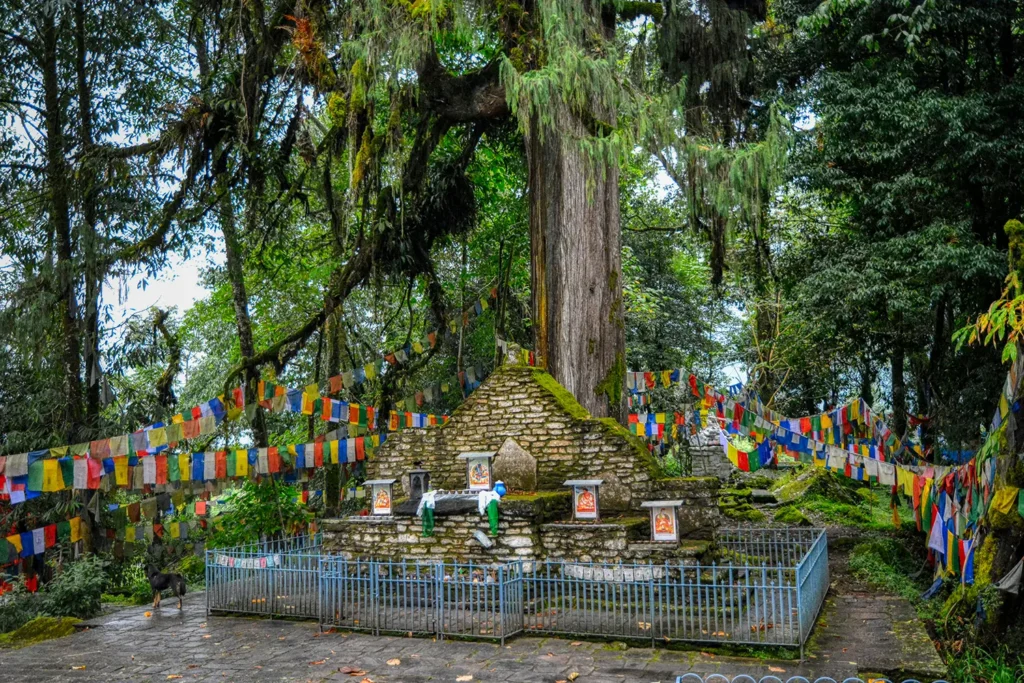
The Norbugang Coronation Throne is the place most closely associated with the events of 1642. The stone throne, nearby chorten and surrounding sacred features make this one of Yuksom’s most important historical stops. A nearby rock bears a mark traditionally regarded as the footprint of Lhatsun Chenpo.
I first visited Norbugang with my family when I was very young. I did not understand its historical importance then. Growing up in Yuksom changed the way I saw it: what visitors recognise as an important monument was also a familiar part of the place in which I was raised.
Norbugang deserves time and quiet attention. Walk around respectfully, observe any restrictions at religious structures, and remember that prayer flags, offerings and monuments here are part of living traditions.
Dubdi Monastery: A walk into Yuksom’s early history
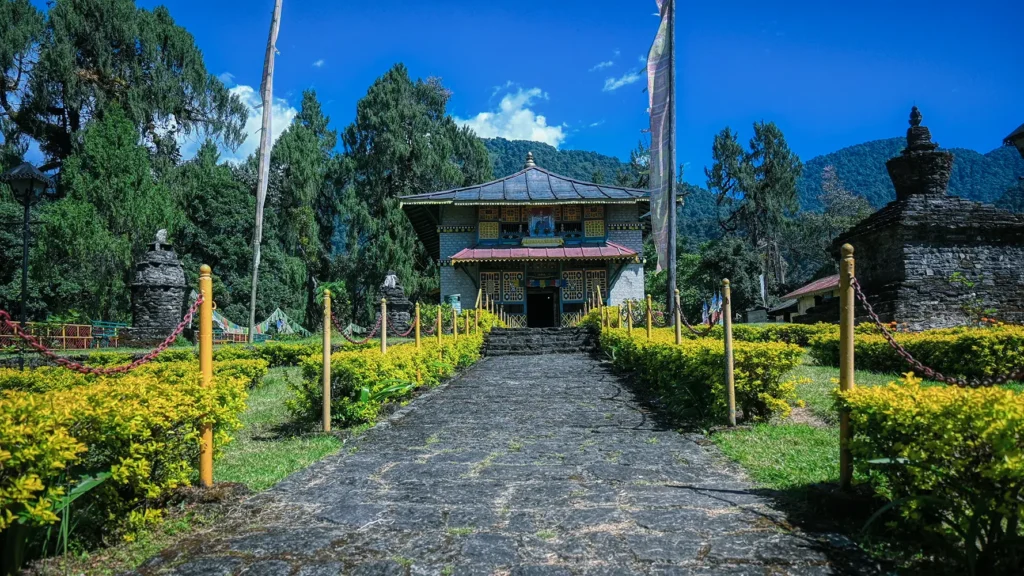
Dubdi Monastery stands on a wooded hill above Yuksom and is one of Sikkim’s oldest monasteries. It is a protected historical monument, reached by an uphill walk of roughly two kilometres rather than a short roadside stop.
Allow enough time for the ascent and the return, especially after rain, when forest paths can be damp. The walk is part of the attraction: it creates a quiet transition from the town to a place with deep connections to Sikkim’s early Buddhist history.
Balihang Tongnam: A Living Limboo Festival in Yuksom
Not every part of Yuksom’s heritage belongs to a monument. Balihang Tongnam, also written Bali Hang Tongnam, is an important annual festival of the indigenous Limboo (Tsong or Yakthung) community, observed around the Tihar and Diwali period. For the community, it is an expression of its own living cultural traditions, not simply another name for a tourist celebration.
Yuksom celebrates Balihang Tongnam with community participation, songs, dances and gatherings that keep Limboo traditions part of everyday public life. During a pre-festival celebration in October 2025, performances included Yarakma, Hakparay, Ke-lang and Tam-Akey Lang. The festival is part of the living cultural heritage of the Limboo community, not merely a seasonal attraction for tourists.
If you visit Yuksom during Diwali, you may encounter related festivities, although dates and venues for organised public programmes can change from year to year. This is one more reason to understand Yuksom as a town with living indigenous traditions, rather than only as Sikkim’s former capital or a Himalayan trekking base.
Places to Visit in Yuksom and Nearby
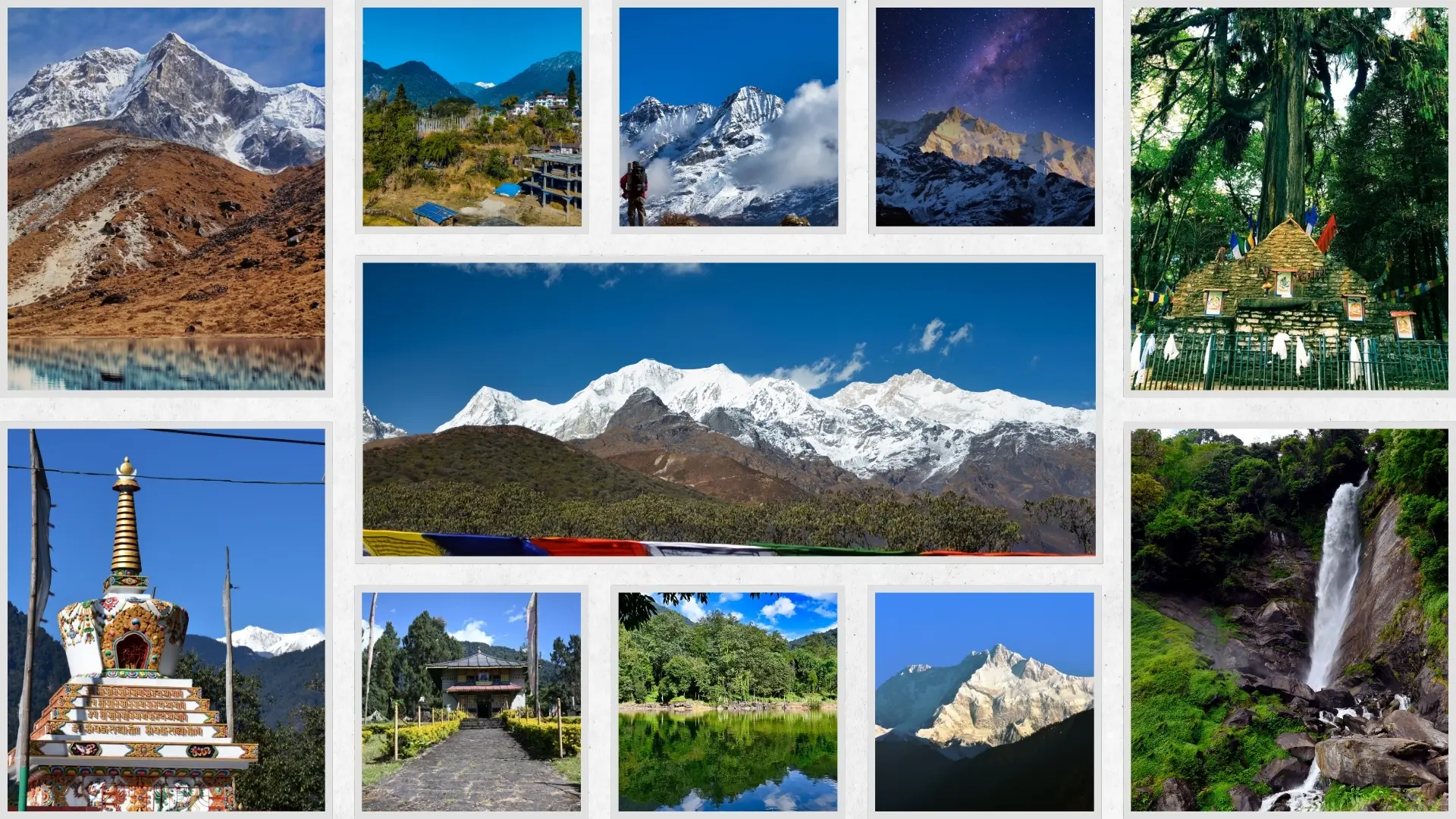
Yuksom’s attractions range from places within walking distance of the centre to waterfalls, sacred lakes and viewpoints that need a vehicle. The most practical way to plan sightseeing is to separate the sites in Yuksom itself from those in the wider West Sikkim region.
Kathok Lake and Kartok Monastery
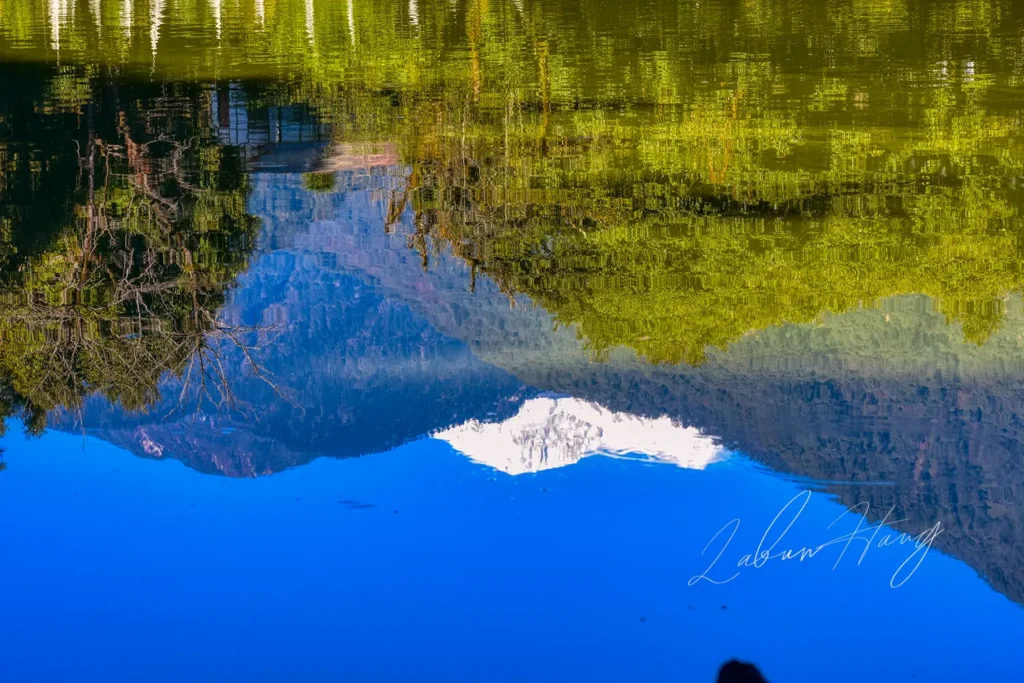
Kathok Lake, also written Karthok Lake, is one of Yuksom’s well-known sacred places. Its calm setting and religious associations make it a natural stop when exploring the historic part of town. Visitors should treat it as a sacred site, avoiding litter, loud activity or disturbance to worshippers.
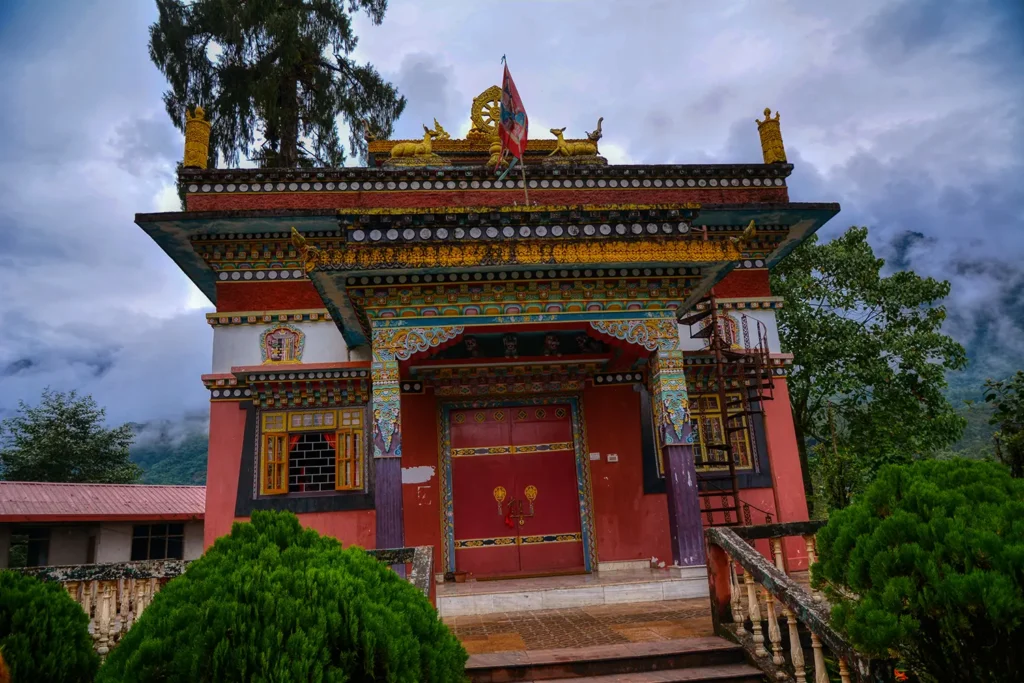
Nearby Kartok Monastery adds another part of Yuksom’s Buddhist heritage to a walking visit. Together with Norbugang, the lake and monastery offer an accessible introduction to the religious character of the area, without requiring a multi-day trek.
Tashi Tenka and local viewpoints
Tashi Tenka is associated with Yuksom’s royal past and provides an elevated perspective of the surrounding valleys and hills. What you can see depends on cloud and weather, so do not assume a guaranteed view of distant snow peaks. Its historical association is as meaningful as its scenery.
Waterfalls and sacred lakes beyond the town
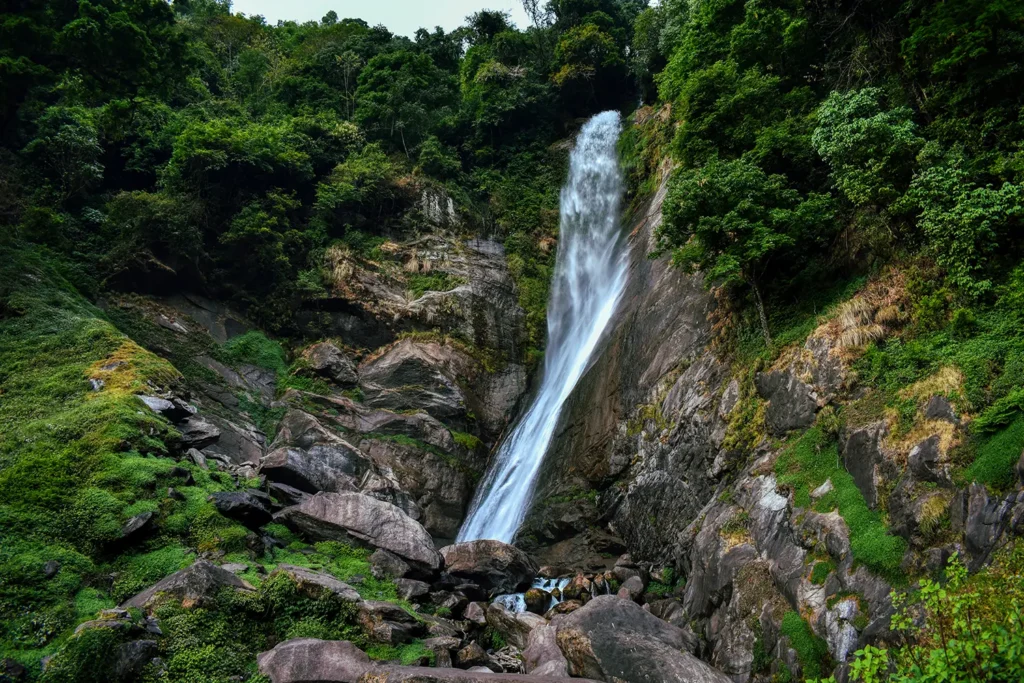
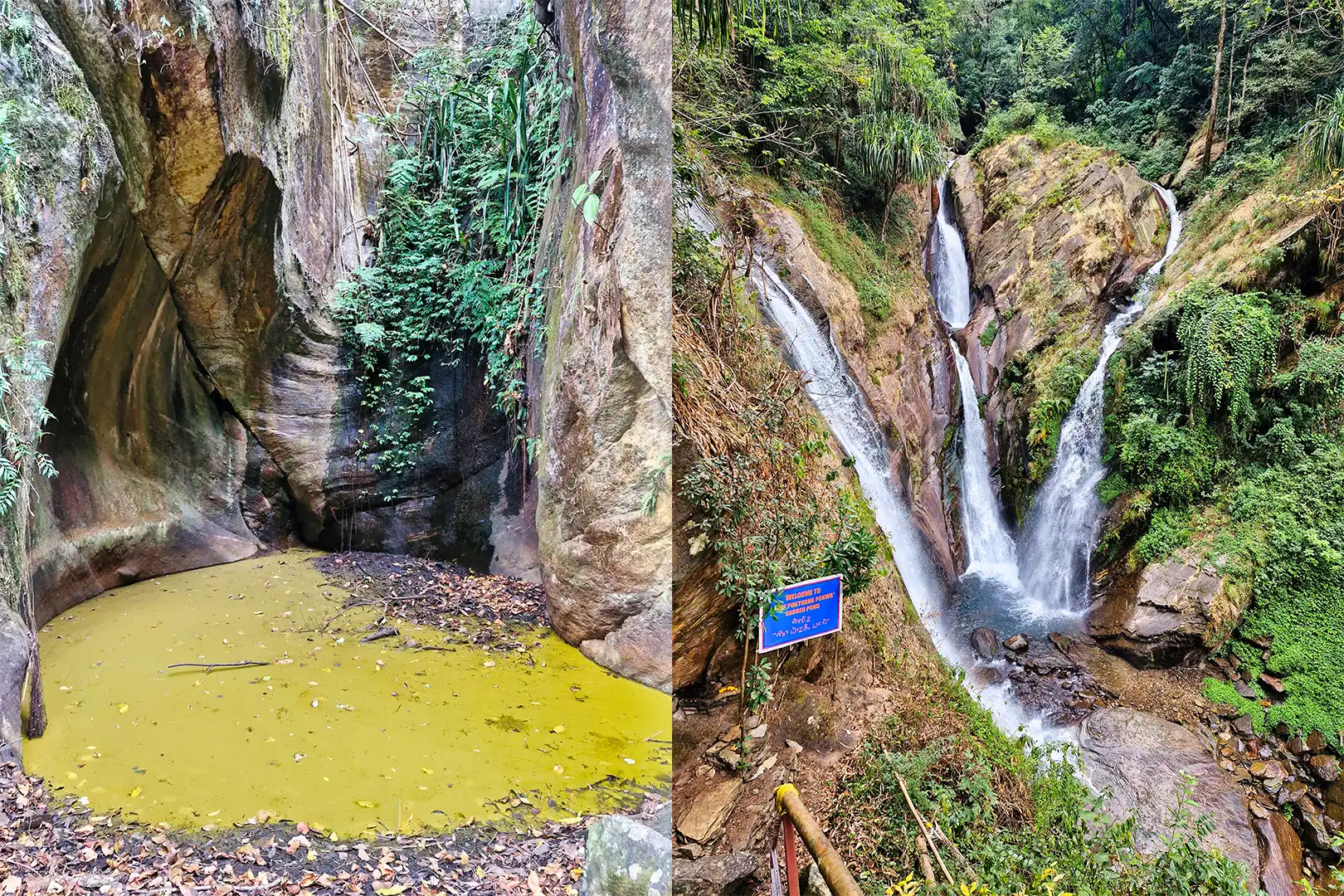
Phamrong Waterfall is a popular excursion in the wider Yuksom area. Visiting a waterfall is a different experience from walking around Yuksom’s monuments, but wet steps and rocks require care, particularly during the monsoon.
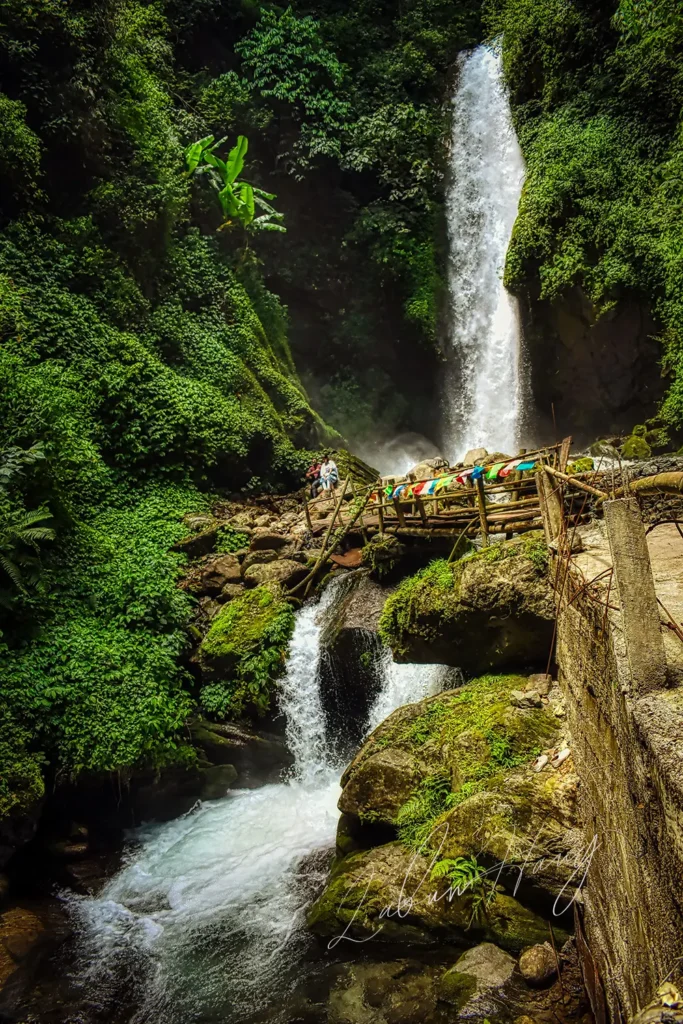
Kanchenjunga Waterfalls
Kanchenjunga Waterfalls lies approximately 10 km by road from Yuksom, along the route towards Pelling. This powerful cascade is one of the best-known natural attractions in West Sikkim, but it is not located inside Yuksom town. From the roadside parking area, a short climb up steps leads towards the waterfall, where visitors can appreciate the sound, spray and force of the falling water at closer range. The flow is especially impressive during wetter periods, when the steps and nearby surfaces may also be slippery. A visit works well as part of a wider sightseeing excursion rather than a separate full-day activity. The surrounding stop has visitor facilities, but you should check local conditions before approaching the falls.
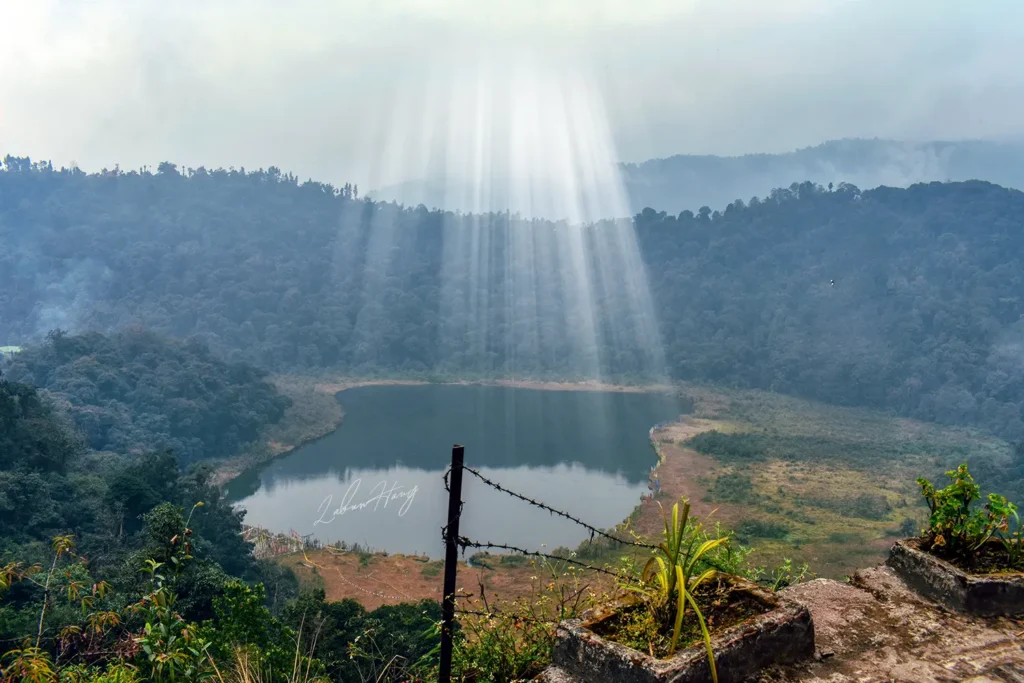
Khecheopalri Lake
Approximately 28 km by road from Yuksom, Khecheopalri Lake is among Sikkim’s most revered sacred lakes. Often called the wish-fulfilling lake, it is significant to Buddhist and Hindu pilgrims and belongs to a wider sacred landscape linked with Yuksom and Sikkim’s monasteries. One traditional belief tells of birds removing leaves that fall onto the water, an expression of the lake’s sacred character rather than a guaranteed natural spectacle. Surrounded by forest and prayer flags, it is a place to visit quietly and respectfully. In February 2025, the lake and its surrounding wetland gained international recognition as Sikkim’s first Ramsar Site, reflecting its ecological importance as well as its cultural heritage. Travellers often combine Khecheopalri Lake and Kanchenjunga Waterfalls in a West Sikkim road excursion.
A place that rarely appears in ordinary travel guides
Yuksom also has connections to smaller communities and sites that are much less familiar to tourists. One of them is Sigey Pokthang Pokwa, associated with the Mangsabung area and Limboo heritage. Its importance is cultural as well as scenic. A visitor should approach a sacred local site with respect for the traditions surrounding it, not simply as another place to collect photographs.
I have documented the story and journey separately in my guide to Sigey Pokthang Pokwa and Mangsabung. For walking routes, combinations of attractions and actual sightseeing itineraries, use my complete Yuksom sightseeing guide. This article focuses on the town as a whole.
Yuksom as a Gateway to Dzongri and Goechala
Trekking has helped introduce Yuksom to travellers far beyond Sikkim. Before entering the mountains, many groups gather here to meet local support teams, organise equipment, check paperwork and prepare for the days ahead. The two best-known routes are Dzongri and Goechala, but neither should be confused with ordinary sightseeing walks.
Dzongri Trek
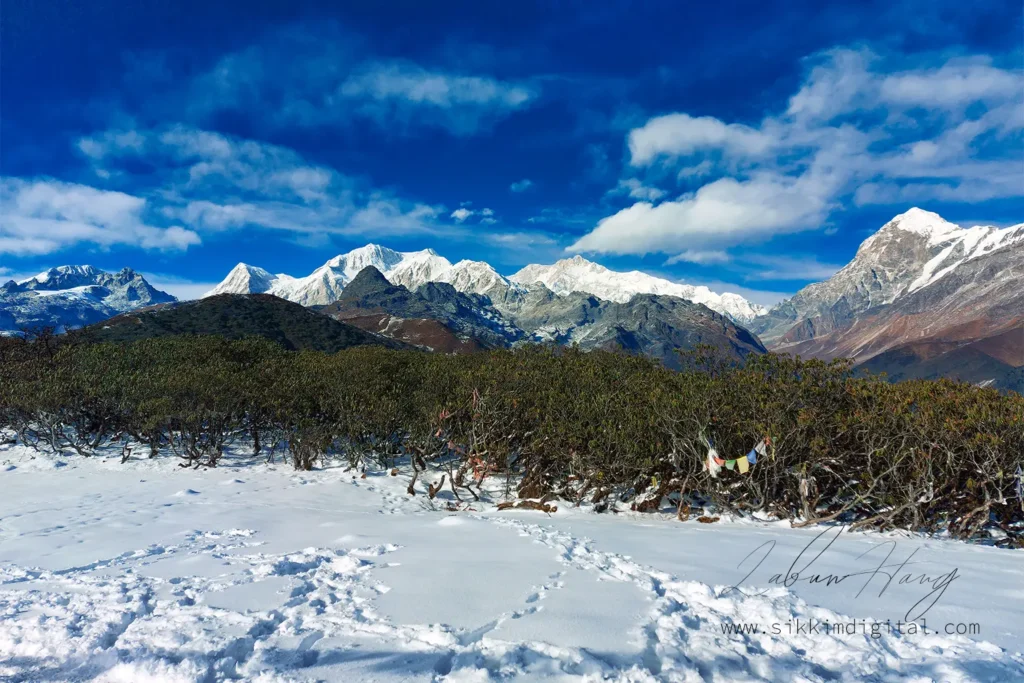
The Dzongri trek climbs from Yuksom through forest trails, rhododendron-covered slopes and high-altitude terrain to an area near 4,000 metres. On clear days, the wider Dzongri landscape offers memorable Himalayan views. The journey is shorter than the full Goechala route but still involves substantial uphill walking and acclimatisation.
A dedicated Dzongri guide should cover its daily route, accommodation, permits, difficulty and preparation in detail. For this general Yuksom guide, the key point is that Dzongri is one of the major journeys beginning from the town.
Goechala Trek
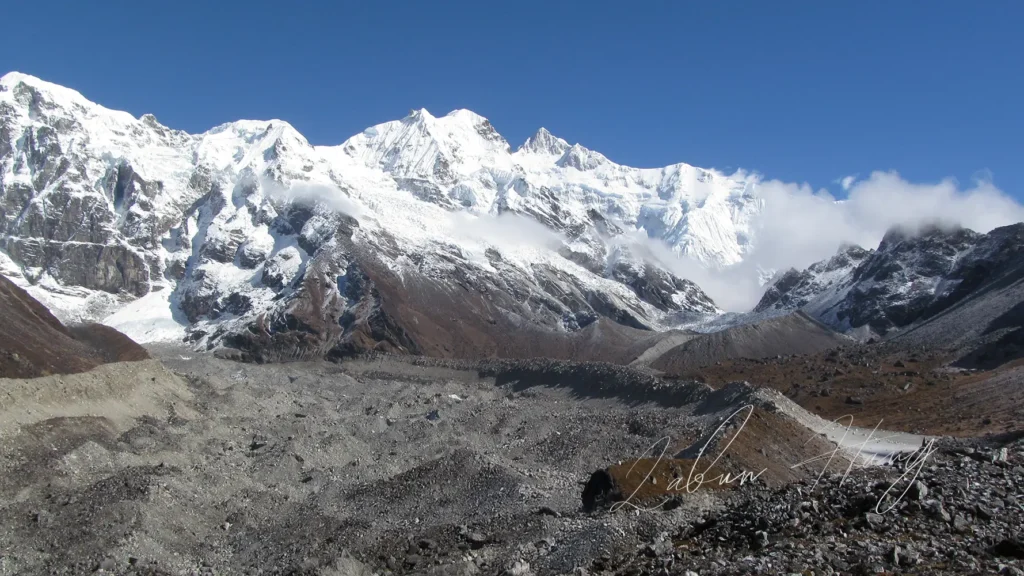
Goechala continues into higher valleys beyond Dzongri, towards the dramatic mountain scenery around Samiti Lake and Viewpoint 1. The usual trekking objective is approximately 4,600 metres above sea level; the higher Goechala Pass is not the normal permitted endpoint of the standard route.
The trek is demanding because of prolonged walking, steep sections and altitude. I have explained these challenges in my separate Goechala trek difficulty guide. For the full route, daily itinerary, permits and prices, read the Goechala Trek guide.
Khangchendzonga National Park and its sacred landscape
Khangchendzonga National Park was inscribed on the UNESCO World Heritage List in 2016 as a site recognised for both natural and cultural significance. Its mountains, forests, valleys and glaciers are important for biodiversity, but the landscape also holds sacred meanings for different communities.
UNESCO’s recognition includes the coexistence of Buddhist traditions and older indigenous sacred relationships with the land. For visitors, that is a reminder that these mountains are not only a setting for adventure. Their cultural importance calls for care, restraint and respect.
Best Time to Visit Yuksom
Yuksom can be visited in different seasons. The best period depends on whether you are coming for historical sites, a quiet stay, photography or a high-altitude trek.
- March to May: Spring brings greener hillsides and seasonal flowers, including rhododendrons along many higher trekking routes. Rain and mist are still possible, and conditions vary with altitude.
- October to November: Autumn is popular for sightseeing and trekking because clear mountain views are often possible after the monsoon. Evenings become cooler as winter approaches.
- December to February: The town can be pleasantly quiet for cultural visits, although higher trekking areas may face snow, cold or access restrictions.
- June to September: Monsoon rainfall brings lush landscapes but can make paths slippery, reduce visibility and disrupt mountain roads. Check current conditions before travelling.
A clear day is never guaranteed, even in a popular season. If your plans involve longer outdoor excursions, keep some flexibility rather than arranging every hour around ideal weather.
How to Reach Yuksom
Yuksom has road connections to other towns in Sikkim and to the transport hubs of North Bengal, but no railway station or commercial airport of its own.
From Bagdogra Airport or New Jalpaiguri
Bagdogra is a common airport for travellers arriving by air, while New Jalpaiguri (NJP) is the principal railway connection. From either location, visitors can arrange a private taxi or use shared transport with transfers at suitable regional points. Actual travel time depends on the route, road conditions, weather and traffic.
From Pelling, Gyalshing and Gangtok
Yuksom is approximately 33 kilometres from Pelling and 45 kilometres from Gyalshing by road. It can be included in a broader West Sikkim journey. Gangtok is also connected by road, though the drive is considerably longer than a short local transfer. Road conditions and the chosen route affect travel times.
For longer journeys, especially during the monsoon, start early and check road conditions. Local taxis are useful for attractions spread across the region, while many places within central Yuksom can be explored on foot. A dedicated transport guide can cover shared-vehicle connections, route choices and fares more thoroughly than this overview.
Where to Stay in Yuksom
Accommodation is one of the ways Yuksom has changed. The town now has affordable hotels, more comfortable and luxury-oriented properties, and a growing number of reputed homestays. Visitors are not limited to basic trekking accommodation or one type of room.
Hotels suit travellers who prefer conventional services, with options at different price and comfort levels. Homestays offer a more personal experience and, depending on the property, an opportunity to share meals and conversation with local hosts. Some are in the centre, while others are in quieter nearby settlements.
Before booking, check the actual location, accessibility, heating or hot-water arrangements, parking if needed, and the facilities shown in recent photographs. Trekking visitors may also want enough time in Yuksom to rest and organise their equipment before departure. Property names and prices change, so I would not treat a fixed list of hotels as permanently reliable.
Food, Shops and Everyday Practicalities
In Yuksom, the food available to visitors reflects both familiar Sikkimese cooking and the needs of travellers. You will commonly find rice-based meals, momos, noodles and soups, though the menu varies between restaurants, hotels and homestays. If you are staying with a local family, ask what they regularly cook instead of assuming every traditional dish is sold in town.
Shops provide everyday necessities, and a private pharmacy is among the services available locally. However, specialist trekking equipment, less common medicines and particular travel supplies should be arranged in advance.
ATMs, Cash and Online Payments in Yuksom
There is no regular bank ATM in Yuksom town as of October 2026. This is worth knowing before you arrive, especially if you are starting a trek or may need cash for transport and unforeseen expenses. Withdraw the cash you expect to need before travelling to Yuksom rather than assuming an ATM will be available after you get here.
On the other hand, UPI scan-and-pay is widely accepted at shops, hotels and homestays. Google Pay (GPay) and other QR-based payment apps are part of everyday transactions in the town. You should still keep some cash, since digital payments depend on working connectivity, power and the payment service.
Small handheld card-reading or micro-ATM services may sometimes be available through a Gram Panchayat unit, but their operation and cash availability should not be taken for granted. Some local shopkeepers may also agree to provide a small amount of cash against a QR payment, sometimes requesting an extra charge; for example, about ₹20 for ₹1,000 has been reported locally. This is an informal arrangement, not an ATM service or a guaranteed facility. The safest plan is to carry sufficient cash before arriving.
Yuksom Today: A Small Town That Has Changed
I want to include this part because a description of Yuksom that ends with monasteries and mountains is incomplete. The town where I grew up has changed significantly in education, healthcare, administration and the facilities available to travellers. These developments matter to residents every day, even when they do not appear on sightseeing maps.
Schools and the changes I witnessed growing up
I began my education at Annie’s House Nursery School, an English-medium school in Yuksom, and studied there through Class 5. I later joined the government school in Class 7. At that time, the government school offered classes only up to Class 10. For higher secondary study, families had to look towards other places such as Pelling or Tashiding, depending on the available subjects.
Even students appearing for the Class 10 CBSE examinations travelled to Pelling for the examination centre in those days. Looking back, these journeys remind me how different local educational opportunities were when I was young.
Today, Yuksom Government Senior Secondary School provides education up to Class 12. Students have more opportunities to continue studying in town, and the range of academic and vocational options has broadened compared with my school years. Good Shepherd English Medium School and Life Vision Academy are among the private English-medium schools in Yuksom.
These details are not included to turn a travel guide into a school directory. They show why describing Yuksom only as a remote village no longer captures the reality of life here.
The Primary Health Centre and local medical facilities
Yuksom’s Primary Health Centre has improved substantially from the limited facilities available in earlier years. Based on my local knowledge, it provides routine consultations and services that include blood and laboratory testing, X-ray facilities and dental care. There is also a private pharmacy in the town.
The centre is useful for residents and visitors, but it is not a substitute for a major specialist hospital. Individual services can depend on staffing and equipment on a particular day. Eye-specialist services are not something travellers should assume are available locally, and patients needing critical or specialised treatment may be referred to facilities in Gyalshing or Gangtok, including the STNM Hospital at Sochakgang.
If you have a significant health condition or are preparing for a high-altitude trek, check the treatment and emergency arrangements that actually apply to your circumstances. A small town’s improving medical infrastructure should not be confused with the resources of a large city hospital.
Administration, business and tourism services
Yuksom also has a Sub-Divisional Magistrate’s office and other public services. The presence of local offices has reduced the need for some journeys that residents once made to larger administrative centres.
Tourism has developed alongside those changes. Local operators, transport providers, hotels and homestays support visitors with very different plans, from a short heritage holiday to a multi-day Himalayan trek. The town is not a major city, nor should it try to resemble one, but it has progressed beyond the limited facilities many older travel descriptions suggest.
Trekking Permits: What Has Improved in Yuksom?
Permit arrangements are particularly important to people visiting Yuksom for Dzongri, Goechala and other authorised trekking routes beginning in this region. The essential point is that entry permission for a foreign visitor to enter Sikkim, route-specific trekking permission and national park permission are separate matters. One should never be casually described as another.
There has also been a practical improvement in where local operators can arrange trekking paperwork. In earlier years, registered local travel agents often had to go to Gangtok to obtain permits for foreign trekking clients. The process later moved closer, through Pelling, but still required travel outside Yuksom. Local permit services for the Dzongri–Goechala route now allow registered operators to coordinate and obtain the relevant route permissions in Yuksom itself, saving time and unnecessary journeys.
The local permit facility serves designated trekking routes associated with Yuksom, including Dzongri and Goechala. It is not a general permit centre for unrelated routes elsewhere in Sikkim.
For foreign tourists, a Sikkim Inner Line Permit, also called a Restricted Area Permit, relates to entering and staying in Sikkim; it is not itself a trekking permit. A registered local travel agent handles the appropriate trekking arrangements, and entry to Khangchendzonga National Park involves separate permission. Indian visitors generally do not require the foreign-visitor entry permit to come to Yuksom, but protected-area trekking still calls for the relevant permits and acceptable proof of nationality. Aadhaar alone should not be relied on as proof of nationality in these applications.
Requirements differ by citizenship, route and administrative procedure. For the current documents and issuing rules, consult a registered local operator and the Sikkim Tourism and Civil Aviation Department’s permit guidance. A separate article will be better suited to explaining each permit, the documents and the application process step by step.
The People Behind Yuksom’s Conservation Work
Yuksom has a notable history of community-led environmental protection. The Khangchendzonga Conservation Committee was established here in 1996, when local people and stakeholders responded to growing concerns about the effects of tourism and trekking on the surrounding landscape.
Its work has included waste management, conservation awareness, responsible trekking and support for community livelihoods. These efforts matter because environmental protection is not simply something imposed from outside: local people have helped shape how visitors use and respect the region.
The mountains around Yuksom are important for biodiversity and for cultural and sacred traditions. As a visitor, carrying back your waste, respecting religious places, following local rules and supporting responsible operators are simple ways to contribute to that balance.
How Many Days Should You Spend in Yuksom?
For a traveller who is not setting out on a trek, two days is a comfortable starting point. It leaves room to see the principal historic sites without rushing, take the uphill walk to Dubdi Monastery and spend time in the town itself.
- One day: Get an introduction to central Yuksom and a few of its major historical or religious sites.
- Two days: Add Dubdi Monastery, leisurely local walks and more time for heritage attractions.
- Three or more days: Explore the surrounding region, visit nearby communities or plan longer excursions at a sensible pace.
A trekking trip needs additional days based on its itinerary. For detailed combinations of sights and a practical day-by-day plan, see the Yuksom sightseeing itinerary. You do not need to fit every nearby waterfall and monastery into a single day.
Frequently Asked Questions About Yuksom
Why is Yuksom famous?
Yuksom was Sikkim’s first capital and the site of Phuntsog Namgyal’s coronation in 1642. It is also known for Norbugang, Dubdi Monastery and trekking routes to Dzongri and Goechala.
Where is Yuksom located?
Yuksom is in Gyalshing district, formerly West Sikkim, in the Indian state of Sikkim, at approximately 1,780 metres above sea level.
Is Yuksom a village or a town?
Many older travel sources call it a village. The central settlement now functions as a developing small town with expanded accommodation, schools, healthcare, administration and tourism services. This describes its present character, without implying a particular formal municipal status.
Is Yuksom worth visiting without going trekking?
Yes. Visitors interested in history, Buddhist heritage, indigenous culture, peaceful local walks and West Sikkim’s scenery can enjoy Yuksom without attempting a high-altitude trek.
How far is Yuksom from Pelling?
Pelling is approximately 33 kilometres from Yuksom by road. Travel time depends on the route, weather and road conditions.
Can you see Kanchenjunga from Yuksom town?
Mountain visibility varies considerably by location and weather. Do not expect an uninterrupted view of Kanchenjunga from every point in town; the higher Dzongri and Goechala routes are especially well known for their mountain panoramas.
Are hotels and homestays available in Yuksom?
Yes. Yuksom offers hotels at different comfort levels, including upscale options, alongside established and developing homestays. Check the actual facilities and recent photographs before booking.
Do I need a permit to visit Yuksom?
Indian visitors can normally travel to Yuksom without a foreign-visitor entry permit. Foreign visitors must follow the applicable Sikkim entry rules. Trekking and protected-area permissions are separate from ordinary entry into the town.
Can I obtain a Goechala or Dzongri trekking permit in Yuksom?
The local permit process for routes such as Dzongri and Goechala is handled through the relevant authorised arrangements and registered local travel agents. It should not be confused with entry permits for Sikkim or permissions for unrelated trekking areas.
What is the best time to visit Yuksom?
Spring and autumn are popular, especially March–May and October–November. Other periods may suit quieter travel, but monsoon conditions and cold-weather trekking limitations should be considered.
A Final Word from Someone Who Grew Up Here
Yuksom is often introduced through one sentence: the place where Sikkim’s first king was crowned. It is true, and it matters. But the town is much more than the event of 1642 or the first morning of a trek.
I know Yuksom through its familiar paths and historical places, and through the changes that affected everyday life: travelling elsewhere for education, seeing local medical services improve, and watching tourism and administrative facilities develop closer to home. I also know that the history of our land cannot be told only through the story of one dynasty. The indigenous communities and traditions of Sikkim belong in that account too.
If you come to Yuksom, visit Norbugang and Dubdi, explore the landscape and learn about the mountain routes. But leave a little time to notice the town itself. There is a living place here, not just a list of attractions.

Conversation