

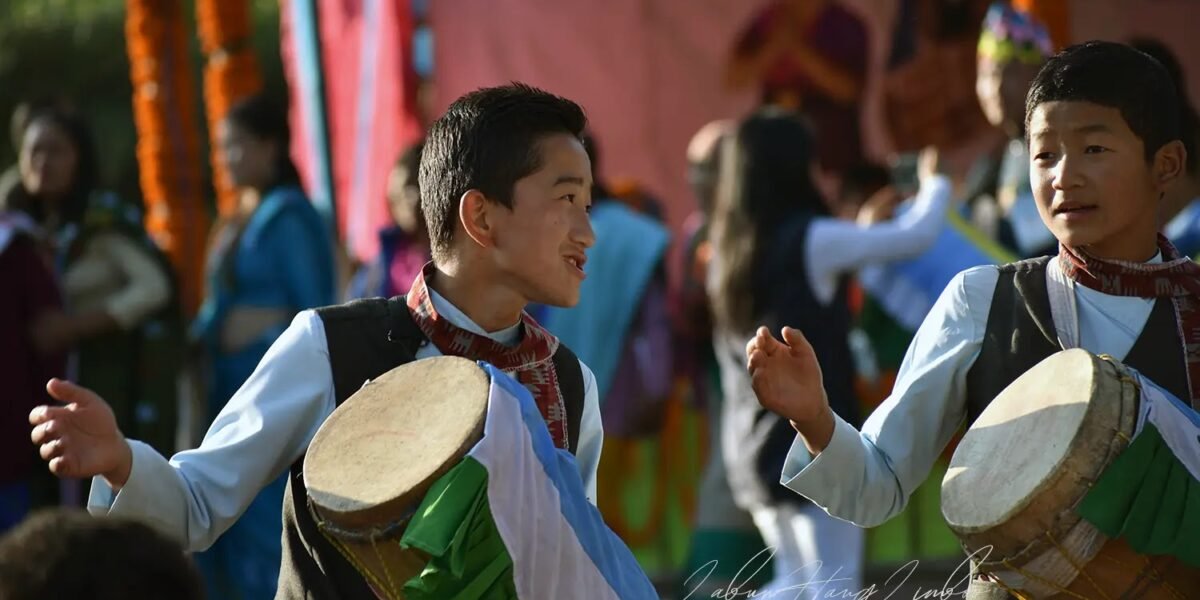
A forgotten indigenous legacy emerges from centuries of systematic erasure.
The Tsong Limboo — The Forgotten Founders of Sikkim
In the valleys of Sikkim, where the holy Khangchendzonga mountains touch the sky, lies a truth that changes everything we know about this land’s beginning. The Limboo people, called Tsong by the Lepchas and Bhutias, are not newcomers to these mountain valleys. They are co-founders. They are the original children of this land, whose heartbeat matches the rhythm of these ancient peaks and soil.
Their sacred homeland sits at the spiritual center where gods once walked with people. Every stone holds memory. Every stream carries ancestral songs.
The written history of Sikkim starts with kings and kingdoms. But the deeper truth lives in the voices of grandparents whose words carried the weight of many generations. They spoke of Tsong kingdoms that grew strong long before the Lho-Men-Tsong-Sum treaty of 1642. These were not distant legends to them. These were lived memories passed from shaking hands to eager hearts.
Records exist that prove the Tsong (Limboo) and the Rongs (Lepchas) walked these paths together. They breathed the same mountain air. They worshipped the same sacred peaks. This was long before any Chogyal kingdom claimed power over their ancient bond.
In that important political agreement of 1642, the Tsong stood as equal partners. They were not subjects begging for favor. They were sovereign people extending their hand in friendship to birth the Sikkimese state.
Yet somewhere in the cruel game of power, their place in Sikkim’s story was wiped away. From equal partners in founding a state, they became invisible citizens in its modern democracy.
Hard to believe, right? But that is exactly what happened.
For me, the silence around their contributions is not just forgotten history. It is a wound that still bleeds fresh. Political exclusion and constitutional neglect have cut deep into their identity.
How did the sons become strangers in their own homes? How did equal partners in building the state become invisible in the constitution? How did the guardians of sacred knowledge get labeled as outsiders in their ancestral lands? How did their songs get dismissed as foreign melodies?
How were they reclassified as Nepali, despite having different mythology, different beliefs, a different language, and a culture that breathes with its own unique rhythms?
The answers lie buried under layers of monastic rule, colonial classifications, and modern political convenience. Each layer is another shovel of earth thrown over living memory.
Yet the Limboo spirit refuses to be buried. It endures. It is sustained by the Mundhums, oral scriptures that pulse with the moral and spiritual backbone of a civilization. This civilization watched empires rise and fall. It existed before both Hindu kingdoms and Buddhist monarchies.
Today, as Sikkim deals with the complexities of democratic representation, the Tsong Limboo find themselves trapped in constitutional limbo. They were recognized as Scheduled Tribes only in 2003. Yet they are still denied the legislative seats guaranteed by Article 371F.
Their historical marginalization stretches like a shadow into the 21st century. Each denied voice is another generation silenced.
Let me be clear: I am not writing boring history here. I am writing about suppressed tears, blood, and the final breath of ancestors who died trying to reclaim their rightful place in the very story they once helped to build.
Identity of the Limboo (Tsong) Communities of Sikkim
Names and Meanings
Language carries the weight of identity, and for the Limboo people, their multiple names tell the story of resistance, adaptation, and survival across centuries of cultural encounters.
To the Bhutias and Lepchas of Sikkim, they are Tsong—a designation rooted in the belief that they originated from the Tsang province of Tibet. This name carries particular significance within the Communities of Sikkim, as it reflects the indigenous recognition of their distinct identity long before external classifications emerged.
The term “Limboo”—by which they are widely known today—came from an entirely different source. When the Gorkha forces encountered these mountain warriors during their expansionist campaigns, they were struck by their prowess with the bow and arrow.
The Gorkhas labeled them “Limboo,” meaning “archer,” a name that speaks to their military resistance against conquest. Some traditions suggest that their ancestral stronghold of Limbuan in Eastern Nepal earned its name because it was “won on the strength of the bow.”
Yet the most meaningful designation comes from within the community itself. The Limboo people call themselves Yakthumba—a term that beautifully encapsulates their relationship with their homeland.
Composed of three Limboo words (Yak meaning hill, thum for place, and ba meaning inhabitants), Yakthumba translates as “Hill People.” This self-identification emphasizes their indigenous connection to the mountainous terrain that has shaped their worldview, spirituality, and cultural practices for millennia.
This linguistic complexity reveals the layered identity of a people who have never been passive subjects of history.
Whether as Tsong in ancient agreements, Limboo in resistance narratives, or Yakthumba in spiritual self-understanding, they have maintained their distinctiveness while adapting to the changing political landscapes of the Himalayas.
Homeland: Limbuwan and the Sacred Geography
The ancestral territory of Limbuwan spans from the Arun River in eastern Nepal to the western districts of Sikkim, embracing both flanks of the mighty Khangchendzonga range.
This vast domain, with its traditional stronghold known as Pallo Kirat, represents far more than geographical boundaries—it embodies a cosmological landscape where divine intervention shaped human destiny.
Limbuwan reaches its spiritual crescendo at the phenomenal architecture of Mount Kumbhakarna, known globally as Jannu, but revered by the Limboo as Phoktanglungma. This eastern extremity of the Khangchendzonga range commands an imposing presence not merely as a geographical landmark, but as the sacred theater where creation myths unfold.
The Limboo cosmology centers entirely on this landscape, with Phoktanglungma serving as the axis mundi—the cosmic center where earth touches heaven.
Every significant event in Limboo mythology radiates from this sacred geography. Creation stories begin here, scripts are divinely revealed in its caves, and the spiritual ecology of Yuma Samyo draws its power from the rivers, forests, and peaks of this blessed terrain.
The valleys of Limbuwan are consecrated ground where the footprints of gods remain embedded in stone and stream.
This deep spiritual connection to Limbuwan explains why political boundaries have never truly contained the Limboo identity. Whether divided between Nepal and Sikkim by Gorkha conquests or colonial administrative convenience, the Tsong communities remain bound by their shared reverence for this sacred landscape.
The mountains know no borders, and neither does the Limboo soul that draws sustenance from Phoktanglungma’s eternal presence.
Uba Hang: A Sacred Legacy in Limboo Mythology
Long before the ink dried on the historic Lho-Men-Tsong-Sum treaty of 1642, and centuries before the Limboo script was carefully etched into stone, the story of Limboo civilization had already begun to unfold. It was rooted in the powerful legend of Uba Hang, an ancestral figure whose epic journey in the 9th century helped shape the cultural imagination of the entire Limboo people.
The saga begins in the year 841 CE, when Langdarma, the last emperor of the unified Tibetan Empire, was assassinated. His opposition to Buddhism and support for the indigenous Bon faith had shaken the foundations of Tibetan monastic rule. His death marked the collapse of the central Tibetan state and scattered his descendants across the Himalayas.
Among those descendants was Uba Hang—a son of Langdarma, known in Limboo oral tradition as Lasa Hang. Cut off from his royal succession and guided by divine dreams sent by Yumasam, the great mother deity, Uba Hang turned his exile into a journey of spiritual renewal.
Between 846 and 849 CE, he led a migration from the Kham region of eastern Tibet into the forested, fertile lands that would later be known as Limbuwan. At that time, Limbuwan was not part of present-day Nepal but existed within a broader cultural and territorial landscape that included parts of ancient Sikkim. It was only much later, during the 18th-century military campaigns of Prithvi Narayan Shah, that Limbuwan was annexed into the expanding Gorkha kingdom.
This context makes it historically evident that the Limboo communities—known as Tsongs within Sikkim—were already established in the region long before the Lho-Men-Tsong-Sum agreement of 1642. Uba Hang’s story forms part of a shared ancestral memory, but it does not define the separate and autochthonous development of the Tsong identity in Sikkim.
Uba Hang’s arrival was not a conquest in the typical sense. He did not seek to build an empire through war, but to restore sacred order through ancestral values. Instead of armies, he brought the ancient laws of the forebears—principles rooted in harmony, justice, and kinship with the natural world. In the highlands of Pallo Kirat and the valleys beneath Phoktanglungma, he unified diverse hill tribes under shared ethical codes.
Oral traditions remember him not only as a king but as a Yehang—a moral teacher and cultural guide. His rule introduced one of the earliest known political frameworks among the ancient Limboo people, grounded not in feudal decree but in the oral codes later preserved through the Mundhums.
From Uba Hang’s time onward, the Limboo—also referred to as Yakthung, Subba, or Limbu in various contexts—were more than a collection of clans. They became a people united by memory, ritual, and language. His descendants, remembered as the Lhasa Gotra, carried forward both royal lineage and spiritual purpose.
The legacy of Uba Hang is still honored in Limboo homes and ceremonies. The great feast he held after the unification of his people is echoed in the Tong-Sum-Tong-Nam festival, celebrated in some regions of eastern Nepal. However, this festival is not practiced broadly today, and its mention remain geographically contextualized.
In Limboo mythology, Uba Hang remains more than a historical figure. He is a cultural ancestor whose journey reflects the spiritual and ethical compass of a people rooted in the land. His story is not the origin of Tsong political identity, but a deeper affirmation of Limboo continuity—a civilization that predates maps, treaties, and dynasties, enduring through sacred knowledge, ancestral law, and the memory of who they have always been.
Sukhim: The True Story Behind Sikkim’s Name
A Name Born of Love, Not Conquest
When nations get their names, history usually leaves clues in the language. The name Sikkim, spoken today in government halls and written on official papers around the world, did not come from conquerors or colonial map makers. It came from something much more beautiful: the soft, amazed words of a Limboo queen who simply said “Sukhim” in her own language, meaning “New House.”
The Queen Who Named a Kingdom
This sacred word comes from the 1600s, during the time of the second Chogyal, Tensung Namgyal (1644–1700). He had three royal wives, but the most important culturally was Queen Thungwamukma, a princess from the Arun Valley of Limbuan.
When she first saw the newly built royal palace at Rabdentse, the capital he had moved from Yuksom, she called it “Sukhim” in Limboo. She was expressing her wonder at the new palace. That single word, rooted in her native language and spoken with royal authority, would become the name of the entire nation.
The Language Tells the Truth
The language facts are clear and well documented. In Limboo:
- Su = new
- Khim (or Khyim) = house or palace
Put together: Sukhim = “new house”
British administrator H. H. Risley confirmed this origin in his Gazetteer of Sikkim (1894, page 40). He noted that “Sukhim,” the Limboo name for the palace, slowly changed through natural speech patterns into Sik-kim, passing through forms like Sukkhim and Sikkom.
A. Campbell also recorded this in his important 1840 paper “Note on the Limboos and Other Hill Tribes” (Journal of the Asiatic Society of Bengal, Vol. 9). He documented how the Tsong people used such language forms across their political territory.
Even Sinha (1975) called the state name’s etymology “the greatest contribution of Limboos to Sikkim.” This was a rare moment when someone acknowledged indigenous naming power in how states get formed.
Naming as a Sacred Right
This naming was not just symbolic. In traditional Himalayan societies, the right to name was sacred authority. Only those whose voices held political legitimacy could do this.
When a Limboo queen named the new royal seat, it was public recognition that the Tsong community held an essential place in Sikkim’s political life. This makes their later marginalization deeply ironic.
Different Words, Different Worldviews
When we compare how different communities named this land, we see deeper philosophical differences:
- The Tibetans called Sikkim Drenjong, “Valley of Rice”
- The Bhutias knew it as Beyul Demazong, “The Hidden Valley of Rice”
- The Limboos called it Sukhim, “New House”
This difference in language is important. It shows how differently these communities saw the land.
While Tibetan and Bhutia names placed Sikkim in terms of farming and cosmic meaning, the Limboo term reflects human action, building something new, and political power.
The Word That Lives as Resistance
Today, while “Sikkim” appears on passports and in parliament buildings, Tsong elders still call their homeland “Sukhim.” In doing so, they quietly resist centuries of being erased.
Each time they say it, they remind us of the foundational truth: this land carries a name that was not born in a monastery or imperial court, but in the language of a queen whose people built the very cultural foundation of this Himalayan state.en whose people built the very cultural architecture of this Himalayan state.
The Lingering Irony and the Voice of the Land
I find myself thinking about the strange irony that haunts this place. A state that was born from the words of a Limboo woman now turns its back on her people. The descendants of that woman still live here, but they have no real voice in the government that speaks their ancestor’s name every day.
When I hear someone say “Sikkim,” I know they’re honoring a people without even realizing it. Yet those same people have been forgotten. Their stories lie buried under piles of paperwork and years of politicians who simply don’t care.
But I believe the mountains still remember. The rivers remember too.
And when I listen to the Limboo people speak, I still hear “Sukhim” on their tongues. That word is waiting. It deserves more than just a place in history books. It deserves a place in our hearts and in how we treat the people who gave it to us.
Yuma Samyo and the Cultural Soul of the Limboo Communities
The Spiritual Core
Deep within Limboo culture lies a faith so old and powerful that it doesn’t fit into our usual boxes of religion. Yuma Samyo centers on something beautiful and rare: a belief that the ultimate divine force is feminine. The Limboo people call her Tagera Ningwaphuma, the Mother Creator. Her energy flows through everything that exists.
This isn’t the male-focused religion we see in Christianity, Islam, or Judaism. It’s not the many gods of Hinduism or the godless philosophy of Buddhism either. Yuma Samyo stands apart. It sees the supreme feminine as the source of all creation.
The Limboo people believe Tagera Ningwaphuma didn’t just create the earth and universe and all living things. She also created the smaller gods and goddesses who help her keep everything in balance. This creates a rich spiritual system where the divine feminine is the ultimate reality, complete in herself and always creating.
This belief shapes everything about how Limboo society works. It affects how they treat the environment, how men and women relate to each other, and how they organize their communities.
Most religions tell people to reject the physical world and focus on the spiritual. Yuma Samyo does the opposite. The material world is sacred. The earth itself is divine, not something broken that needs fixing. When you look at a river, a mountain, or a forest, you’re seeing Tagera Ningwaphuma’s creative power at work. Every living thing carries her mark.
This creates a spirituality that naturally protects the environment. Taking care of nature becomes a religious duty. People relate to the natural world with respect, not as something to use up or control.
The ethics of Yuma Samyo also set it apart from other faiths in the region. The Limboo people believe in biogenesis, the idea that life only comes from other living things. This puts their creation stories in line with what modern science tells us, while keeping deep spiritual meaning.
This blend of scientific understanding and mystical wisdom shows how thoughtful and complex Limboo spiritual traditions really are.
Mundhums: The Oral Constitution of the Tsong People
The Mundhums represent one of humanity’s most extraordinary achievements in oral literature—a comprehensive spiritual and cultural encyclopedia transmitted across generations through memory, song, and ritual performance.
The term itself, translating as “the power of great strength,” reveals the Limboo understanding that their sacred literature contains not merely information, but transformative spiritual energy capable of sustaining a civilization across centuries of persecution.
These sacred narratives work on many levels at once. They are creation myths, history, moral lessons, ritual guides, and mystical teachings. Unlike scriptures written on paper, which often remain fixed, the Mundhums are alive. They breathe, they change, they adapt, while still holding on to their core spiritual essence.
This is why Limboo culture survived even during times of suppression, when written traditions might have been destroyed.
The guardians of this sacred knowledge—the Sambas (folk poets), Phedangmas (ritual priests), and Yemas (female spiritual practitioners)—represent more than religious functionaries. They are living libraries, carrying within their minds and hearts the accumulated wisdom of millennia.
When Limboo language and script were banned for 173 years, these spiritual guardians became the sole repositories of Tsong civilization, preserving through memory what could not be committed to writing.
The transmission of Mundhums involves sophisticated mnemonic techniques, musical structures, and ritual contexts that ensure accuracy across generations. Each verse carries multiple layers of meaning—literal, symbolic, and mystical—requiring years of training to master.
The Sambas, in particular, developed extraordinary artistic abilities, weaving together narrative, poetry, music, and performance in presentations that could last for days.
The Four Mundhums and Lepmuhang
The architectural sophistication of Mundhum literature reflects the intellectual achievements of Limboo civilization.
The sacred corpus divides into two primary categories: Thungsap Mundhum (oral tradition) and Peysap Mundhum (written compilation), each serving distinct functions in preserving and transmitting cultural knowledge.
The Thungsap Mundhum represents the original oral form—epic narratives sung by learned Sambas, where “Sam” means song and “Ba” indicates the male practitioner who masters these sacred songs. These performances were not merely entertainment but ritual events that connected communities with their ancestral wisdom, seasonal cycles, and cosmic order.
The oral Mundhums possessed particular power because they emerged directly from the breath and voice of the practitioners, carrying spiritual energy that written texts could not convey.
The Peysap Mundhum, developed after the creation of Limboo script, expanded into four specialized texts: Soksok Mundhum, Yehang Mundhum, Sapji Mundhum, and Sap Mundhum. Each section serves specific functions in the comprehensive spiritual education of the community.
The Soksok Mundhum contains the foundational cosmological narratives—creation stories, the emergence of humanity, the origins of evil forces such as envy, jealousy, and anger, and explanations for childhood mortality. These texts provide the theological framework for understanding existence itself.
The Yehang Mundhum chronicles the emergence of human civilization through the wisdom of early leaders who established laws, marriage customs, seasonal worship patterns, and purification rituals.
The Lepmuhang Mundhum specifically addresses practical spiritual life—language development, seasonal ritual cycles, purification ceremonies for birth and death, and the complex social customs that maintain community harmony.
It also explores the fascinating phenomenon of linguistic diversity among the Kirat peoples and the cosmological significance of seasonal celebrations.
This systematic organization of sacred knowledge demonstrates the intellectual sophistication of Limboo civilization and explains how the Communities of Sikkim once possessed one of the most comprehensive oral literature traditions in the Himalayan region.
Phoktanglungma: Where human Life Began
The Sacred Mountain of Creation
Rising 7,710 meters into the clear Himalayan sky, Phoktanglungma stands as the 32nd highest mountain in the world. But for the Limboo people, its importance goes far beyond any earthly measurement.
The outside world knows it as Jannu or Mount Kumbhakarna. But this majestic peak serves as the cosmic center where divine creation began and where the eternal conversation between heaven and earth continues.
The Divine Workshop
The Mundhum stories tell us that after Tagera Ningwaphuma created the earth from nothing, she appointed Creator God Sigera Yabhundin Mang Porokmi Wambhami Mang to breathe life into the planet.
Wambhami Mang lived in the sacred realm of ‘Sang Sang Den’, one level below the supreme goddess’s home. He chose Phoktanglungma’s summit as his sacred workshop where life itself would be made.
At the specific location called ‘Mangjirima Manglodama’ on the mountain’s peak, Wambhami Mang thought deeply about what form humans should take. The Mundhums describe this as more than just creative thinking. It was a cosmic building project where divine consciousness shaped the basic design of human existence.
The mountain became both laboratory and temple, where the creative force of the universe focused its attention on making beings capable of awareness, love, and spiritual growth.
The Failed First Attempts
The first attempts at human creation, using precious metals, failed completely. No matter how perfectly made, these forms stayed lifeless.
Only after talking with Tagera Ningwaphuma did Wambhami Mang understand the principle that would later become central to Yuma Samyo beliefs: life can only come from existing life forms.
Coming down from the sacred peak, the Creator God gathered bamboo ash, fowl droppings, rainwater, and resin. All were products of living systems. He returned to Mangjirima Manglodama to begin again.
The Successful Creation
The successful creation of Laikkangsa (the male) and Simbummasa (the female) marked the victory of life-based principles over simple material shaping.
Simbummasa woke up on the eighth day, Laikkangsa on the ninth. These numbers continue to hold sacred meaning in Limboo ritual cycles.
This creation story makes Phoktanglungma not just a geographic landmark, but the birthplace of conscious life itself.
Riki Bed: The Sacred Gift of Writing
The Divine Script Revealed
The second great divine story that happened on Phoktanglungma’s sacred slopes was about giving written knowledge to humanity. This event forever linked the Limboo people to the cosmic library contained within their mountain sanctuary.
When Sirijonga Hang, the legendary 10th-century king, wanted to give his people a script that could preserve their cultural wisdom, he turned to the goddess Nisammang Ningwaphuma, the divine patron of wisdom and learning.
Through deep meditation and spiritual discipline, Sirijonga received a vision directing him toward Phoktanglungma, the mountain that sits to the right of Khangchendzonga when viewed from Sikkim. Following divine guidance, he traveled to the sacred peak where Nisammang Ningwaphuma showed herself and led him to a hidden cave at the mountain’s base.
In the deepest chambers of this underground temple, she showed him a stone tablet bearing the Riki Bed, the divine script that would become the foundation of Limboo literacy.
What This Story Means
This sacred story establishes several crucial parts of Tsong spiritual identity.
First, it confirms Phoktanglungma as the eternal storehouse of divine knowledge, a cosmic library accessible to those prepared through spiritual discipline.
Second, it reveals the Limboo understanding that writing itself is a sacred gift, not a human invention. Each character carries divine energy and connects the writer to cosmic wisdom.
Third, it shows the Limboo belief that their cultural traditions come from direct divine revelation rather than borrowing from neighboring civilizations.
The three months Sirijonga spent mastering the script in the cave represent more than just education. They symbolize the shamanic initiation required to become a bridge between divine knowledge and human understanding.
When he came out to unveil the Limboo script and compose the foundational texts “Kirat Kahun Sapla” (instructions for conduct) and “Kirat Samlo Sampla” (the written Mundhum), he brought forth more than literacy. He delivered a technology for preserving and passing down the sacred wisdom that would sustain Limboo civilization through centuries of persecution.
The Mountain That Meditates
Perhaps the most mystically important aspect of Phoktanglungma lies in its strange resemblance to a hermit seated in deep meditation. This visual connection, recognized by Limboo spiritual practitioners across generations, transforms the mountain from mere geological formation into living embodiment of cosmic consciousness.
The peak’s distinctive shape, with its steep faces rising to a pointed summit, naturally brings to mind the image of a robed figure in contemplative posture, gazing eternally across the Himalayan vastness.
This resemblance carries deep theological meaning within Yuma Samyo spirituality. If the mountain itself appears as a meditating hermit, then the entire Khangchendzonga range becomes a cosmic mandala, a three-dimensional meditation on the relationship between consciousness and cosmos.
The Limboo understanding positions Phoktanglungma as the central figure in this mountain mandala, the cosmic consciousness from which all wisdom flows.
The Hermit’s Teaching
The hermit symbolism also connects Phoktanglungma to the broader Limboo tradition of spiritual seeking. Just as individual practitioners retreat to mountain caves and forest hermitages for intensive meditation, the mountain itself models the ultimate spiritual goal: complete absorption in cosmic consciousness.
The peak’s eternal stillness, its distance from worldly concerns, and its direct communion with sky and star embody the ideal of spiritual realization that Tsong practitioners hope to achieve.
Furthermore, the hermit mountain serves as a constant reminder that true wisdom requires withdrawal from everyday worries.
In a culture where mountain peaks are revered as dwelling places of enlightened beings, Phoktanglungma stands as the supreme example. It’s not just harboring wise hermits, but actually embodying the hermit ideal in its very geological structure.
Living Wisdom
This mystical understanding explains why Phoktanglungma continues to draw Limboo pilgrims and practitioners seeking direct spiritual transmission.
The mountain is not merely a place where divine events occurred in mythical time. It remains an active spiritual presence, a cosmic hermit whose meditation sustains the universe and whose wisdom remains accessible to those prepared to receive it.
Sirijonga Hang: The King Who Changed Everything
The Golden Age of the Limboo People
The reign of Sirijonga Hang (880-915 CE) represents the golden age of Limboo civilization. It was a time when political unity, cultural achievement, and spiritual renewal came together to create one of the most advanced societies in medieval Himalaya.
Rising to power as the feudal conflicts of the 9th century came to an end, Sirijonga unified the warring clans of Limbuan and was elected Kirat king. He established a realm that would serve as the foundation for Tsong identity across the centuries that followed.
More Than Just a Conqueror
Sirijonga’s brilliance lay in understanding that political unity required more than military conquest. It demanded cultural togetherness and spiritual purpose.
When he brought Limbuan together under his rule, he also systematically revived Yuma Samyo to its full glory. Most importantly, he gave his people the revolutionary gift of a written script that would allow the Mundhums to be preserved in permanent form.
The Sacred Script
The creation of the Limboo script represents one of the great intellectual achievements of medieval Asia. Unlike scripts borrowed or adapted from neighboring civilizations, the Limboo writing system came from direct spiritual revelation. This is chronicled in the sacred stories of Sirijonga’s mystical journey to Phoktanglungma.
The divine origin of the script gave it special authority within Tsong culture and connected literacy itself to spiritual practice.
With this new technology of written communication, Sirijonga composed the foundational texts of Limboo political and ethical life. “Kirat Samlo Sampla” put the Mundhums into written form. “Kirat Kahun Sapla” established legal and ethical guidelines for how individuals and communities should behave.
These texts represent the world’s earliest systematic literature in the Limboo language and the constitutional foundation for a distinctly Tsong approach to governance.
A Kingdom Built on Wisdom
The kingdom Sirijonga established was remarkable for how it combined spiritual and earthly authority. As both political ruler and religious reformer, he embodied the Limboo ideal of leadership that serves both worldly welfare and cosmic harmony.
His reign showed that indigenous wisdom traditions could create sophisticated political institutions without borrowing from outside models of kingship or governance.
The Second Sirijonga Teyongsi: A Hero Who Died for His People
A Culture in Crisis
Eight centuries after the golden age of Sirijonga Hang, Limboo civilization faced its greatest crisis. By the early 1700s, the Yuma Samyo faith was under relentless attack from Hindu influence in Nepal and Buddhist conversion efforts in Sikkim.
The written script had mostly disappeared, surviving only in broken pieces of Mundhums kept by scattered families. The political independence guaranteed by Lho-Men-Tsong-Sum was crumbling under increasing Bhutia control and Tibetan monastic influence.
Into this desperate situation stepped Sirijonga Teyongsi, born in 1704 in Yangwarok, the same region that had produced the original Sirijonga.
The Priest Who Claimed to Be a King
Trained as a ‘Muhigum Ongsi,’ a celibate priest devoted to Yuma Samyo teachings and service to the needy, Teyongsi claimed to be the reincarnation of the legendary king. He dedicated his life to reviving Tsong culture and faith.
Working first in Limbuan territories of Nepal, Teyongsi systematically rebuilt the Limboo script, trained eight disciples in the ancient Mundhum traditions, and launched a comprehensive cultural revival movement.
His success in pulling Limboo communities away from both Hindu and Buddhist influence represented a direct challenge to the religious and political powers of both Nepal and Sikkim.
Entering Enemy Territory
When Teyongsi arrived in Sikkim in 1734, he entered a realm torn by succession crises and increasing Tibetan intervention. The powerful Pemayangtse monastery, staffed by monks of pure Tibetan bloodline (‘Tasang’), viewed the Limboo revival as a direct threat to their project of Buddhist control.
The timing was particularly dangerous. Sikkimese rulers were actively promoting Buddhist conversion through the Sangacholing monastery, specifically targeting Lepcha and Limboo subjects.
Success That Sealed His Fate
Teyongsi’s work in the Hee-Martam area of West Sikkim proved extraordinarily effective. The Mundhums record that he succeeded in reviving Limboo culture and faith, pulling entire communities back from Buddhist conversion and reigniting pride in Tsong identity.
This success, however, sealed his fate. The Pemayangtse monks, working with the Tibetan general Rabden Sharpa, conspired to eliminate the threat to their religious supremacy.
The Martyrdom
The assassination of Sirijonga Teyongsi in 1741 at Kalej Khola in Hee-Martam stands as one of the great martyrdoms in Limboo history. The murder, Limboo historians record, was carried out by the monks of Pemayangtse themselves.
Imam Singh Chemjong adds that Sirijonga Teyongsi was put under arrest, tied to a tree and shot to death with poisoned arrows. All his eight disciples were also murdered along with him.
Cultural Genocide Begins
The immediate aftermath of Teyongsi’s martyrdom witnessed one of history’s most systematic attempts at cultural genocide.
The 1741 Sikkimese court order that banned Limboo literature and rituals under threat of death represented more than religious persecution. It was an attempt to erase an entire civilization from existence.
JR Subba, in his book “History and Development of Limboo Language” (2002), mentions a Court decree sent to the Limboos shortly after Sirijonga Teyongsi’s assassination. This message, he translates as:
“Fowls are tamed with fowl-cages, pigs are tamed with pig-neck yoke, Sirijonga is a teacher of Limboo language and literature should not be discussed, otherwise the Administration will award capital punishment.”
This chilling announcement reveals the systematic nature of the cultural attack. The comparison of Limboo intellectual leaders to barnyard animals shows the dehumanizing thinking behind the persecution.
The explicit threat of death for even discussing Limboo language and literature created a climate of terror that forced Tsong culture completely underground.
173 Years of Darkness
The ban extended far beyond religious practice to cover every aspect of Limboo cultural expression. Written materials were seized and destroyed, cultural gatherings were forbidden, traditional festivals were suppressed, and even private instruction in Limboo script became punishable by death.
The monasteries that had orchestrated Teyongsi’s murder now supervised the methodical destruction of centuries of accumulated cultural achievements.
The psychological impact of this suppression cannot be overstated. For a people whose identity was intimately connected to their sacred literature, the forced abandonment of the Mundhums represented spiritual death.
Parents could no longer pass their traditional wisdom to children, priests could no longer perform ancient rituals, and the entire system of Tsong cultural transmission was shattered.
What followed was 173 years of enforced silence. Nearly two centuries during which Limboo culture survived only in the most secretive domestic settings, passed down through whispered fragments and hidden memories.
This period of cultural darkness would not end until 1914, when the British colonial administration finally permitted the revival of Limboo language study. The damage inflicted during this period of systematic suppression continues to hurt Tsong communities today, as generations of cultural knowledge were forever lost to the machinery of religious persecution.
The Lho-Men-Tsong-Sum Pact: A Promise That Was Broken
A Historic Agreement
The year 1642 stands as both victory and tragedy in Limboo historical memory. It was the moment when their political equality was formally recognized and the beginning of their systematic marginalization.
The Tripartite Agreement of Lho-Men-Tsong-Sum, rooted in the oath of unity taken and formally concluded at Denjong Phuntsok Khangsar, represented one of the most progressive political arrangements in 17th-century Asia. Three distinct ethnic communities voluntarily formed a unified kingdom, based on cultural independence and a shared role in governance.
The Numbers Tell the Story
The signing ceremony itself reflected the population and political realities of pre-modern Sikkim.
According to Tsong records, ‘LHO-MEN-TSONG SUM’ had 24 leaders signing: 12 Limbus, 8 Bhutias, and 4 Lepchas. This proves that Limbus had a majority presence and representation in Sikkim since ancient times. This numerical arrangement was not random. It reflected the actual population and territorial control of the communities of Sikkim at the time of state formation.
The kingdom of Sikkim was to be ruled through the council, called ‘Lho-Men-Tsong-Sum’. They all equally had to be represented in the council. They were not supposed to fight among themselves.
If one tribe thought ill of any other tribes, the culprit was to be punished by the promise. The agreement established more than political alliance. It created a sacred kinship where Bhutias served as fathers, Lepchas as mothers, and Limboos as sons, bound by spiritual oaths that forbade war between them.
Seeds of Destruction
Yet this remarkable experiment in multi-ethnic democracy contained the seeds of its own destruction. The Bhutia rulers, increasingly influenced by Tibetan monasticism and political models, began to view the federal structure as an obstacle to centralized control.
The successive Chogyals, rather than honoring the treaty’s spirit of equality, systematically worked to reduce Limboo and Lepcha independence while concentrating power in the hands of the Bhutia nobility and their Tibetan advisors.
The Slow Betrayal
The erosion was gradual but relentless. What began as equal participation in governance transformed into token representation, then into outright exclusion.
The Tsong found themselves redefined from co-founders to subjects, from equal partners to ethnic minorities requiring protection rather than power. The sacred bond of Lho-Men-Tsong-Sum became a historical memory invoked only when convenient for those who had betrayed its fundamental principles.
Reclassification: From Indigenous Tsong to ‘Nepali’
The eighteenth century marked a turning point in the political and cultural status of the Tsong Limboos of Sikkim. Across both Nepal and Sikkim, indigenous Limboo communities were systematically reclassified and stripped of their historical identity through state-driven mechanisms. While this erasure took different forms in each region, the outcome was the same: the marginalisation of a people who were once sovereign participants in Himalayan statecraft.
Nepal: Limbuwan Annexation and Identity Rewriting
Between 1743 and 1774, King Prithvinarayan Shah launched military campaigns to annex the independent principalities of Limbuwan. Among the most significant losses was Morang, ruled by Buddhi Karna Raya Khebang Limbu. Though early treaties promised autonomy to Limbu rulers, these guarantees were gradually broken.
The Gorkha regime introduced the caste-based model of a “garden of four varnas and thirty-six jats”, which served to culturally and administratively absorb Limboos into a homogenised “Nepali” identity. This reclassification erased their aboriginal status.
- Limboo chiefs were reduced to the role of state-appointed Subbas.
- The traditional Kipat land tenure system was undermined through revenue reforms.
- Limboo language and Yuma Samyo religion were excluded from public life.
- Government records and censuses labelled Limboos simply as “Nepali.”
Sikkim: From Recognition to Political Removal
In Sikkim, the Limboos were known locally as Tsongs. While initially recognised as one of the kingdom’s founding communities, their cultural practices came under pressure from Tibetan Buddhist orthodoxy. A royal decree in 1741 formally restricted Tsong rituals, under influence from institutions like the Pemayangtse Monastery.
Political erasure became more explicit in the twentieth century. In 1966, the Chogyal granted Tsongs a reserved seat in the Sikkim State Council. But this representation was short-lived.
Following the 1973 Tripartite Agreement, the Tsong seat was abolished without consultation, and Tsongs were administratively merged into the broader “Nepali” category. The implications were immediate and long-lasting.
- 23 May 1973: Tsong leaders formed the Akhil Sikkim Kirat Limboo Chumlung.
- 15 June 1976: A formal memorandum was submitted, demanding restoration of their seat and recognition.
- 1978: Bhutia–Lepchas were granted ST status; Tsongs were excluded.
Parallel Methods of Cultural and Political Erasure
Though governed by different regimes, both Nepal and Sikkim used strikingly similar strategies to marginalise Limboo identity:
- Suppression of Religion: Yuma Samyo rituals were banned or discouraged in both states.
- Language Marginalisation: Limboo language was excluded from schools and state institutions.
- Loss of Political Voice: Nepal reduced indigenous rulers to Subbas; Sikkim removed the Tsong legislative seat in 1973.
- Identity Reclassification: Both states administratively labelled Limboos as “Nepali,” denying their indigenous status.
These measures did not rely on violence, but rather on state machinery: laws, censuses, education, and religious institutions. The effect was the same—erasure of indigenous Tsong identity and silencing of their historical contributions to the region.
Denied Their Rightful Seats: The Limboo-Tamang Struggle for Justice
A Victory That Became a Betrayal
The recognition of Limboos and Tamangs as Scheduled Tribes in 2003 marked a watershed moment in the struggle for constitutional equality. Yet it also revealed how structural discrimination persists within India’s democratic framework.
The Scheduled Castes and Scheduled Tribes Order (Amendment) Act 2002 (No. 10 of 2003), published on 8 January 2003, should have automatically triggered the reservation of legislative seats under Article 332 of the Constitution.
Yet more than two decades later, the Limboo and Tamang communities remain constitutionally invisible in the Sikkim Legislative Assembly.
The Constitutional Framework and Its Failures
According to the Constitution, Article 332 makes it clear that Scheduled Tribes must be given seats in state assemblies. For Sikkim, Article 371F(f) adds another layer—it gives Parliament the power to make special laws to protect the rights of communities like the Limboos. Yet, even with both of these legal tools in place, their rightful place in the Assembly remains empty.
The refusal to grant reserved seats to the Limboo and Tamang communities is not just a delay—it is a continuation of their long history of being pushed aside, this time through legal loopholes and official silence.
The Roy Burman Commission: A Political Mirage
In 2011, the Government of Sikkim passed a resolution seeking increase in the number of seats in the Sikkim Legislative Assembly from 32 to 40 based on the recommendation of the Roy Burman Commission. The proposed breakup included: 12 for Bhutia-Lepcha, 2 for Scheduled Caste, 2 for Sangha, 4 for Scheduled Tribes, and 20 for General seats.
However, this formula represents nothing more than political theater—a snake charmer’s act designed to mesmerize rather than deliver real change. The Roy Burman Commission’s approach to creating 40 seats is fundamentally flawed when viewed against Sikkim’s demographic realities. With Sikkim’s small population, further delimitation based on this formula would create constituencies that fail to meet even the minimum voting criteria, undermining the very foundation of democratic representation.
The mathematics of democracy cannot be bent to accommodate political convenience. Creating artificially small constituencies merely to appear progressive while knowing they would be constitutionally untenable is political hogwash—a deliberate distraction from implementing genuine solutions.
The Political Economy of Tokenism
The harsh reality is that no political party can honestly deliver justice to the LT communities because they view them merely as a vote bank rather than equal citizens deserving representation. This is the fundamental problem with minority politics in India—communities are courted during elections but abandoned when it comes to substantive action.
The LT issue is essentially about minority rights, and minorities face an inherent disadvantage in electoral politics. The community’s own internal divisions further weaken their collective strength, making them vulnerable to political manipulation. Traditional political parties exploit these fractures, offering symbolic gestures while avoiding meaningful change.
The Supreme Court Verdict and New Possibilities
Recent developments following the Supreme Court’s January 2025 verdict have opened new avenues for resolution. As LTVC president Yehang Tsong stated, “The verdict says, before election assembly seat reservation can be given from the existing 32 Assembly seats. The verdict also says that delimitation for Sikkim assembly seats can happen now under Article 371F.”
This legal clarity eliminates the excuse of constitutional barriers that politicians have long used to justify inaction.
The Need for Collective Resistance
The path forward requires acknowledging an uncomfortable truth: unless minorities unite and create meaningful resistance, politics will continue to ignore their legitimate demands. The LT communities cannot rely on the benevolence of mainstream political parties who have already demonstrated their willingness to string along these communities for over two decades.
Real change requires organized, sustained pressure that makes the political cost of inaction higher than the cost of granting genuine representation. This means moving beyond fragmented appeals to different parties and building a unified movement that cannot be dismissed or divided.
Towards Constitutional Completion
The constitutional recognition achieved in 2003 remains incomplete without the political representation that would allow Limboo and Tamang voices to participate directly in the democratic governance of their homeland. The ongoing struggle represents not just a fight for legislative seats, but a broader battle for the principle that constitutional promises must be honored, not indefinitely deferred.
The question is no longer whether the LT communities deserve representation—the Constitution has already answered that. The question is whether India’s democratic institutions will honor their own legal framework or continue to perpetuate the historical marginalization of these communities through bureaucratic inertia and political calculation.
Cultural Continuity Across Borders
Modern political boundaries have not erased the enduring cultural unity of the Limboo people, whose communities stretch across eastern Nepal, Sikkim, and other parts of the world . However, it is important to clarify terminology: the term “Tsong” is historically specific to the Limboo people of Sikkim, a name that emerged through local usage and political agreements such as the seventeenth-century Lho-Men-Tsong-Sum treaty. Outside Sikkim, these communities are known primarily as Limboo or Limbu, and they do not identify with the “Tsong” label.
Despite being divided by national borders, the broader Limboo identity has not fragmented. In fact, the division of Limbuan—the ancestral Limboo homeland—between different states has fostered diverse centers of cultural resilience, preservation, and revival.
Nepal: Cultural Assertion Through Federalism
In Nepal, Limboo communities of traditional Limbuwan territories have emerged as prominent voices in the struggle for indigenous rights and local autonomy. Following Nepal’s 2006 political transformation, Limboos gained new space to express their identity, which had long been suppressed under the centralized Hindu monarchy.
The constitutional recognition of Nepal as a federal democratic republic has allowed Limboo communities to advocate for self-governance, promote the Yuma Samyo religion, and revive the Sirijunga script and Mundhum oral literature through formal education and civic activism.
Sikkim: The Tsong Narrative within Statehood
In Sikkim, the Tsong identity carries a unique historical and political weight. As one of the three founding communities of the Sikkimese state—alongside the Bhutia and Lepcha—Tsongs emphasize their ancestral contribution to the kingdom’s formation. The Lho-Men-Tsong-Sum agreement is often invoked as a moral and political foundation for equal representation and recognition.
Rather than seeking autonomy outside the state framework, Sikkimese Tsongs assert their rightful place within the existing system, drawing legitimacy from their indigenous status and historical presence.
Shared Culture Beyond Borders
Regardless of differing political strategies, the cultural and spiritual connections among Limboo communities remain robust and unbroken.
- Yuma Samyo religious practices, Mundhum oral traditions, agricultural festivals, and kinship networks follow remarkably similar patterns across borders.
- Phoktanglungma (Kanchenjunga) is revered as a sacred mountain by Limboo people in both Nepal and Sikkim, anchoring their shared cosmology.
- Language preservation efforts in Nepal, including new literature, textbooks, and digital resources, have found eager readers and adopters in Sikkim, reinforcing a shared transnational cultural space.
Digital Bridges and Cultural Revival
In recent years, the internet and social media have helped connect geographically scattered Limboo populations. Diaspora communities in India, Nepal, Bhutan, and abroad now participate in virtual gatherings, language classes, and cultural celebrations. These platforms have enabled a pan-Limboo renaissance, where ideas, stories, and identity symbols circulate freely, enriching each node in the wider cultural network.
Fighting Back: How the Tsong People Reclaimed Their Identity
Breaking 173 Years of Silence
The gradual lifting of cultural prohibitions began in the early 20th century. This was driven partly by British colonial administrative needs and partly by the persistence of Limboo cultural activists who had maintained underground networks throughout the period of suppression.
The ban was relaxed in Sikkim in 1914, a full 173 years later. Limboo scholars from Limbuwan and Sikkim worked hard to revive the script and education.
One of History’s Greatest Comebacks
This revival movement represented one of the most remarkable cultural resurrections in modern history. Working from broken manuscripts, elderly memories, and scattered oral traditions, Limboo scholars systematically rebuilt their written language and began the process of cultural renewal that continues today.
The revival was led by figures like Iman Singh Chemjong, who in 1925 named the script after Sirijonga, honoring the martyred saint who had given his life for its preservation.
Winning Political Recognition
The political dimensions of the revival movement proved equally significant. The Government of Sikkim through the Sikkim Official Language Act, 1977 recognized Nepali, Bhutia, Lepcha Language as the official languages of Sikkim. The Limboo language got status of state official language only in 1981.
Educational developments sped up in the late 20th century. Graduate level classes were started in the year 2000, under NBU, and Sikkim University formally started classes from 2008.
Now, at this current stage, Ph.D courses have also been started from the year 2022. The expansion of Limboo language education to the doctoral level represents a remarkable achievement for a community whose very existence was denied for centuries.
A Monument to a Martyr
The most symbolically significant development was the construction of a 56-foot statue of Sirijonga Teyongsi at Hee Bermiok, at the very site where he was martyred.
This monument, inaugurated through the initiative of former Chief Minister Pawan Chamling, serves both as memorial to Tsong resistance and as catalyst for cultural tourism that brings broader awareness to Limboo history.
The statue has become a powerful symbol of Limboo cultural assertion and historical vindication, transforming a place of historical trauma into a center of cultural celebration and spiritual renewal.
More Than Just Survival
The survival and revival of Tsong culture within the modern democratic framework of India represents one of the most successful indigenous cultural preservation movements in contemporary South Asia.
Despite centuries of systematic suppression, Limboo communities have not merely survived but have achieved remarkable cultural renaissance that demonstrates the resilience of indigenous knowledge systems.
The annual Teyongsi Sirijunga Sawan Tongnam celebration has been declared a State Holiday in Sikkim, representing official recognition of Tsong contributions to Sikkimese heritage.
Building a New Generation
Educational developments have provided crucial infrastructure for cultural transmission.
The expansion of Limboo language education from elementary levels to doctoral studies has created a new generation of Tsong intellectuals equipped with both traditional knowledge and contemporary academic training. This synthesis has produced a remarkable flowering of Limboo scholarship, literature, and cultural analysis that enriches both the community and the broader academic understanding of Himalayan civilizations.
Young People Leading the Way
Youth initiatives represent perhaps the most encouraging development in contemporary Tsong cultural life. Young Limboo professionals, students, and artists are creating innovative combinations of traditional and modern cultural expressions.
Digital platforms, cultural festivals, academic conferences, and artistic collaborations are creating new spaces for Limboo cultural expression that reach far beyond the traditional geographic boundaries of Limbuan.
Ancient Wisdom for Modern Problems
The persistence of Yuma Samyo spirituality within contemporary Limboo communities demonstrates the continued relevance of indigenous theological and philosophical systems. Rather than becoming museum pieces or tourist attractions, Mundhum teachings continue to provide ethical guidance, spiritual comfort, and intellectual stimulation for contemporary Tsong practitioners.
The ecological wisdom embedded within Yuma Samyo traditions has found new relevance in an era of environmental crisis, positioning Limboo communities as guardians of crucial traditional knowledge about sustainable relationships with mountain ecosystems.
Recognizing the Limboo as Foundational Communities of Sikkim
The story of the Tsong Limboo goes beyond the dry language of constitutional amendments and political negotiations. It is written in tears that have fallen on sacred soil for generations. It lives in the voices of mothers who sang in whispers so their children’s language would not be stolen again.
These are not a people seeking entry into someone else’s house. They are the original architects, their fingerprints still on the foundation stones, their ancestors’ blood mixed with the earth when Sikkim took its first breath. They stood as equals in 1642, when the covenant at Norbugang bound three communities to one promise. Yet for centuries, they have watched that promise decay, their hands still extended in hope.
In the shadow of Phoktanglungma, where gods once walked among mortals, an entire civilization learned to survive by becoming invisible. For 173 years, their language was banned. Their scriptures were labeled dangerous. Elders died with stories sealed inside them, too sacred or too risky to share. Children were raised as strangers to their own ancestry.
But mountains remember what governments forget. Khangchendzonga still bears silent witness. The rivers carry forbidden songs. The wind still whispers erased names. Nature has never stopped recognizing them, even when official records did.
When Sirijonga Teyongsi was bound to a tree and killed for reviving his people’s voice, his enemies thought they were ending a story. Instead, they began its most powerful chapter. His blood became ink. His death, a scripture. His sacrifice, the lifeblood of a culture they could not kill.
Today, his statue stands not only as a stone—but in every Limboo child who learns the script he died protecting. Each letter written is a defiance. Each verse remembered is survival.
And yet, in the halls of modern democracy, where Article 371F promises representation to indigenous communities, the Tsong voice still echoes unanswered. Two decades after being recognized as Scheduled Tribes, their legislative seats remain empty. Each election becomes a ritual of exclusion. Each delay, another dream deferred. I wish I were wrong. But twenty years is not a delay—it is a negligence. It simply means devalued.
This is not about ambition or ethnic rivalry. I am tired of hearing that. It is about sacred obligation—the debt a nation owes to its own foundation. The Limboo are not asking to be included in Sikkim’s story; they are demanding recognition as its co-authors. Not charity, but justice. Not favor, but restoration.
From the mist-wrapped valleys where Yuma Samyo still guides her children, to the chambers where promises lie unfulfilled, the Tsong Limboo carry forward the dream of authentic democracy—not majority rule that silences minorities, but a covenant of equality that once gave birth to this land.
Their Mundhums still pulse with wisdom older than kingdoms. Their ceremonies still bind earth and sky. Their knowledge still offers healing where modern systems fail. And their voice—once silenced—now rises with clarity.
The sacred mountain continues its eternal meditation, watching over a people who refused to disappear. In every child who speaks Limboo, in every elder who remembers, in every youth who demands representation, the prophecy of Sirijonga Teyongsi lives on.
This is not just a moment for the Limboo people. It is a reckoning for Sikkim itself. Will it honor the founding vision of cooperative governance, or continue a legacy of marginalization? Will democracy speak for all, or only some?
The Tsong Limboo have waited long enough. Their silence has ended. Their voice is clear. The door to justice now stands open, not asking for permission, but insisting on return.
I have carried this story like a burden for years. Maybe writing this is the only way I know how to carry it forward.
Let the mountains bear witness: our story will not end in exclusion. It will end in triumph—when our voices echo through the halls tsong ancestors helped build, when the name “Sikkim” remembers the queen who first uttered “Sukhim,” when the founding covenant is not just remembered, but finally fulfilled.
Otherwise, I will still carry one last burden—the question from a child tugging at my sleeve, eyes wide with innocence and confusion: “You said we are Lho-Men-Tsong-Sum. Then tell me… where is our political rights?”

Other Articles

Master Godangel’s Lovism: is the Solution the World Needs for peace?
Yuksom through my Indigenous Eyes – Complete details and travel guide.



Firstly , a huge thanks to dearest Labun Da for writing such a significant piece of work that will always be embedded forever in the hearts of Yakthung people. You have written the truth, stated facts and mentioned what needs to be mentioned in correct manner. I will always be rooting for your work.
we are very thankful to you, for you have written our history, in such a beautiful manner, it boils up a rage in us along with it swells up an emotion of love and pride.
Dear Ikla Tsong Limboo,
Your words truly mean a lot to me. Writing this piece was my small attempt to preserve and honor the history and spirit of our Yakhthung (Tsong) community. To know that it resonates with you and stirs pride makes the effort even more meaningful. Our history belongs to all of us, and if my work can spark even a little reflection, love, and unity among us, I feel grateful. Thank you from the bottom of my heart for your encouragement and for standing with me in this journey of keeping our voices alive.